Photo: Insa Osterhagen from Pixabay
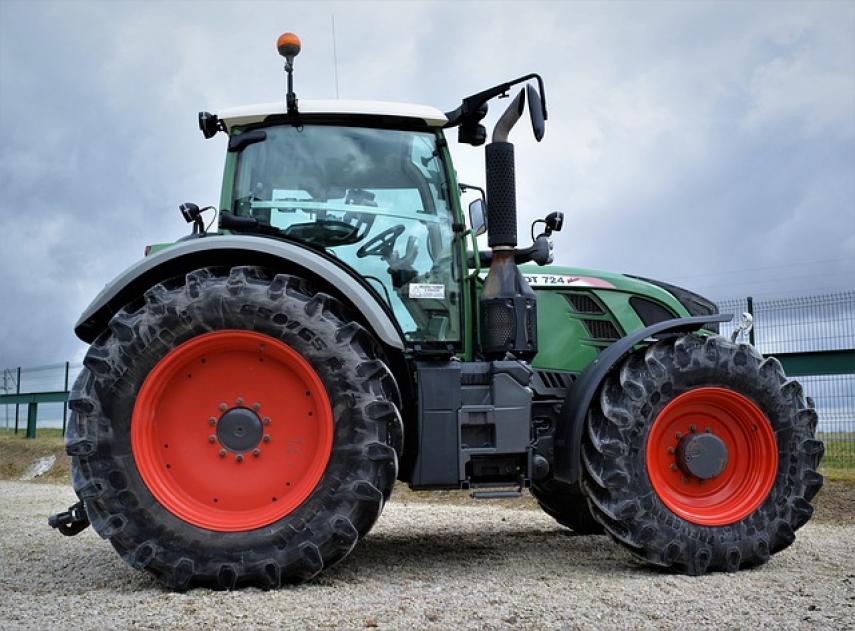
TALLINN - At the initiative of the Estonian Chamber of Agriculture and Commerce and the farmers' cooperative KEVILI, a coordinated nationwide protest by the agricultural sector is scheduled for March 19. During the event, agricultural producers will gather with their tractors on the ring roads and at major traffic hubs of Estonia's largest cities.
The protest aims to send a unified and visible message about the importance of Estonian agriculture and the need to guarantee equal competitive conditions for Estonian producers within the European Union.
During the protest, agricultural producers will gather with tractors in several Estonian regions, including Tallinn, Tartu, Pärnu, Rakvere, Viljandi, Jõhvi, Jõgeva, Kuressaare, Räpina, Valga, and Võru. Between 10 a.m. and 12 p.m., the tractors will move slowly on or near the ring roads for a limited period. The organizers have affirmed that traffic will not be blocked, and public and emergency transport will not be impeded.
Following the demonstration, several farmers will take their tractors to local schools and kindergartens to introduce agriculture to children and explain how food is produced. The aim is to bring farming closer to the public and to highlight the role of food production in Estonia's economy and society.
The protest's visual communication will feature unified messaging and symbols. Estonian flags will be displayed alongside posters with messages such as "Food security begins in the field," "(Food) security starts from the field," and "No farming - no food."
The protest will coincide with a parliamentary debate on "Food as a strategic economic sector," a matter of national importance. The agricultural sector aims to use this occasion to emphasize that food production is not merely an economic sector but a strategic component of Estonia's economy and security.
In the rapidly changing security landscape, local food production and national food security have become increasingly vital. Estonia's ability to provide its population with sufficient, high-quality food depends directly on the agricultural sector's capacity to develop and invest on an equal footing with other European Union member states.
The protest is timed as the European Union discusses priorities for the next budgetary period (2028-2034), with the "agri-prosperity gap"-an income disparity in European agriculture-becoming a more prominent issue. For the last 20 years, Estonian producers have faced weaker investment capabilities and development conditions compared to many other member states, impacting both the sector's competitiveness and national food security.
The European Commission estimates that Estonia is entitled to approximately 546 million euros in additional funding to rectify historical subsidy imbalances, yet there is no guarantee that these funds will be allocated to the agricultural sector.
The protest's goal is to send a peaceful, nationwide signal that the Estonian agricultural sector is united and ready to discuss its future in the context of economic growth, investment, and food security. Estonian producers are not demanding special treatment but are calling for a level playing field in the European market.
Kerli Ats, chairwoman of the board of the Estonian Chamber of Agriculture and Commerce, remarked that farmers are bringing tractors into cities to serve as a reminder that this machinery is used to work the land and grow food. "The work done in the fields often goes unnoticed by urban residents, yet our daily meals depend on it. Simultaneously, the agricultural sector faces several serious challenges that need to be addressed and solved. This is why we are bringing our protest to urban areas-to highlight the critical role of agriculture in Estonia's economy and food security."
Ants-Hannes Viira, head of agricultural policy at the Estonian Chamber of Agriculture and Commerce, highlighted that while Estonian agriculture and food production have made significant progress over the past 20 years, the country remains a net importer of food. "We have the potential to develop food production into a strategic economic sector. To do so, we need investment in both agriculture and the food industry. These investments would help add value to agricultural land, one of our most vital natural resources, improve our foreign trade balance, and bolster Estonia's food security."
According to Timo Varblas, head of the Estonian Farmers' Federation, the European Commission has allocated approximately 540 million euros for Estonian agricultural producers. "Due to lower subsidies, we are at a disadvantage compared to other EU countries. If the government decides to divert the funds meant to address this inequality, it signifies that other issues are being prioritized over food security. This is no longer just a concern for producers-it affects every person in Estonia," Varblas stated. "Unpredictable weather, constantly changing and piling-up regulations, and economic uncertainty are part of a food producer's daily life. Estonia's farmers have been very patient for a long time, but there is a limit to our patience. We don't need aid. We need assurance and clear decisions that demonstrate ensuring food security is also a government priority."
Hannes Prits, a board member of the farmers' cooperative KEVILI, pointed out the grim reality of Estonian crop farming: three consecutive years of losses, plummeting investment capacity, and producers going out of business. "This isn't an issue of a few struggling companies; it's a systemic problem. It's a question of survival," he said. "Agricultural products and foodstuffs constitute Estonia's second-largest export sector after electronics. Maintaining this position requires supporting competitiveness and investment, not diverting funds to other areas."
Margo Klaasmägi, head of agriculture at Artiston Grupp and Farmer of the Year 2024, confirmed that Estonia has become a prosperous nation. "Estonians have never lived as well as they do today, and our tables have never been so plentiful. Unfortunately, this prosperity has disconnected many from the realities of life-the idea that water comes from the tap, food from the store, and money from an ATM. In truth, both water and food come from the land-from our fields and forests. Food security is not just a buzzword. The crises of recent years have proven that agricultural producers must be able to guarantee local food production. To achieve this, we need a level playing field to remain competitive," Klaasmägi stated.
According to young farmer Janel-Marcus Lohvart, the decisions being made now are crucial for young farmers and rural youth. "These decisions shape the environment we will leave for future generations. Agricultural producers are not just food suppliers; they are also the custodians of Estonia's heritage landscapes, clean nature, and rural life. Therefore, the future of agriculture concerns not just the producers, but all of society," Lohvart said. "If we want high-quality, domestic food to continue to be produced in Estonia, today's policies must create an environment where young people can operate, invest, and thrive in the agricultural sector."
Ahti Kalde, a board member of Sadala Agro, stated that societal expectations, consumer demands, and government regulations require massive investments from the agricultural sector. "The 546 million euros allocated by the European Commission covers only about a third of these needs. To meet these challenges, agriculture must simultaneously produce high-quality food, provide environmental services, maintain regional balance, and comply with ever-stricter climate policies. It is impossible to fulfill these tasks without investment and without losing competitiveness."
Agricultural producers and organizations wishing to join the protest who have not yet done so are invited to make contact at [email protected].
The protest is being organized by the Estonian Chamber of Agriculture and Commerce in cooperation with KEVILI, and has been joined by the Estonian Farmers' Federation and Young Estonian Farmers.

Please enter your username and password.

2026 © The Baltic Times /Cookies Policy Privacy Policy