
Can happiness be measured? And if so, could it be trained – like a muscle?
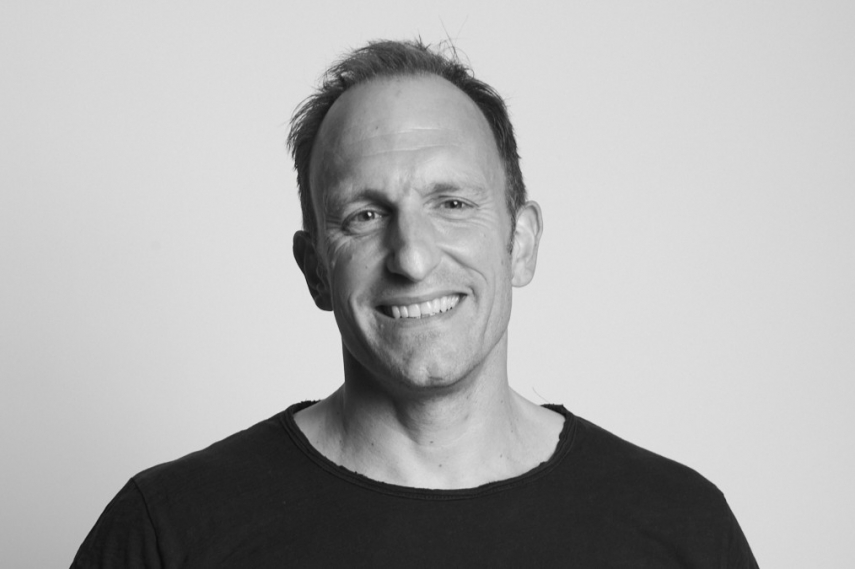
At sTARTUp Day in Tartu, the largest startup event in the Baltics, held at the end of January this year, Axel Bouchon, founder and CEO of Matter Neuroscience, as well as a neuroscientist, immunologist, author, and serial entrepreneur, took the stage with a bold claim: his team has identified what may be the first measurable biomarker for happiness in the human brain.
In his talk, “Happiness Matters,” Bouchon unveiled MRI-based findings and introduced “Joyalties” – neuroscience-driven tokens of appreciation designed to reward behaviors that genuinely enrich our lives.
During the festival, The Baltic Times sat down with Bouchon to discuss the science of happiness, the global emotional crisis, and whether well-being can truly be engineered.
We seem to live in a world where happiness is declining rather than increasing. Do you agree?
Yes, I do. Globally, around one billion people are diagnosed with depression or related conditions such as anxiety, addiction, or aggression. But that’s only part of the story. I believe billions more are in what I’d call a “pre-disease” state – chronically unhappy and compensating through overwork, overconsumption, or other habits that signal something is out of balance.
What makes this especially concerning is that emotions are contagious. Positive emotions spread – but so do negative ones. If the overall emotional balance shifts toward unhappiness, it can spread across societies. That’s what we’re trying to address.
So where does Matter Neuroscience come in?
We wanted to find an objective way to measure happiness – something biological, not just a survey response. Using high-resolution MRI scans, we identified specific brain regions linked to emotional well-being.
From there, we created what we call an “emotional fitness gym.” Just as you train muscles in a physical gym, you can train emotional circuits in the brain. Our app offers structured exercises, guided programs, and team-based activities designed to strengthen those regions.
Interestingly, we didn’t originally plan to build a consumer app. We’re a biotech company focused on patients. But during our clinical studies, participants became significantly happier – and we could see that in the MRI data. Investors encouraged us to make it accessible to a broader audience.
Today, we have around 30,000 to 35,000 users. Growth has been steady, and that’s intentional. Emotional fitness works best in smaller, engaged groups. You can’t meaningfully “train happiness” with 10,000 people at once.
What makes your app different from other wellness platforms?
Our approach is grounded in neuroscience. We’re not offering generic advice or motivational quotes. We base everything on measurable brain data.
The app combines guided exercises, trained facilitators, teamwork, and even a reward system we call “Joyalties.” We operate on a subscription model, like most digital platforms.
Do you collaborate with researchers?
Yes. Our research is conducted in partnership with leading academic institutions. We work with Stanford University in the U.S., Maastricht University in the Netherlands, and the Happiness Research Institute in Copenhagen. Our internal team is relatively small – we rely heavily on academic expertise.
Denmark is often ranked among the happiest countries in the world. Are such rankings reliable?
Happiness is deeply personal, so national averages can only tell part of the story. That said, many studies of the kind are solid.
What Denmark does particularly well – and what aligns with our findings – is fostering strong social connections. People regularly gather with friends and family, and the social system supports work-life balance. In our own research, social interaction consistently emerges as one of the strongest predictors of well-being.
You’ve spent time in Estonia before. What impression do you have?
I genuinely enjoy Estonia and the Baltic States in general. The technological and scientific progress here is impressive. There’s is clear sense of momentum and ambition.
Culturally, emotional expression may be more reserved compared to some other countries, but I find people thoughtful, intelligent, and very open to meaningful conversations.
Looking ahead, how much of future happiness will depend on pharmaceuticals versus technology?
Pharmaceuticals address illness – they’re essential when someone is severely depressed. But medicine doesn’t create happiness; it treats disease.
What consistently makes people happier is real human interaction. That’s why I believe the future of well-being lies more in meaningful social experiences than in pills or even apps.
Even our platform is designed to minimize screen time. The goal isn’t to keep users online – it’s to encourage real-world connection. In the end, that’s where genuine happiness is built.

Please enter your username and password.

2026 © The Baltic Times /Cookies Policy Privacy Policy