Photo by Serena Vittorini and Kamand Razavi
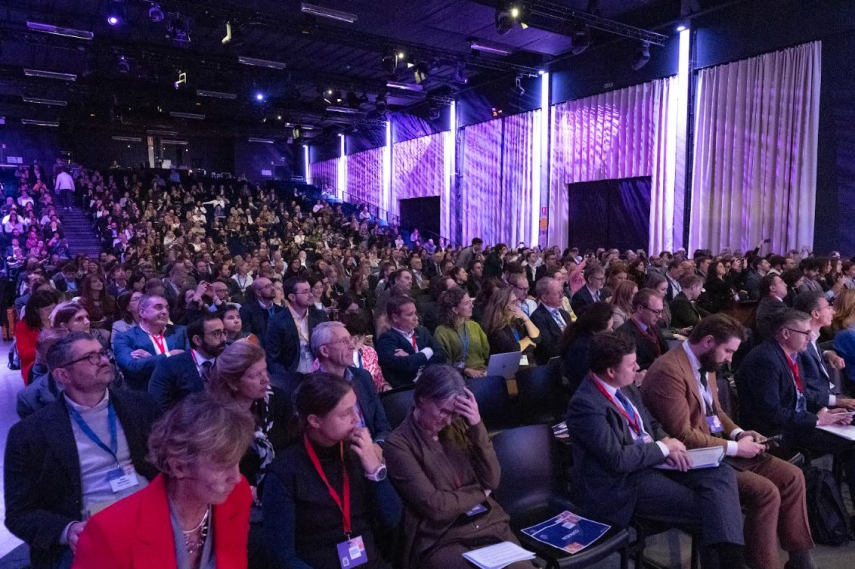
Photo by Serena Vittorini and Kamand Razavi
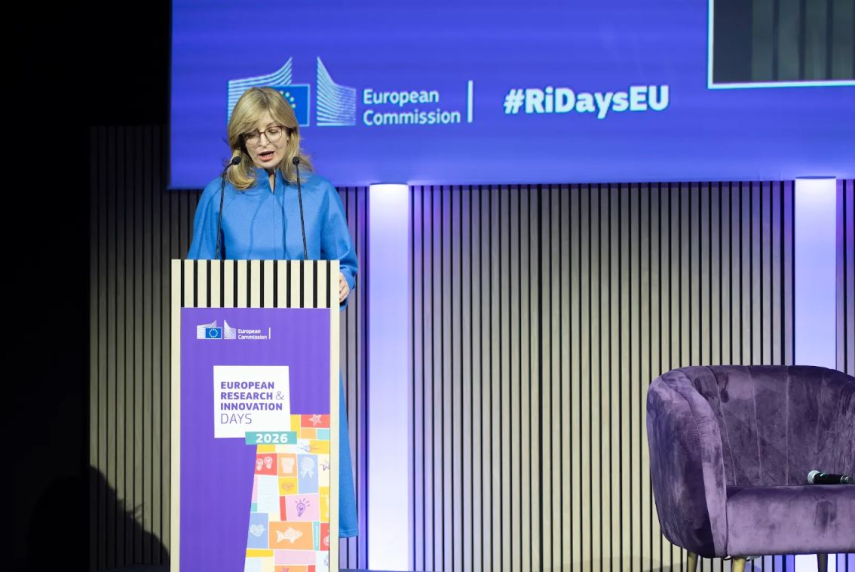
European Commissioner for Startups, Research and Innovation Ekaterina Zaharieva (by Serena Vittorini and Kamand Razavi)
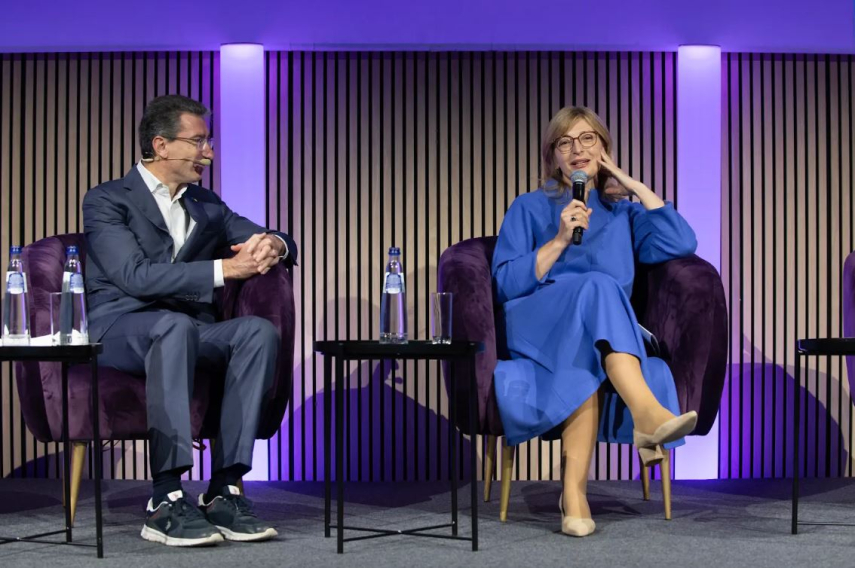
Photo by Serena Vittorini and Kamand Razavi
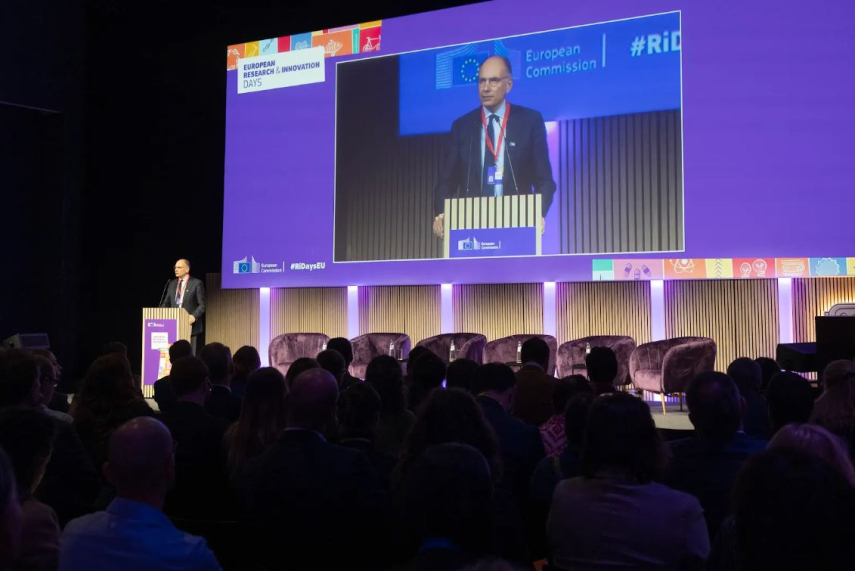
On November 10–11, the European Research and Innovation Days 2026 brought together policymakers, scientists and investors in Brussels to examine how Europe can translate its research strengths into commercially successful technologies, stronger industries and greater economic independence. European Commissioner for Startups, Research and Innovation Ekaterina Zaharieva was unable to make herself available for an interview with The Baltic Times on this occasion, but her office promised to answer our questions about research and innovation in the Baltic states. We hope to share her insights with our readers soon.
Commissioner's call for increased research funding
At the conference, Commissioner Zaharieva called for increased research funding, warning that Europe risks losing further ground to its global competitors and voicing disappointment over a proposed 9.6% cut to the next Horizon Europe budget, which would reduce funding by €16.8 billion from the European Commission's proposed €175 billion.
She stressed that a more ambitious research budget was essential if the EU was to achieve its longstanding target of spending 3% of GDP on research and development. According to Commission estimates cited in reporting on the conference, an additional €565 billion in R&D investment would be needed to reach that target by the end of the decade.
Zaharieva's remarks underscored a central message of the two-day conference: Europe must back its scientific excellence with substantially greater investment to strengthen technological leadership, drive innovation and remain competitive in the global economy.
Organised by the European Commission's Directorate-General for Research and Innovation (DG RTD), the conference brought together European policymakers, researchers, entrepreneurs, investors and representatives of scientific institutions.
Across two days and more than 20 sessions, the programme explored Europe’s competitiveness and industrial leadership including debates on the Startup and Scaleup Strategy, the European Life Sciences Strategy, the AI in Science Strategy and the European Innovation and European Research Area Acts. From high-level panels to hands-on breakouts and focused networking, Research and Innovation Days link policy with real-world impact.
A palpable sense of gloom
As at other conferences I have attended in Brussels recently, there was a palpable sense of gloom at the European Research and Innovation Days, accompanied by a good deal of European soul-searching, if not outright self-criticism.
The familiar refrain that the European Union has lost its competitive edge was heard again, with Mario Draghi's landmark report on European competitiveness repeatedly invoked.
The war in Ukraine was seen as a threat to Europe as a whole, while growing political fragmentation added to the unease. Ireland, holding the presidency of the Council of the EU, had proposed in October cutting funding for Horizon Europe, the EU's flagship research and innovation programme for 2028–2034, by almost 10%.
Some speakers also warned that radical political forces were increasingly seeking to interfere with the freedom of scientific research and innovation – a particularly troubling prospect amid the possibility of further political upheaval in Spain, France and Germany.
Perhaps most worrying was the concern that young European talent, discouraged by the rapid advance of artificial intelligence and uncertain career prospects, was either turning away from research altogether or seeking better opportunities in the United States and China.
Baltic voices in the European debate
The Baltic states were represented in discussions concerning international scientific cooperation and the coordination of research policies.
Latvian Member of the European Parliament Ivars Ijabs participated in the November 11 session titled "Strengthening open and secure international cooperation and science diplomacy".
The session addressed the relationship between international research cooperation and the changing geopolitical environment.
Lithuania's research attaché at its Permanent Representation to the European Union, Brigita Serafinaviciute, participated in the November 10 session "Alignment of Public Research Policies".
The discussion concerned coordination between national research priorities and broader European initiatives.
Amid the prevailing pessimism, Lithuania emerged as a welcome bright spot. The country was repeatedly praised and held up as an example, not only for its achievements in laser technologies but also for its flexible, cross-sectoral use of Horizon Europe funding and its research cooperation with other EU member states.
For European businesses, the conference addressed three closely connected challenges: overcoming obstacles to commercialising research, securing sufficient investment for innovative companies to grow, and strengthening Europe's technological sovereignty.
A recurring theme
The relationship between scientific discoveries and business development was a recurring theme throughout the conference.
European universities and research institutions generate scientific knowledge, but turning that knowledge into marketable products requires financing, entrepreneurial expertise, supportive regulation and access to customers.
For smaller companies, particularly those developing advanced technologies, these challenges can be substantial.
The conference programme therefore placed considerable emphasis on strengthening connections between researchers, investors and businesses.
The challenge of Europe's fragmented market
Former Italian prime minister Enrico Letta's participation highlighted another important dimension of the competitiveness debate: the relationship between Europe's single market and the ability of innovative companies to expand internationally.
Currently, Letta is President of the Jacques Delors Institute in Paris and Dean of the IE School of Politics, Economics and Global Affairs in Madrid.
Although the European Union offers access to a large common market, businesses developing new technologies must still navigate different national administrative practices, regulatory requirements and investment environments – another acute issue raised by many speakers.
These differences can complicate expansion, particularly for smaller businesses seeking to operate across several European countries.
The conference's focus on regulatory barriers and investment opportunities was therefore directly relevant to the wider discussion about Europe's economic integration.
For innovative companies, access to a larger market can be particularly important when substantial upfront investment is needed before a product becomes commercially viable.
The challenges are especially significant in capital-intensive industries, including advanced manufacturing, artificial intelligence, energy technologies and other research-driven sectors.
Investment remains central to innovation
The role of private investment featured prominently in discussions involving representatives of Europe's innovation and financing communities.
Ann Mettler, a member of the European Innovation Council Board, was among the participants in discussions about regulatory obstacles affecting innovative businesses.
Reginald Vossen, president of Business Angels Europe, brought the perspective of private investors who help finance early-stage companies.
Their participation reflected the importance of linking research activity with the capital needed to develop and commercialise new technologies.
Innovative businesses frequently require several stages of financing, from initial research and product development to industrial production and international expansion.
Access to early-stage capital is therefore only one part of the challenge.
Companies must also secure financing as they grow, build management capabilities and establish commercial relationships beyond their domestic markets.
For Europe's smaller economies, including the Baltic states, these issues are particularly relevant because domestic markets and investment pools are comparatively limited.
The conference's attention to investment and scaling up consequently had implications extending beyond Europe's largest research and industrial centres.
Artificial intelligence and technological sovereignty
Artificial intelligence and Europe's technological independence formed another major strand of the conference.
Brando Benifei, a member of the European Parliament, and Anita Schjøll Abildgaard, co-founder and chief scientific officer of Iris.ai, were among the participants in discussions about AI development and technological sovereignty.
The inclusion of both political and business perspectives illustrated the breadth of the issue.
Artificial intelligence is increasingly relevant not only to digital businesses but also to manufacturing, scientific research, healthcare, energy systems and other sectors.
For European companies, the commercial opportunities associated with AI are closely connected to questions about access to computing infrastructure, specialised expertise and investment.
Technological sovereignty also raises questions about Europe's dependence on technologies and infrastructure developed elsewhere.
The broader business question is whether Europe can create conditions in which promising technologies are developed, financed and commercially expanded within its own economic ecosystem.
Scientific freedom and research security
The conference also addressed the relationship between international scientific cooperation and the need to protect sensitive research.
Research cooperation remains essential for scientific progress, but universities, companies and public institutions must also consider the security implications of sharing sensitive knowledge and technologies.
This creates a difficult policy balance between maintaining openness and protecting strategically important research.
For businesses working with universities and international partners, these questions can affect collaborative projects, intellectual property and access to specialised technologies.
Beyond financing and technological sovereignty, the conference also examined the importance of scientific talent and the conditions needed for researchers to succeed.

Please enter your username and password.


2026 © The Baltic Times /Cookies Policy Privacy Policy