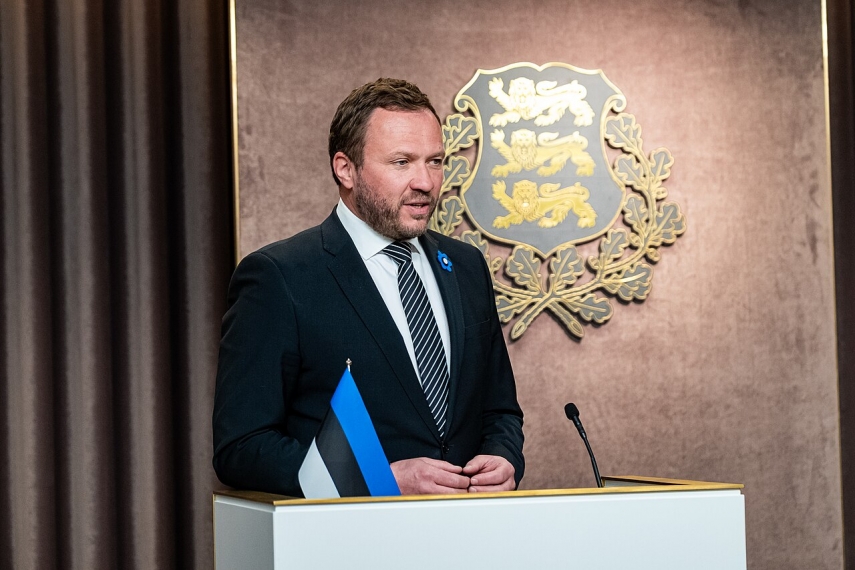
TALLINN – Undersecretary of the Ministry of Foreign Affairs Mariin Ratnik visited Kyiv from March 24-25 to attend a meeting of the Ukraine Donor Platform, where discussions focused on the state of Ukraine's economy and the reforms necessary for its development and accession to the European Union.
Ratnik also met with Ihor Zhovkva, diplomatic advisor to the President of Ukraine; Iryna Vereshchuk, Deputy Head of the Office of the President; Matthias Schmale, UN Humanitarian Coordinator for Ukraine; Juan-Pedro Schaerer, Head of the International Committee of the Red Cross Delegation in Ukraine; and Anka Feldhusen, Ukraine's Business Ombudsman.
In addition to military aid, Estonia provides significant support to Ukraine by developing business contacts, delivering humanitarian aid, and implementing various reconstruction projects, all of which contribute to the nation's recovery, development, and accession to the European Union.
The meeting of the Ukraine Donor Platform focused on the needs of the Ukrainian economy and the implementation of reforms required for EU integration. "The main challenges in Ukraine's reform process are strengthening the justice system, combating corruption, reinforcing the relevant institutions, and improving the business climate," said Ratnik. "With a full-scale war still raging in Ukraine—a fact underscored by Russia on March 24 when it launched one of the most severe attacks since the invasion began—it is extremely important for Ukraine to strengthen its economy and prepare for EU accession."
As part of the meeting, discussions were held with Ukrainian entrepreneurs and civil society representatives to better understand their challenges and needs.
"Around 400 companies from Estonia export to Ukraine, and Ukraine is a key target country for Estonia's business diplomacy. To better understand the Ukrainian market, we are organizing several business delegation visits to Ukraine again this year," Ratnik stated. The meeting with Business Ombudsman Anka Feldhusen focused on how her office can support Estonian companies entering the Ukrainian business landscape. A business visit for companies in the defense, energy, and green technology sectors is scheduled for next month.
"In addition to economic development, the ability of the entire society to cope with the overall effects of the war requires attention. There remains a critical need for humanitarian aid, especially in frontline regions, where Estonia can also contribute. At the same time, it is increasingly important to integrate humanitarian aid into Ukraine's social system, as no one can predict when the war will end," Ratnik said during her meeting with the senior UN representative.
The meeting with Iryna Vereshchuk, Deputy Head of the Office of the President of Ukraine, centered on a broad-based security approach from the perspective of social cohesion, including the reintegration of veterans into society. Estonia's system, which encompasses defense, economic, societal, and social welfare aspects, serves as a model for Ukraine. "Estonia is ready to share its experience in this area," Ratnik said.
With Juan-Pedro Schaerer, Head of the International Committee of the Red Cross Delegation in Ukraine, Ratnik discussed the issue of deported Ukrainian children. According to various reports, Russia has forcibly relocated nearly 20,000 children, of whom a few thousand have been returned from Russia, with assistance from the International Red Cross among others. Ratnik also commended the Red Cross for its crucial work in organizing prisoner-of-war exchanges and in searching for and identifying those missing in the war.
Undersecretary Ratnik also met with Ihor Zhovkva, diplomatic advisor to the President of Ukraine. They discussed the current state of peace talks, the impact of the war in the Middle East on Ukraine, and Estonia's preparations for hosting the international Ukraine Recovery Conference in 2027.
Additionally, in Brusyliv, Zhytomyr Oblast, Ratnik laid the cornerstone for Estonia's next development cooperation project: an 18-apartment building for internally displaced Ukrainians, constructed in cooperation with Japan.

Please enter your username and password.

2026 © The Baltic Times /Cookies Policy Privacy Policy