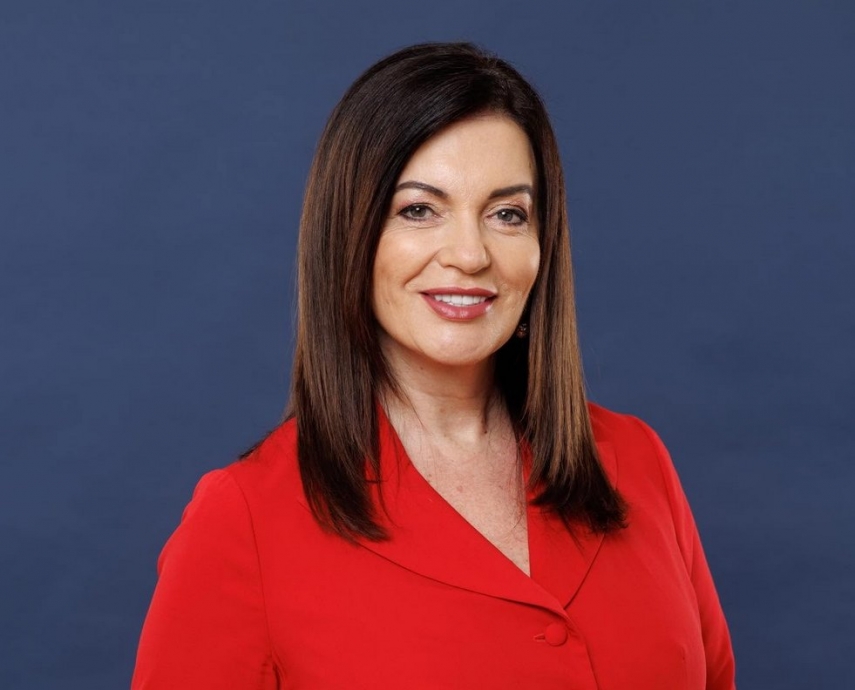
RIGA - European countries do not perceive the security risks posed by Russia in the same way, which is why countries in the Baltic Sea region should cooperate more closely and move faster in strengthening their defense capabilities, European Parliament (EP) member Martins Stakis (Progressives) told LETA.
Asked to explain why problems with defense matters often lie at the national level, the MEP indicated that support for Ukraine correlates with an understanding of defense issues. According to Stakis, the Baltic and Nordic countries allocate around 1.5 to 2.2 percent of their gross domestic product (GDP) to Ukraine. Meanwhile, Hungary's aid to Ukraine is almost zero, while countries such as France and Italy provide around 0.3 percent of their GDP to Ukraine.
The Latvian MEP noted that countries around the Baltic Sea that are focused on defense issues are starting to lose patience because they believe that time is running out. At the same time, some southern European countries have other priorities and do not see the need for a big rush. According to Stakis, these countries also believe that Europe needs to become stronger and more secure, but when they are urged to act today, they find excuses for not doing so just yet.
The MEP pointed out that the Netherlands is one of the driving forces in the EP at the moment, because this country knows firsthand what it means when a passenger plane is shot down over Ukraine. In Stakis' view, the Netherlands understands very well that this such incidents can affect any country. He mentioned that public opinion in the Netherlands advocates much more decisive action to strengthen Europe's capacity to defend itself.
"Let's not talk about the Baltic and Nordic countries, because they have a neighbor who would not allow them not to think about these issues. It should be noted that southern countries have no such experience," the MEP said.
Stakis also mentioned a meeting with MEPs from Italy, Spain and Greece, in which they discussed the possibility for these countries to provide more support for defense. According to the MEP, the representatives of these countries said that they were called upon to show solidarity, but when their countries urged solidarity over the refugee crisis, the Baltic countries were reluctant to help. Stakis underlined that European solidarity works both ways.
As to what is not working and whether it is the defense industry that is not keeping up, Stakis said that things may not be moving as fast as one would like, but there are success stories. According to him, four years ago Europe could not provide 155 millimeter projectiles for Ukraine, but today it can provide about one and a half million of such projectiles per year.
In his view, there are accomplishments that demonstrate Europe's ability to take action. Stakis agreed that Europe is lagging behind Ukraine, which is at least two steps ahead in the production of drones, but Europe stands with Ukraine, and there is hope that Europe will be able to take over Ukraine's know-how.
Stakis believes that one should not wait all the time for the weakest link in the chain to catch up with the rest. In Stakis' view, the countries around the Baltic Sea, their prime ministers and defense ministers need to come together and decide to do it themselves - to stay true to NATO allies and the European defense voice and to act at the speed they want. He pointed out that one cannot keep waiting and wasting time trying to convince others.
If the Baltic states, the Scandinavian countries, Poland and Germany were to come together, he said, a joint innovation procurement project could be launched. Another problem, according to Stakis, is the fragmented market, where entrepreneurs have to go to each country's defense ministry and knock on doors.
The MEP proposes that countries allocate 0.01 percent of their GDP for procuring innovation. According to Stakis, these countries could agree to coordinate their future purchases and buy together, which would result in lower prices and faster delivery.

Please enter your username and password.

2026 © The Baltic Times /Cookies Policy Privacy Policy