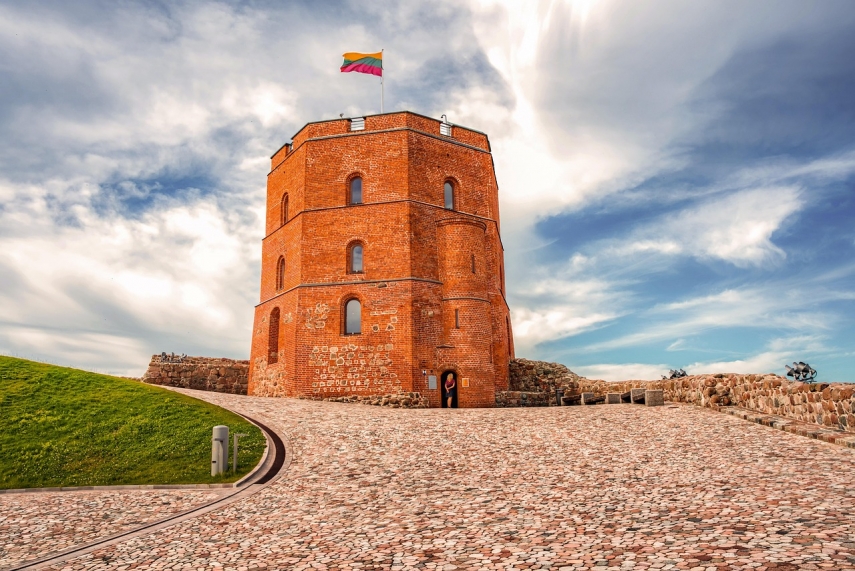
Photo: ValeraRychman from Pixabay
Lithuania has quietly become one of the more practical EU jurisdictions for foreign founders - not because of aggressive marketing, but because the numbers genuinely hold up. Low setup costs, a fully remote company registration process in Lithuania, and a corporate tax regime that's competitive even by Baltic standards. This guide breaks down what it actually costs, what you'll owe in tax, and which of Lithuania's two main company structures fits your situation.
The Two Structures You're Choosing Between
Lithuania offers two main entity types for small and medium businesses, and almost every foreign founder ends up picking between them.
MB (Mažoji bendrija / Small Partnership) is the lighter-weight option. It allows up to 10 owners, requires just €1 in minimum share capital, and - critically - has no mandatory director. Owners can run the company directly without formally employing anyone in a director role. All members must be natural persons; an MB can't have a company as a shareholder.
UAB (Uždaroji akcinė bendrovė / Private Limited Company) is Lithuania's equivalent of a standard Ltd or GmbH. It allows up to 249 shareholders, can be owned by other legal entities (not just individuals), and offers a proper share-based structure for raising outside capital. Minimum share capital is €1,000, with at least €500 due before registration completes and the remainder payable within 12 months.
On paper, both offer full limited liability. The real difference shows up in ongoing costs - specifically, one structure forces a recurring expense that the other doesn't.
The UAB's Hidden Cost: Mandatory Director Employment
This is the detail that catches a lot of first-time founders off guard.
A UAB legally requires an appointed director. You can take that role yourself - there's no requirement to hire a Lithuanian resident or bring in someone external - but you have to be formally employed by the company, and that triggers mandatory social tax contributions. The catch: those taxes are calculated on the full minimum wage, regardless of whether the director works full-time, part-time, or technically does almost nothing.
In practice, that's roughly €300–350 per month in unavoidable payroll tax - somewhere around €4,000 a year - before the company has paid the director (or anyone else) a single euro in actual salary or profit.
An MB has no equivalent requirement. Owners manage the company directly with no obligation to formally employ a director, which is the main reason most small businesses and solo founders default to it.
Registration Costs: MB vs UAB
All-inclusive registration pricing - covering state duties, government fees, and a registered Lithuanian business address - generally breaks down as follows for non-residents.
An MB with a single owner typically costs around €700–750 to register. If there are two or more owners, the price ticks up slightly to roughly €750–800, reflecting the extra documentation involved in verifying multiple shareholders. Either way, the minimum share capital required is just €1, so the registration fee itself makes up almost the entire upfront cost.
A UAB is more expensive to set up, generally running from €1,200, regardless of how many shareholders are involved. On top of that registration fee, a UAB also requires €1,000 in minimum share capital, at least half of which (€500) must be in place before registration completes, with the remaining €500 payable within 12 months. It's worth being clear that this share capital isn't a fee paid to anyone - it becomes the company's own working capital. Most formation agencies handle this deposit on the founder's behalf, so non-residents typically don't need to open a Lithuanian bank account or wire funds personally before the company exists.
A few things worth knowing about these figures:
- Lithuanian residents generally pay less than non-residents for the same registration, since non-resident cases involve more document handling and verification.
- The UAB's €1,000 share capital isn't a fee - it becomes the company's own working capital. Formation agencies typically handle this deposit on the client's behalf, so non-residents usually don't need to open a Lithuanian bank account or wire funds personally before registration.
- Pricing is genuinely all-inclusive at most reputable providers - no separate state duty invoices showing up later.
How Long Company Registration in Lithuania Actually Takes
The timeline depends heavily on the registration method:
- Company registration in Lithuania remotely (most common for non-residents): the company is registered first, then ownership is transferred to the founder. Typically 5–10 business days from payment to a fully registered company.
- Remote via Power of Attorney: the company is registered directly in the founder's name from the start, but the POA has to be notarised and apostilled in the founder's home country first. This usually adds 2–4 weeks and at least €500 in extra cost.
- In-person via notary in Lithuania: fastest once you're physically present (1–2 business days), but travel and notary costs make it the most expensive route overall.
The Centre of Registers itself (Lithuania's companies registry) processes standard applications within 3 business days once a complete file is submitted - the variation in total timeline comes almost entirely from how the founder's documents get prepared and delivered, not from the registry itself.
Lithuanian Corporate Tax, Explained Properly
This is where Lithuania's pitch to foreign founders gets genuinely interesting.
Standard corporate income tax is 7% on annual profit, for companies with annual revenue under €300,000. Above that threshold, the rate rises to 17%. To put the 7% rate in concrete terms: a company with €100,000 revenue and €60,000 in expenses has €40,000 in profit, taxed at 7% - a €2,800 tax bill.
There's also a 0% corporate tax holiday for qualifying new companies in their first two years of operation, after which the standard 7% (or 17%) rate kicks in. The important caveat: this 0% rate generally applies only to companies registered directly in the founder's name through a notary - not to companies set up via the registration-then-transfer method that most non-residents use for convenience. If the 0% holiday matters to your specific plans, it's worth confirming the registration method upfront, since the faster, cheaper route forfeits it.
VAT registration isn't automatic. A Lithuanian company only needs to register for VAT once:
- Annual turnover exceeds €45,000, or
- The company purchases more than €10,000 per year in goods from other EU member states or third countries
Once either threshold is hit, VAT registration with the State Tax Inspectorate (VMI) becomes mandatory.
Ongoing Costs After Registration
Registration is a one-time expense. Running the company involves a few predictable recurring costs:
- Accounting: typically starts from around €100/month for a basic package. Low-activity or dormant companies can often get away with an annual reconciliation instead of monthly bookkeeping, which significantly reduces the yearly bill.
- Registered address: usually included in the original registration price for an unlimited period, with no separate renewal fee.
- VAT registration (if triggered): a one-time setup cost, separate from registration itself.
- Director social tax (UAB only): the ~€300–350/month figure discussed above, which doesn't apply to an MB.
So Which One Should You Choose?
Choose an MB if you're a freelancer, solo founder, or small services/e-commerce business with up to 10 owners, you're not planning to raise outside investment, and you want to avoid the mandatory director tax burden entirely. For most non-resident founders setting up a lean operation, this is the more economical default.
Choose a UAB if you plan to raise capital from outside investors, expect to scale significantly, need a structure with legal-entity shareholders, or operate in a regulated sector (fintech, lending, financial services) where a share-based corporate structure is effectively required.
Worth knowing: switching from MB to UAB later is possible without dissolving and re-registering the company, so starting lean with an MB doesn't lock you out of upgrading once the business actually needs it.
The Bottom Line
Lithuania's appeal for foreign founders comes down to a fairly simple combination: low, transparent setup costs, a fully remote process that doesn't require ever stepping foot in the country, and a 7% corporate tax rate that's hard to match elsewhere in the EU. The real decision isn't really about cost at registration - both structures are cheap by European standards - it's about whether the UAB's mandatory director tax is worth paying for the ability to raise capital and bring in legal-entity shareholders. For most small and solo businesses, it isn't, and an MB does the job for a fraction of the ongoing overhead.

Please enter your username and password.


2026 © The Baltic Times /Cookies Policy Privacy Policy