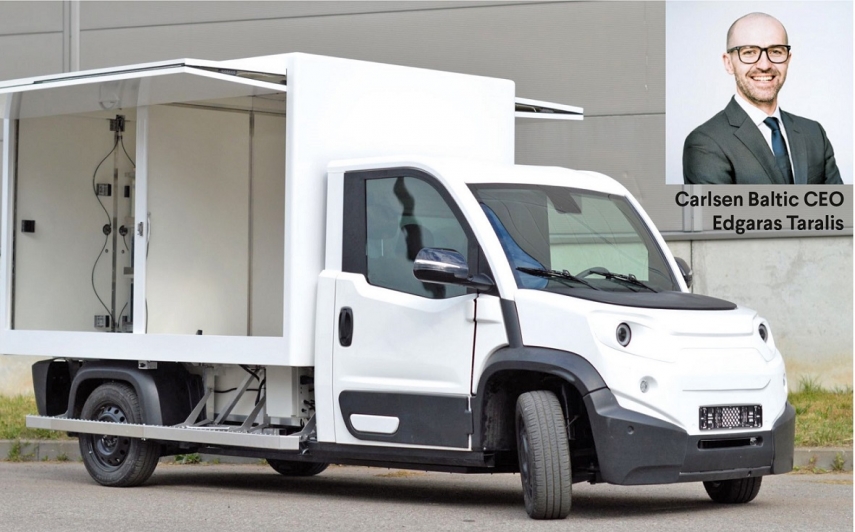
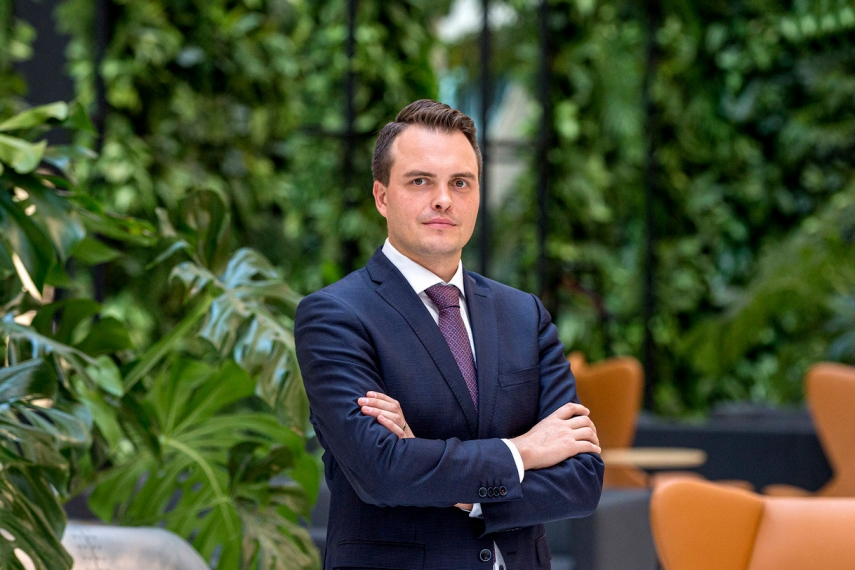
Now, Carlsen Baltic, one of the leading manufacturers of ultra-light deep-freeze bodies for last-mile delivery, innovating sustainable cooling solutions for major European markets, is entering one of its strongest growth periods yet, driven by rapid innovation and rising demand across Europe’s largest last-mile delivery markets. “The company is now scaling up production and accelerating technological partnerships to meet tightening EU environmental standards. If we want a cleaner and more efficient cold chain, the industry cannot wait for change – we must build it ourselves,” Edgaras Taralis, the CEO, emphasized to The Baltic Times Magazine.
How long do you operate in Lithuania, Latvia, and Estonia? What have been the major milestones for Carlsen Baltic in Lithuania and the Baltic region?
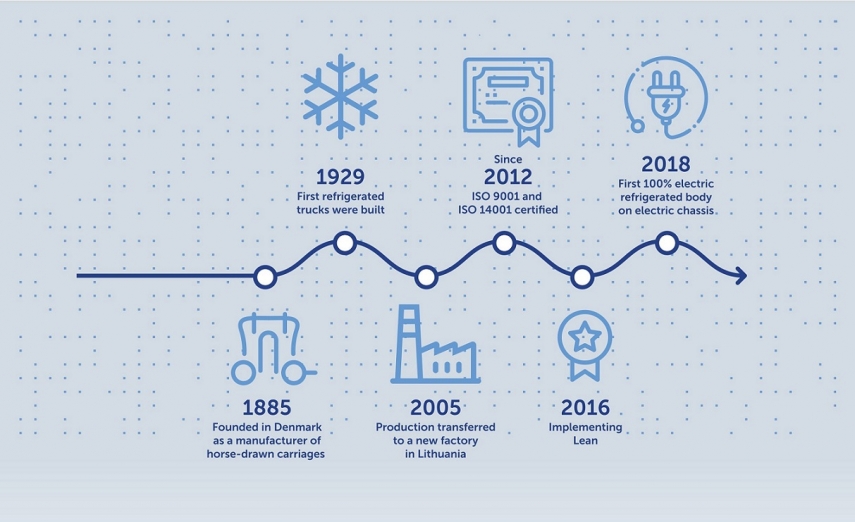
Maybe the first thing to note is that the Carlsen company in Denmark was established in 1885.
In 2004–2005, Carlsen Baltic UAB was established in Kaunas, relocating mainly manufacturing activity to Lithuania. At that time the main reason was cheap LT labour. Part of GRP production was also moved to Latvia. Later, engineering, sales, and HQ were all moved to Lithuania.
2000s–2010s marked our leadership in ice-cream and frozen-food distribution, developing ultra-light eutectic deep-freeze bodies for 3.5 t chassis and becoming a key supplier to major European frozen-food brands (bofrost*, Eismann, Hemglass, Hjem-IS, etc.).
The years of 2023–2024 saw a recovery and strong growth: revenue in 2024 reached around 11.2 million euros, approximately 35 percent higher vs. the prior year, with solid profitability (~5 percent net margin), confirming that the company successfully adjusted to the new market environment.
What sets Carlsen Baltic apart from other companies in the industry?
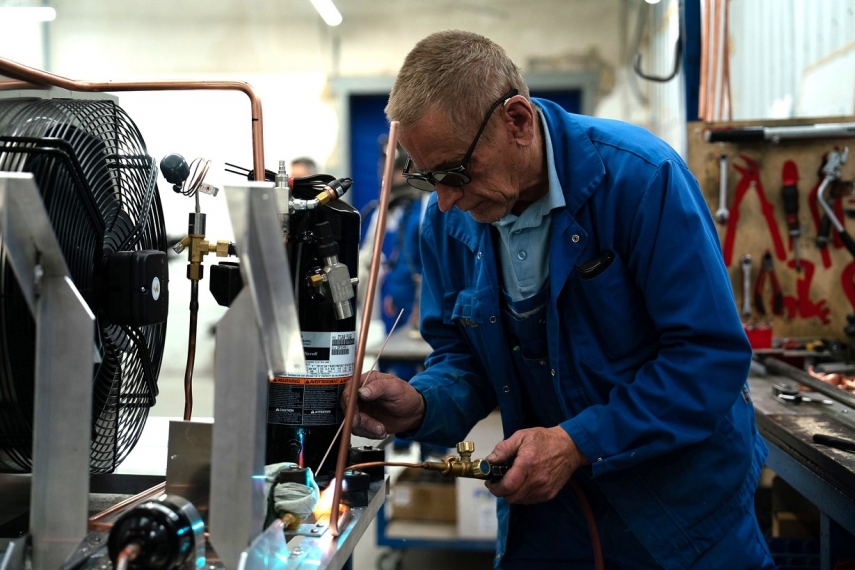
Continuous development along with the market and our clients. For over 18 years Carlsen Baltic has had a dedicated team of engineers in all related fields required to provide custom solutions for clients within a very narrow logistics niche. This continuous improvement and fine-tuning allow us to make freezer bodies that are 10–20 percent lighter, which in terms of payload is pure gold.
What trends are shaping last-mile delivery solutions, particularly regarding low-GWP refrigerants and solar-powered cooling systems, and how has Carlsen Baltic adapted to these developments?
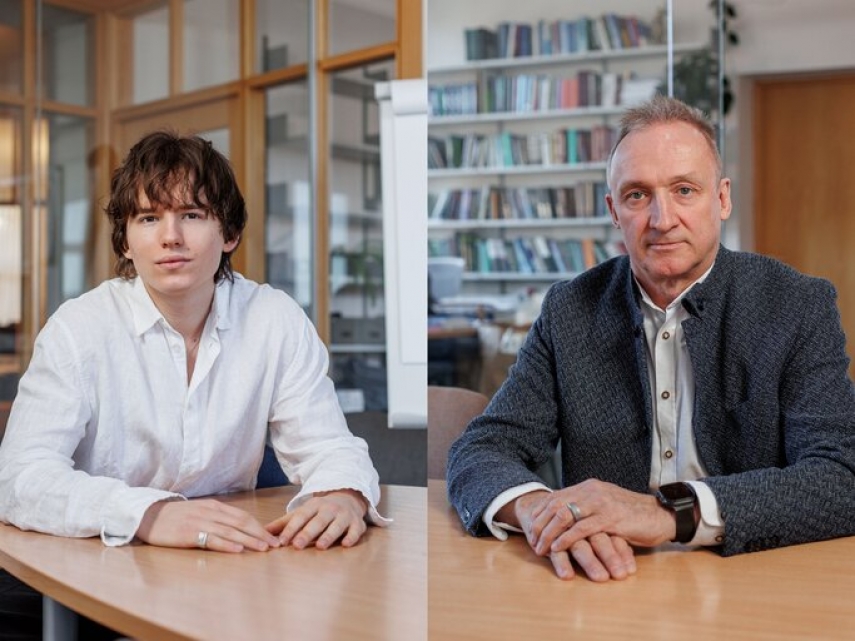
Strict EU regulations are pushing last-mile delivery systems toward very low-GWP refrigerants, such as propylene, which are ecological but also flammable and explosive. This creates a major safety and efficiency challenge for mobile cooling. Carlsen Baltic, together with a professor at Kaunas University of Technology, has already adapted by developing a new system that uses a much smaller refrigerant charge while meeting upcoming environmental requirements.
Who are your major clients? Is it easy to work with big names, known brands?
Our major customers are bofrost*, Picnic, and Eismann. Working with big names keeps us constantly innovating, because large clients are usually the first to adopt new regulations such as GWP-0 and to implement new technologies.
How do your operations differ in Latvia and Estonia?
The Baltics are not our main market, although we do have customers here as well. Like in any manufacturing business, volume is essential, so we focus on larger markets such as Germany, Austria, the Netherlands, France, Belgium, and Scandinavia, where the demand for our deep-freeze and last-mile delivery bodies is much higher.
How was the year 2025 for your company?
2025 will be among the record years for us in terms of produced bodies and turnover, and we’re very happy about that. However, we did face challenges in scaling our production; it was difficult to find employees, so we had to fill some open positions with workforce from a temporary staffing agency.
In terms of industry impact, what should you watch for in 2026?
In 2026, the main industry impact for Carlsen Baltic will come from the early market shift toward low-GWP and future GWP-0 refrigerants, which is only beginning but already influencing customer expectations and product development. Demand in key markets like Germany, the Netherlands, and France will continue to grow, while labour shortages and production scaling will remain important challenges. Ongoing innovation together with Kaunas University of Technology will remain essential to stay ahead of tightening EU regulations and emerging market needs.
Also, deeper integration of IoT into logistics allows gathering big data, which in turn provides possibilities for AI technology, both in fleet management and cold-chain control and optimization. Carlsen Baltic, in cooperation with Latvian-based https://www.mapon.com and neighbouring in Kaunas IoT manufacturer Teltonika, is in the process of taking advantage of these possibilities.

Please enter your username and password.
2026 © The Baltic Times /Cookies Policy Privacy Policy