TALLINN - While many people postponed buying a car last year due to uncertainty and new taxes, the beginning of 2026 has brought more transactions to the market than expected, and experts are observing cautious optimism.
According to Ando Rahu, head of a car portal, the market revival is due to the fact that many purchasing decisions postponed last year are now being acted upon. "Last year was a perfect storm in the car market, where the implementation of the car tax and general uncertainty led many to postpone buying a car," he says.
Although all segments were affected, the car tax hit cheaper used cars the hardest, where the tax can make up a large portion of the car's price. "If a car costs 500 euros and the registration fee is 500 euros, it becomes very difficult to buy or sell that car within this target group," Rahu explained.
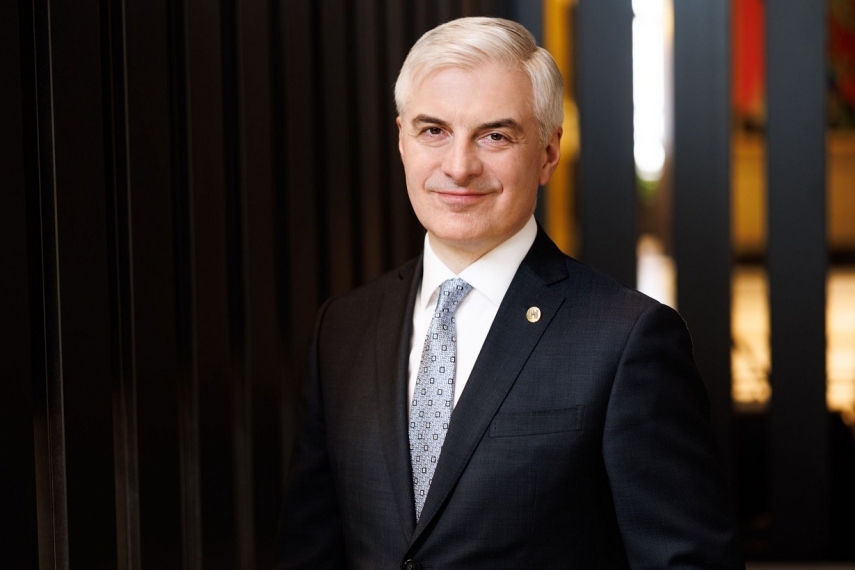
While many postponed buying a car last year, this cannot be done indefinitely, noted Martin Ilves, head of Coop Pank's leasing business line. "If the family grows or the old car starts needing more repairs, the decision has to be made sooner or later," he stated.
The claim of a market revival is also supported by statistics from the beginning of the year. In February, 1,142 new passenger cars were registered, which is 515 more than at the same time in 2025. This represents an 82 percent year-on-year growth for the market.
"Although the market has not yet reached its previous peaks, it is clear that the worst of the slump is over and it is slowly starting to return to a normal rhythm," Rahu believes.
This is also indicated by the number of leasing applications at the beginning of the year. "As a rule, January and February are the two quietest months of the year for the leasing and car markets, and seeing better-than-expected results already in these months inspires optimism," said Ilves.
The recovery of the car market may also be supported this year by several tax changes that leave people with more money in their pockets. One of the biggest changes is the 700-euro tax-free income applicable to everyone, which increases the net income for many people. Additionally, the government's previous plan to raise the income tax rate from 22 percent to 24 percent was cancelled. A further tax relief of up to 100 euros for each minor child was also introduced for families with children regarding the annual car tax, reducing the costs associated with owning a vehicle.
According to Ilves, the fact that people are gradually getting used to the changes in the tax environment, including the annual car tax and registration fee, also contributes to the market's revival. "If incomes remain stable and some of the tax burden eases, it may give people more courage to make larger expenditures," he noted.
According to Rahu, it is currently a clear buyer's market. Although there are many cars for sale, which allows for price negotiation, he says this does not mean that prices have dropped significantly. Cars with good prices still find buyers quite quickly. This is aided by professional intermediaries who actively monitor advertisements and quickly buy up good offers from the market. In addition, many cars are also sold to neighboring countries, where people are willing to pay more for them. "Compared to our immediate neighbors, cars in Estonia are cheaper today. Car dealers talk about how they are consequently selling a fair number of cars out of Estonia," he stated.
He also advises buyers to be cautious with offers that seem too cheap. "If the price of a used car is 20 percent below the market average, you have to ask why the seller wants to sell that car so cheaply," says Rahu.
For many buyers last year, a comfortable price range was around 20,000-25,000 euros. "When the price of a car goes over 30,000 euros, interest drops significantly," Ilves noted.
The average desired lease amount for private individuals applying for leasing from Coop Liising in 2025 was 23,346 euros. "This means that a typical applicant is looking at a car whose cost is approximately within their one-year net income," he said.
According to Ilves, this also shows that decisions are generally being made in a considered and financially thought-out manner.
However, when making a purchase decision, it is worth looking beyond just the purchase price. According to Ilves, the actual cost of a car is greatly influenced by how well the vehicle holds its value over time. "When buying a car, I look at both its current price and what its price might be in five years," Ilves said.
He noted that differences in the resale value of car makes and models can be significant - some cars can lose half their value in a few years, while other models hold their price better.
In addition to price and residual value, Ilves and Rahu recommend considering the total cost of ownership. For example, repair and maintenance costs can increase rapidly after the warranty period, which is why many companies replace their car fleets every three to five years.
At the same time, according to Ilves, emotions should not be completely disregarded when buying a car. "There should be a little bit of emotion, because then it's better to sit in a traffic jam," he remarked.
Coop Pank, based on Estonian capital, is one of the five universal banks operating in Estonia. The bank has 228,400 daily banking clients. Coop Pank utilizes the synergy between retail and banking, bringing everyday banking services closer to home. The bank's strategic owner is the domestic retail chain Coop Eesti, whose sales network includes 320 stores.

Please enter your username and password.

2026 © The Baltic Times /Cookies Policy Privacy Policy