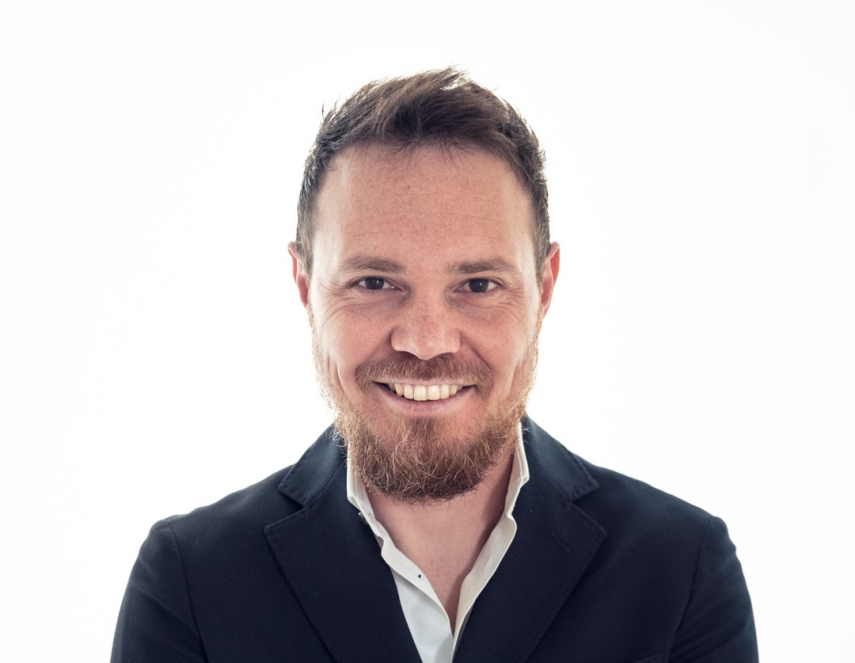
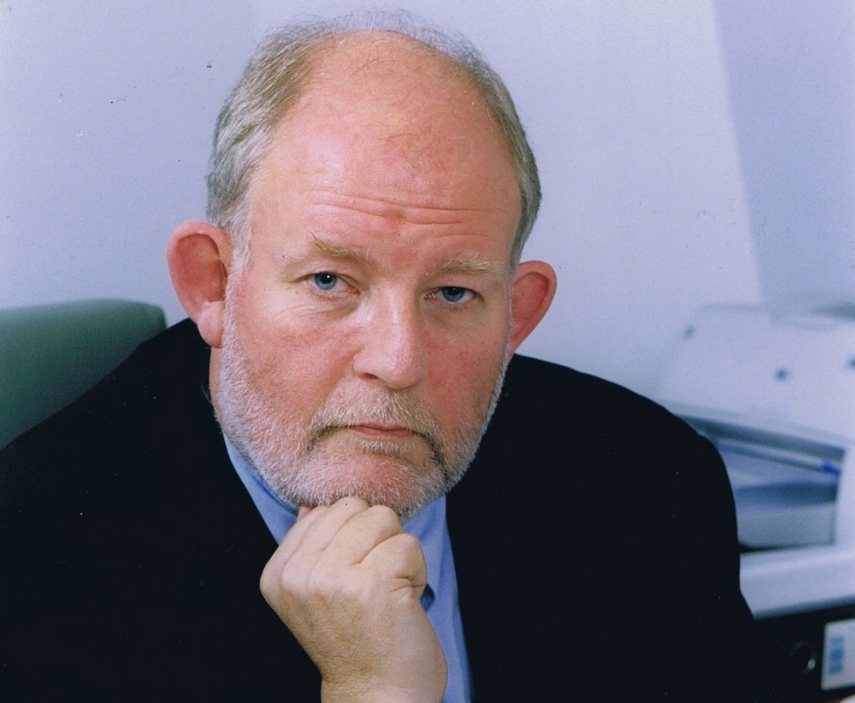
Photo: Former UK Home Secretary Rt Hon Charles Clarke co-founded Baltic Geopolitics Programme
The University of Cambridge's Centre for Geopolitics is a leading research institution focused on international security and strategic affairs. Its Baltic Geopolitics Programme, co-founded in 2021 by former UK Home Secretary Rt Hon Charles Clarke and Professor Brendan Simms, promotes research and policy dialogue on the Baltic Sea region. Mr. Clarke discusses the Programme's work, regional security, and UK–Baltic cooperation with The Baltic Times.
What inspired you and Professor Brendan Simms to establish the Baltic Geopolitics Programme, and what gap were you seeking to address?
We founded the Programme, as part of Cambridge University’s Centre for Geopolitics, in January 2021 because we felt that the security challenges in the Baltic Sea region were becoming increasingly significant and needed wider discussion and consideration both in the UK and more widely.
In June 2020 we had held an online event on the 80th anniversary of the Soviet takeover of the Baltic states in June 1940 which resulted from the Ribbentrop-Molotov Pact, signed 10 months earlier in Moscow. This panel discussion attracted substantial online interest, and we became convinced that the work of a Cambridge University Baltic Geopolitics Programme could be sustained, and so we went ahead.
Personally, I was motivated by the fact that my wife's mother fled Estonia in September 1944 in front of the Russian advance and that many of her family, like many Balts, had perished in 1940/41 and subsequently. I was therefore acutely aware of the difficulty of discovering what really happened then.
However, after our programme had started the salience of our work was massively increased by the Russian full-scale invasion of Ukraine in February 2022. This sharp shock focused an intense spotlight on Russian intentions to dismember the post-1945 European security framework, with enormous implications, and even existential threats, for the Baltic Sea region.
There is still too much ignorance in the UK, Western Europe and North America about the history and current geopolitical situation in the Baltic. We believe that our programme has taken significant steps to reduce this ignorance, but an enormous amount remains to be done.
You have spoken about a lack of understanding in the UK regarding the Baltic Sea region. Why does this matter today, particularly in the context of Russia's war against Ukraine?
In September 1938 a previous British Prime Minister, Neville Chamberlain, told the British people that the German annexation of parts of Czechoslovakia was “a quarrel in a faraway country between people of whom we know nothing”.
This complacent and ignorant attitude led Nazi leaders to believe that they would be able to spread their cruel tyranny unchecked by international opposition.
In contrast to those pre-World War 2 years one of the most powerful weapons against Russia today is the widespread understanding and appreciation of their aggressive threats to European security since 2014. The UK's security, like that of the rest of Europe, depends fundamentally on the stability and integrity of the overall European security framework which Russia’s attack on Ukraine has significantly undermined.
The Baltic Sea region, with Ukraine, is currently the cradle of all these concerns. Consequently, we all need to understand what is happening there, why it is happening and how we can best resist aggressors such as Russia is today. These are the subjects upon which our Programme seeks to widen discussion.
How has the geopolitical significance of the Baltic region changed over the past decade?
In addition to the important and continuing economic success of all the Baltic Sea countries over this period there are two important respects in which the geopolitical significance of the Baltic Sea region has changed over these years.
First, since the Russian annexation of the Crimea in March 2014 the Baltic Sea countries, with their acute local experience and their appreciation of the Russian threat, have become more influential in the foreign and security policy direction of both NATO and the European Union. The Baltic voices have significantly strengthened the preparedness of NATO to face up to potential Russian threats. An example is the development of the Joint Expeditionary Force (JEF) and its increased readiness to take on particular challenges, such as against shadow fleets and attacks on underwater infrastructure.
And second, the decisions of Sweden and Finland to abandon neutrality and join NATO in 2023/4, with much closer coordination with European allies, has strengthened the European part of NATO and the resilience particularly of NATO's eastern European members. The suggestion that the Baltic Sea has become a “NATO lake” is significantly overblown but the military balance in the region has certainly changed.
The Programme brings together academics, diplomats, military leaders and business representatives. Why is this multidisciplinary approach important?
It was important that our Programme does not limit itself to simply academic research and collaboration, valuable though they are. But their value is much increased if supplemented by dialogue with people from government, military and business.
There is already evidence both that policy practitioners in government have benefited from the insights of academic analysts and that academic research benefits from the input of practitioners.
In these first five years we have been successful in engaging diplomats, military and government people and we have gained respect from them as we seek to offer historical assessments and address contemporary challenges. However, we still have more to do in successfully engaging businesses and generating the benefits arising from such engagement.
We have also been able to build a Baltic Geopolitical Network of 26 universities across the Baltic Sea region. We are working increasingly closely with them to promote research, generate exchange of ideas and promote common activities, through conferences and seminars, academic exchanges, summer schools and research applications.
Looking back on more than 120 events organised by the Programme, what have been the most important lessons or insights gained so far?
Everyone will have derived their own particular insights from the wide range of events which we have held, most of which can be seen on our YouTube channel. My personal top dozen are:
- The immense impact of historical memory upon contemporary events;
- The critical importance of energy security and the rapid changes taking place in the Baltic;
- The pace at which societal resilience is developing in Baltic countries;
- The depth of the UK/Baltic relationship over more than 200 years;
- The process of formation of borders and their impact upon borderlands;
- The impact of the reducing dialogue between Russia/Belarus and the Baltic countries;
- The increasing significance of the Baltic for Germany and Poland;
- The complexities around the future of Kaliningrad;
- The immense significance of the NATO decisions of Sweden and Finland;
- The relationship between ‘High North’ geopolitics and the Baltic;
- The uncertainties about Russian futures as their Ukraine war proceeds;
- The complexities of language policy in the different Baltic states.
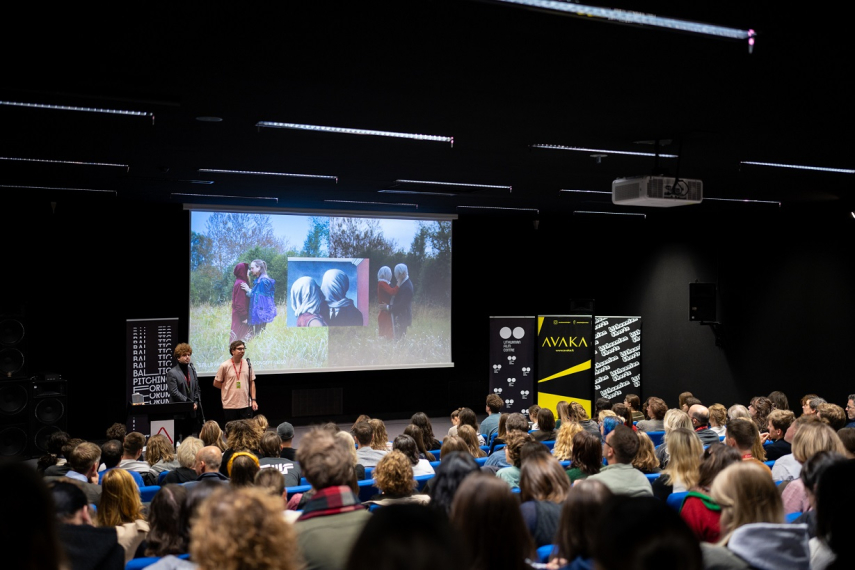
Our events began online (because of COVID conditions) but then developed to in-person events in Cambridge, London, and throughout the Baltic Sea region, many in partnership with our partner universities and some working with British embassies in the region and Baltic embassies in London. We will continue to develop this programme by:
- extending the range of subjects that we cover;
- Improving the quality and quantity of our book and publications output;
- improving media coverage of our events;
- extending our dialogue with UK and the Baltic Sea political circles;
- Generating sponsorship for our work from interested parties.
How do you assess the current state of UK engagement with the Baltic states, and where do you see opportunities for closer cooperation?
UK engagement with the Baltic states is good in some areas but could be improved in others. There has been particularly extensive interchange between the UK and Estonia because of the UK/NATO military base in Tapa. It is also pretty good with Latvia and Lithuania on general security matters.
We are keen to see wider economic and industrial co-operation notably in areas such as E-society and digital transformation, renewable energy, pharmaceuticals, and defence industrial cooperation. There is substantial potential for expansion in these fields. Better collaborations with Cambridge University, with its focus on innovation, would benefit the economies of both the UK and the Baltic Sea region.
It is interesting that the UK government is looking at Baltic countries when considering important future-facing policy matters such as digital identity in Estonia and the governance of immigration in Denmark.
The Programme is working to establish professorships in Baltic studies at Cambridge. Why is academic expertise on the region so important for future policymakers and leaders?
Academic expertise is important to assist future policy makers and leaders to fully understand the very complicated history and societies in the region which influence current behaviour.
That is the core reason why we seek to establish professorships in Baltic studies at Cambridge University. It is also the case is that professorial appointments are essential to developing academic strength, notably through supervising PhD students, teaching undergraduates and postgraduates and promoting effective research partnerships between Cambridge and the region.
Many people understand this argument fully and are ready to support this ambition. In the coming months we hope to make substantial progress in this field.
As the Baltic Geopolitics Programme continues to grow, what are your further goals? Especially, in terms of cooperation with Lithuanian institutions, NGOs including?
Our first five years have proved our original concept – that there is immense interest in, and support for, the importance and significance of doing this work on the Baltic Sea region.
Our challenge now is to accelerate our progress and so to extend more fully the activities that we undertake and their impact.
This certainly involves stronger collaboration with institutions in all the Baltic Sea countries – very much including Lithuania where we already have some powerful relationships – and with a wider range of NGOs.
The future is very optimistic, and we would greatly welcome engagement from anyone who is interested in helping to develop our work

Please enter your username and password.

2026 © The Baltic Times /Cookies Policy Privacy Policy