VILNIUS - The Baltic states and Poland will seek more European Union funding to secure the eastern border.
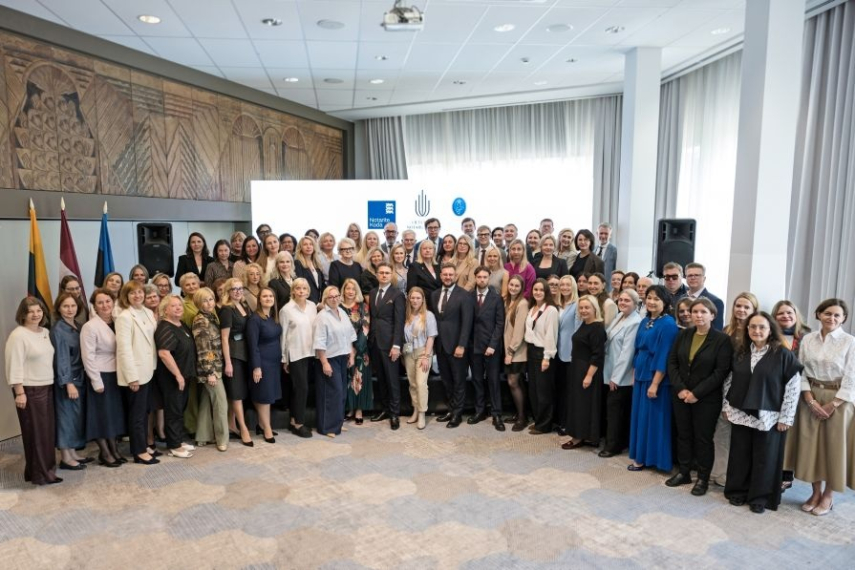
"We must stand together and speak with one voice to attract the attention of other European countries, making it clear that this is not just our national border, but the external border of the entire EU," Finance Minister Kristupas Vaitiekunas said in Vilnius on Friday during the signing of a joint declaration on strengthening the economic and financial resilience of the eastern border.
In the declaration, ministers responsible for finance and economy are calling for greater defence priority in the new European Union multiannual budget.
"We feel the pressure on our financial systems, fiscal systems and economies. Every euro contributed by other countries to the security of the eastern border helps share this financial and economic burden," Vaitiekunas said.
The countries also called for stable support for Ukraine, which they say is defending the rest of Europe from military aggression.
The finance ministers argued that the European Union is not sharing the defence funding burden equally, noting that countries on the eastern flank allocate significantly more to national defence.
Estonian Finance Minister Jurgen Ligi said the Baltic states are "carrying a heavier burden than other European nations" and stressed that European Union policy should better account for regional differences. Latvian Finance Minister Arvils Aseradens added that future challenges remain unpredictable, necessitating greater European Union financial flexibility.
While ministers expressed satisfaction with the European Union's vision to increase security funding for 2028-2034, they maintained that the bloc could do more.
Polish Finance and Economy Minister Andrzej Domanski urged all European Union member states to contribute more actively to European defence, emphasising that the Baltics and Poland are already paying a high economic price for the war in Ukraine.
"We expect all member states to become more involved in the process of ensuring European security. It must be clear to everyone that Europe needs new tools and new rules to strengthen our continent," the Polish minister said.
Vaitiekunas suggested there are opportunities to cut European Union spending in other areas and noted that new revenue sources, such as tax initiatives, are being considered.
According to the Ministry of Finance, the declaration highlights the negative impact of an aggressive Russia on regional economies, citing slower GDP growth, reduced trade flows and difficulties in attracting foreign direct investment.

Please enter your username and password.

2026 © The Baltic Times /Cookies Policy Privacy Policy