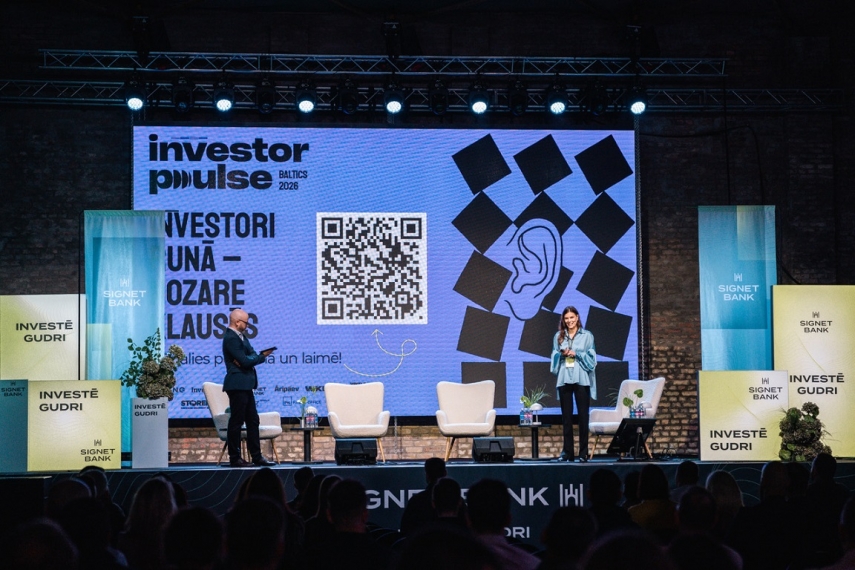
More than 35% of Latvia’s population actively uses artificial intelligence (AI) on a daily basis, primarily for personal purposes (28%), while 16% have used AI for work and 8% in education, according to data from Latvia’s Central Statistical Bureau for the past year. AI solutions are also being actively introduced in both private and public sector organisations - Eurostat data shows that currently one in five companies with more than ten employees uses AI. Compared to previous years, these figures are growing rapidly. At the same time, however, discussions are increasingly emerging about AI’s actual impact on business performance and efficiency. And here, the numbers look significantly different - only around 1% of companies believe AI is fully integrated and delivering substantial business value, according to a study by McKinsey & Company.
Only 23% of Companies See Positive Change from AI
The international report “Superagency in the Workplace” reveals that AI’s real impact on business performance remains relatively limited. So far, AI has not delivered significant return on investment at the organisational level. Executives across industries report that the benefits gained from AI adoption have been modest - only 19% of companies experienced revenue growth exceeding 5%, while another 39% saw moderate growth of up to 5%. Meanwhile, 36% reported no significant changes at all. Cost-related benefits have also been limited, with only 23% of companies seeing positive improvements. This suggests that many organisations are currently using AI without any real impact on business outcomes.
Costs, Experience and Risk Reduction
To ensure AI adoption is more than just following the hype, organisations must first evaluate what they actually want to achieve and define clear criteria for when AI investments can be considered successful. Most often, AI effectiveness is assessed in one of four categories: cost reduction, revenue growth, improved experience and engagement, and strategic development with risk mitigation.
Looking at cost reduction more closely, AI creates value when manual work can be reduced without compromising quality, when existing resources are used more efficiently, when the number of errors decreases, and when daily business, production, or operational processes become simpler and faster. However, if AI negatively affects quality, creates additional tasks for employees, or complicates workflows, its impact on costs may in fact become negative.
Helping Create New Products and Services
Many companies initially focus solely on efficiency gains when implementing AI, but it is equally important to evaluate its impact on revenue growth and business expansion. AI creates real value only when it helps products or services reach the market faster, enables entirely new services or products, creates new revenue streams, improves sales performance, and delivers added value to customers.
How Often Do Employees Need to Correct AI Mistakes?
Another important measure of AI effectiveness is the improvement of experience and engagement - both for employees and customers. Essentially, this reflects how people interact with technology. Value is created only when customer experience improves, employees become more productive and satisfied, and collaboration with partners becomes simpler and more efficient.
For example, if a company introduces an AI-powered customer service solution that automatically answers frequently asked questions and reduces the workload of customer support specialists while maintaining response quality, customer satisfaction increases. But if the tool provides inaccurate responses that employees constantly need to correct, it negatively impacts both staff and customers.
AI Without Clear Governance and Control
Finally, strategic development and risk mitigation must also be considered. AI creates value when it accelerates innovation and research, gives organisations a competitive advantage, improves operational stability, and ensures compliance with security requirements. However, if a company adopts AI without clear governance and oversight, the opposite effect may occur - including opaque or flawed decision-making, reputational risks, and even regulatory violations.
AI solutions are certainly here to stay. However, when making decisions about integrating them into everyday organisational processes, it is essential to carefully assess their real contribution instead of simply following the hype. One of the first questions we discuss with clients at Helmes Latvia when they want to implement AI solutions is: what specific challenges or problems are they trying to solve? This question often determines whether AI becomes a genuine driver of business growth or simply another technological experiment. The companies that succeed are not those that merely adopt AI, but those that integrate it purposefully into their processes, clearly define the value they expect, and continuously evaluate the results achieved.

Please enter your username and password.

2026 © The Baltic Times /Cookies Policy Privacy Policy