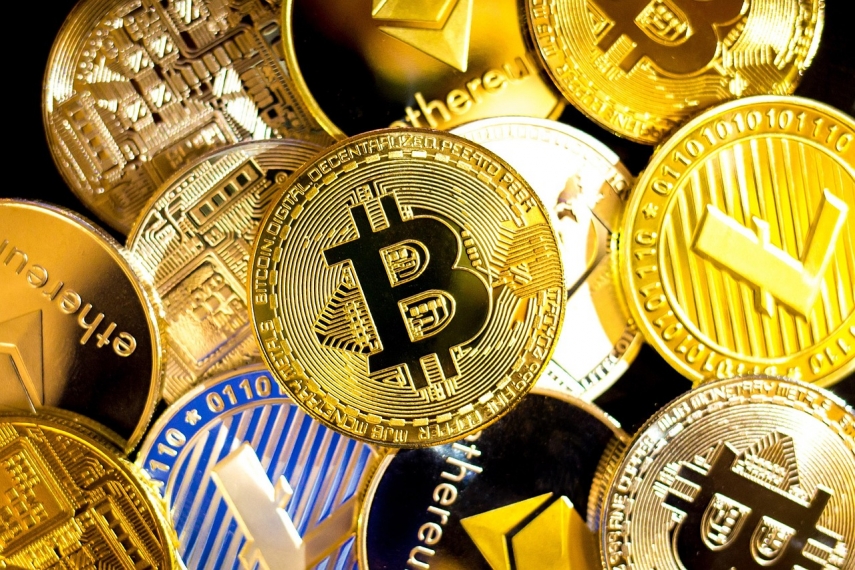
Photo: Photospirit from Pixabay
Many cryptocurrency enthusiasts debate whether Ripple's payment token represents a sound long-term investment.
The digital asset has generated passionate supporters and vocal critics, each camp presenting compelling arguments about its trajectory.
This comprehensive review examines the evidence on both sides, helping you form educated conclusions about this polarizing cryptocurrency's prospects.
Understanding Ripple's Payment Token: Core Concepts
Ripple Labs launched their digital currency in 2012, targeting a specific inefficiency: slow, expensive international bank transfers.
Rather than pursuing Bitcoin's decentralized philosophy, the developers focused exclusively on financial institution needs.
The project released 100 billion units at inception, with approximately 60 billion now available for public trading.
Current market prices hover between $2.40 and $3.00 as of 2025, securing a top-five ranking by total market capitalization.
This massive token supply creates unique challenges for price appreciation, requiring enormous capital inflows to achieve significant valuation increases.
Positive Indicators Supporting Growth Potential
1. Genuine Enterprise Integration
Unlike many blockchain projects that merely announce partnerships, Ripple has secured actual operational deployments.
Bank of America routes 100% of internal transactions through Ripple's infrastructure.
Santander integrated the technology into One Pay FX, enabling customers to send international payments within seconds.
These aren't pilot programs—they're production systems processing real transaction volumes for major financial institutions.
Some projections suggest Ripple could eventually facilitate 14% or more of SWIFT's $150 trillion annual payment flow.
Even capturing a fraction of that volume would generate substantial demand for payment settlement infrastructure.
Asset managers including BlackRock, VanEck, and Securitize reportedly work with Ripple on tokenization initiatives for traditional securities.
2. Legal Clouds Have Cleared
The SEC filed a lawsuit in 2020, claiming the token violated securities regulations.
This legal battle devastated prices and prevented mainstream adoption for years.
A federal judge ruled favorably for Ripple regarding retail sales in August 2024.
The SEC completely abandoned its appeal in early 2025 under new leadership sympathetic to digital assets.
Paul Atkins, the recently appointed SEC Chairman, strongly supports cryptocurrency innovation rather than aggressive enforcement actions.
Investors evaluating whether XRP has a sustainable future should recognize how regulatory approval fundamentally transforms the investment landscape.
More exchanges and institutions now feel comfortable supporting the asset without legal risk.
3. Technology Expands Into New Markets
The XRP Ledger achieved ISO 20022 compliance, aligning with the new global financial messaging standard that SWIFT adopts fully by November 2025.
This positions the technology for seamless banking infrastructure integration worldwide.
Ripple introduced Ripple USD, a dollar-backed stablecoin, expanding beyond the native token in late 2024.
The network processes up to 40,000 transactions per second, far exceeding Bitcoin and Ethereum's capabilities.
This speed makes the ledger attractive for tokenizing real-world assets like stocks, bonds, and property—a market potentially worth $400 trillion.
Significant Concerns Tempering Expectations
1. Underwhelming Historical Returns
The token launched thirteen years ago but peaked at just $3.84 in January 2018—over seven years past.
Despite major partnerships and regulatory victories, prices remain stuck near that 2018 high.
The asset crashed by 90% or more on three separate occasions, wiping out investors who purchased during hype cycles.
Current valuations barely touch previous peaks despite supposedly transformative developments in enterprise adoption and legal status.
This persistent resistance suggests fundamental demand limitations that positive news hasn't overcome.
2. Economic Reality Limits Massive Gains
Retail investors often dream of $100, $500, or $1,000 per token.
Basic mathematics exposes these scenarios as wildly unrealistic given the 60 billion circulating supply.
Reaching $100 requires a $6 trillion market cap—nearly four times Bitcoin's current valuation.
At $500, the market cap hits $30 trillion, approaching the entire U.S. stock market's value.
A $1,000 price implies $60 trillion, exceeding America's annual GDP and rivaling all global equities combined.
Monitoring XRP price movements reveals that achieving such valuations would require unprecedented capital inflows into a single digital asset.
Modest investments won't generate significant wealth unless the token somehow achieves sustained 42% annual growth for ten years—something historical data doesn't support.
3. Centralization Undermines Core Thesis
Market critics note the token frequently rallies on social media buzz rather than fundamental value drivers.
Ripple controls approximately 40 billion tokens (40% of total supply), releasing them gradually on predetermined schedules.
This corporate control contradicts cryptocurrency's decentralization philosophy and creates concentrated selling pressure.
Banks using Ripple's payment network don't necessarily need the native token—they can transfer fiat currencies directly.
The new Ripple USD stablecoin might actually reduce demand, as institutions prefer price-stable assets for settlements.
Expert Forecasts Show Dramatic Disagreement
Digital Coin Price predicts $3.08 minimum and $3.51 average by late 2025.
GOV Capital forecasts $4.78 within one year, while Changelly suggests $2.39 to $3.08 trading ranges throughout 2025.
Optimistic scenarios envision $7.17 by 2027 if institutional adoption accelerates.
However, bearish analysts warn of potential 90% crashes to $0.36 within five years. Because of this enormous prediction spread, smart investors regularly view XRP/USDT price trends to see if market reality aligns with these theoretical forecasts.
Setting Realistic Investment Goals
The cryptocurrency won't create millionaires from small positions unless investors entered at pennies years ago.
Investing $1,000 at $3 requires the token reaching $300 for $100,000 returns—representing 10,000% growth.
While the asset has gained 51,000% since 2012, that spans thirteen years of extreme volatility.
Reasonable expectations involve 2x to 3x returns during bull markets if adoption progresses favorably.
Planning retirement around exponential gains from a $3 cryptocurrency ignores mathematical constraints and performance history.
Concluding Perspective: Modest Evolution Ahead
The digital asset will likely continue serving niche cross-border payment functions.
ISO 20022 compliance and tokenization capabilities might generate legitimate institutional interest.
Regulatory clarity substantially improves conditions compared to years of SEC uncertainty.
However, expecting sudden moonshots to $100+ contradicts basic token economics and market realities.
The most probable outcome involves gradual growth with periodic volatility rather than explosive wealth creation.
The token probably won't disappear, but it equally won't generate overnight fortunes from modest allocations.
Treat this as a speculative position rather than a core investment holding.

Please enter your username and password.

2026 © The Baltic Times /Cookies Policy Privacy Policy