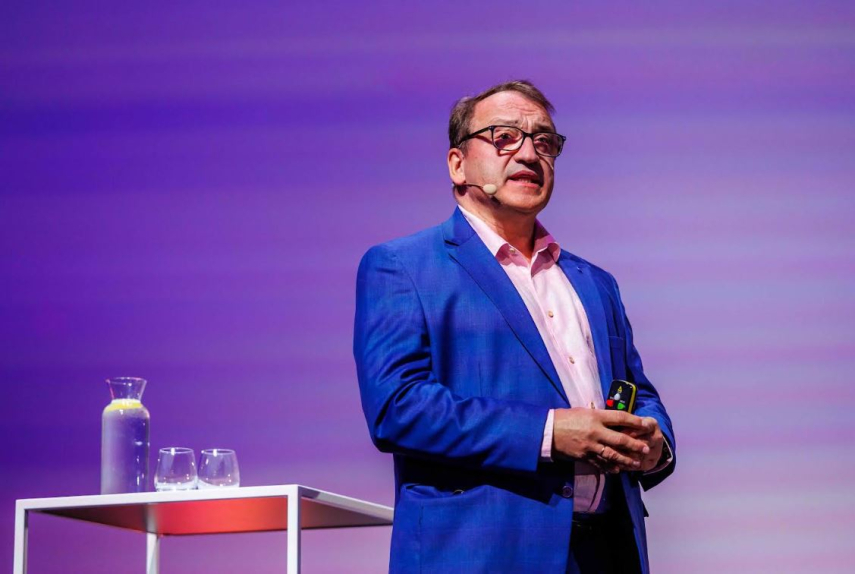

Photo: Tatjana Lasmane
Access to medicines and reliable supply chains go hand in hand. This spring's conflict in the Middle East served as another reminder of just how closely the two are connected, sending shockwaves through the global economy that are still being felt today. While the world's political heavyweights flex their muscles, manufacturers are left figuring out how to adapt to an increasingly unpredictable environment. And while supply disruptions in many industries are measured primarily in financial losses, the stakes in pharmaceuticals are considerably higher – people's health is on the line.
1. You Can't Switch Suppliers Overnight
The blockade of the Strait of Hormuz drew manufacturers into a complicated game of chess, forcing them to think several moves ahead. Although Grindeks does not directly purchase oil or liquefied natural gas, fluctuations in energy prices affect the production of solvents, reagents and intermediates in Europe, China and India – the markets from which we source our raw materials. Even materials manufactured in Germany may depend on supplies from other parts of the world. Predicting where and when the next disruption might hit can therefore feel rather like reading tea leaves.
At first glance, the solution seems obvious – if one supplier cannot fulfil an order, find another. In the pharmaceutical industry, however, things are rarely that simple. Pharmaceutical manufacturing is strictly regulated, and changing a raw material manufacturer requires quality testing, compliance assessments and, in many cases, amendments to medicinal product registration documentation. All of this takes time – precisely what is in short supply during a crisis.
The key is to act before problems arise. We aim to have at least two qualified manufacturers for every raw material, ensuring that an alternative is available when needed. As the conflict in the Middle East escalated, we promptly contacted our suppliers, reviewed raw material availability and delivery schedules, and built up additional stocks of certain critical materials. Deliveries can, of course, be delayed for reasons entirely unrelated to geopolitics, which is why risk assessment must be part of everyday operations rather than a reaction to the latest crisis. We are all in the same boat when it comes to global supply chains, and sometimes a single shock is enough to rock it.
2. The Cheapest Option Can Prove the Most Expensive
Traditionally, procurement decisions have placed considerable emphasis on securing the lowest price. The disruptions of recent years have shifted that balance. Price still matters, but supply reliability now deserves just as much attention. After all, a production shutdown can prove far more expensive than the savings made on raw materials. In pharmaceuticals, there is another factor in the equation – ensuring that patients can access the medicines they need.
Working with suppliers involves far more than agreeing on a price and delivery date. We need to understand how reliable their own manufacturing operations are, where they source their raw materials and how vulnerable their transport routes may be. The better we understand the entire supply chain, the fewer unpleasant surprises we are likely to face.
Fortunately, the pharmaceutical industry has certain advantages in this respect. European pharmaceutical manufacturers are required to comply with Good Manufacturing Practice (GMP) standards, which impose strict quality controls, including the assessment and qualification of raw material suppliers. Supplier audits, quality documentation and testing help identify potential risks early and screen out partners that fail to meet the required standards. These safeguards cannot shield us from geopolitical crises, but they do provide a much clearer picture of who we are buying from and what we are buying.
3. The Price of Dependence on Imports
Crises, for all the costs they bring, have one useful quality – they quickly expose the weakest links in a system. The events in the Strait of Hormuz have once again highlighted a problem the pharmaceutical industry has been discussing for years.
Data from the CHESSMEN project (Coordination and Harmonisation of the Existing Systems against Shortages of Medicines – European Network), cited by the European Commission, show that more than half of reported medicine shortages in the European Union and European Economic Area are linked to manufacturing problems, including shortages of active pharmaceutical ingredients.¹
A substantial share of the active ingredients and intermediates required for medicine production is manufactured outside the EU, primarily in Asia. Lower production costs have long made this an attractive option. Yet the other side of the coin is becoming increasingly apparent – Europe's dependence on lengthy supply routes and a relatively limited number of manufacturers.
Europe has recognised the problem and is looking for ways to address it. One such initiative is the Critical Medicines Act, which aims to strengthen the production of critical medicines and their active ingredients within the EU while diversifying supply sources.
However, it would be unrealistic to imagine that pharmaceutical manufacturing can simply be brought back to Europe overnight. Raw material production requires substantial capital investment, and European companies must compete with manufacturers in countries where energy, labour and other operating costs are significantly lower. Expanding production capacity, like almost everything in pharmaceutical manufacturing, takes time and comes at a considerable cost.
Europe must therefore find a way to make the production of critical medicines and raw materials economically viable in the long term. Calls to manufacture more products locally will achieve little unless companies can remain cost-competitive and generate a return on their investments. This requires predictable investment conditions, opportunities to modernise production facilities and sufficiently stable demand.
Latvia, for its part, does not have to start from scratch. We already have pharmaceutical manufacturing expertise, qualified specialists and established infrastructure. But simply listing these strengths will not get us very far. What we need is a focused industrial policy that enables us to build on them.
We cannot control global geopolitical developments, and it would be naive to expect international supply chains to run smoothly from now on. What we can do is invest in our own manufacturing capacity and reduce our exposure to external shocks.
Yes, this will require investment, cooperation and, at times, choosing something other than the cheapest available option. But can we really afford not to?
Literature:
1 Summarising evidence supporting the legislative proposal laying a framework for strengthening the availability and security of supply of critical medicinal products as well as the availability of, and accessibility of, medicines of common interest and amending Regulation (EU) 2024/795 EUR-Lex - 52025SC0263 - EN - EUR-Lex

Please enter your username and password.


2026 © The Baltic Times /Cookies Policy Privacy Policy