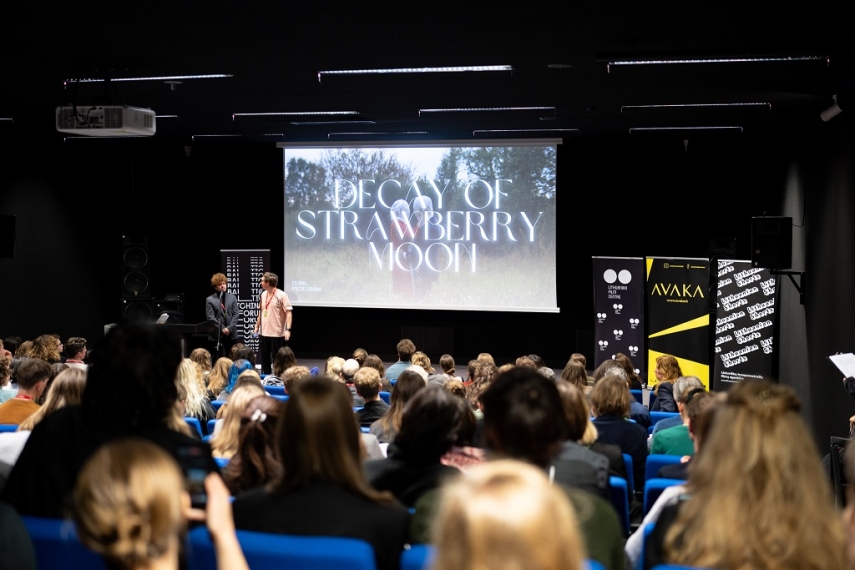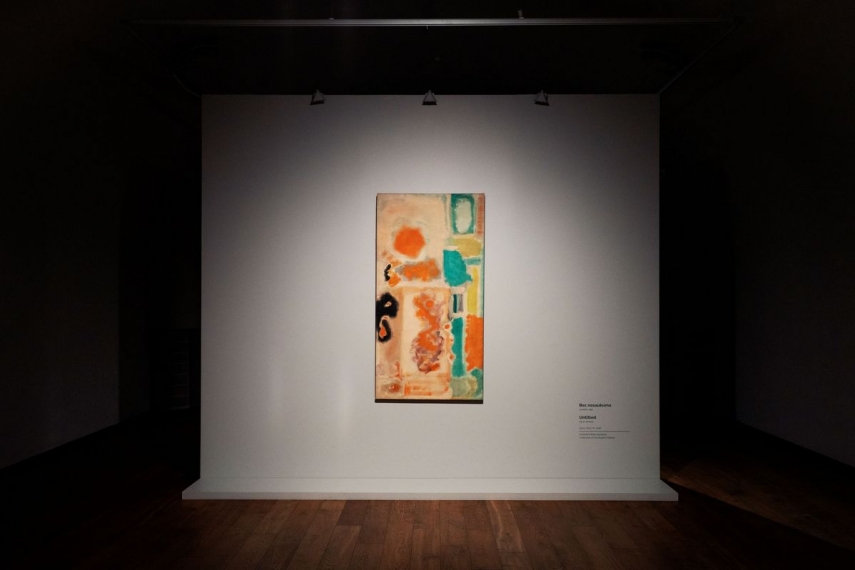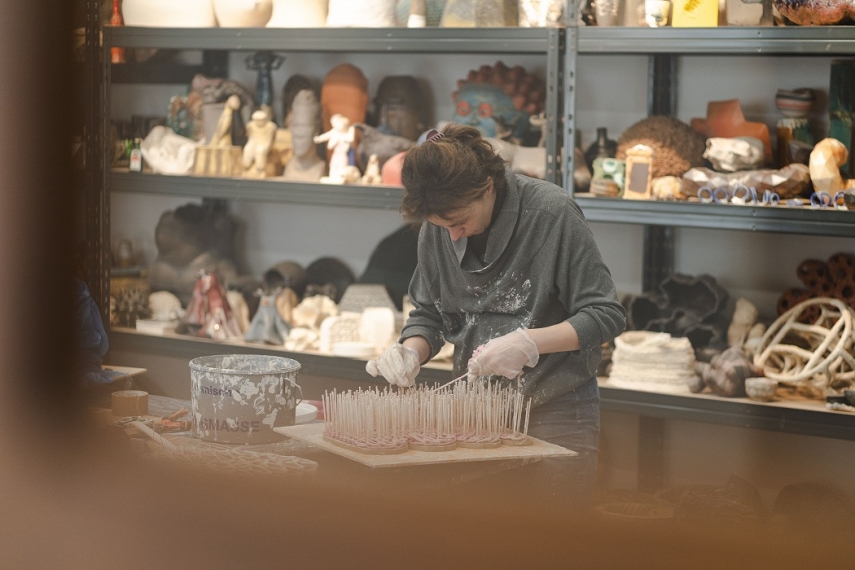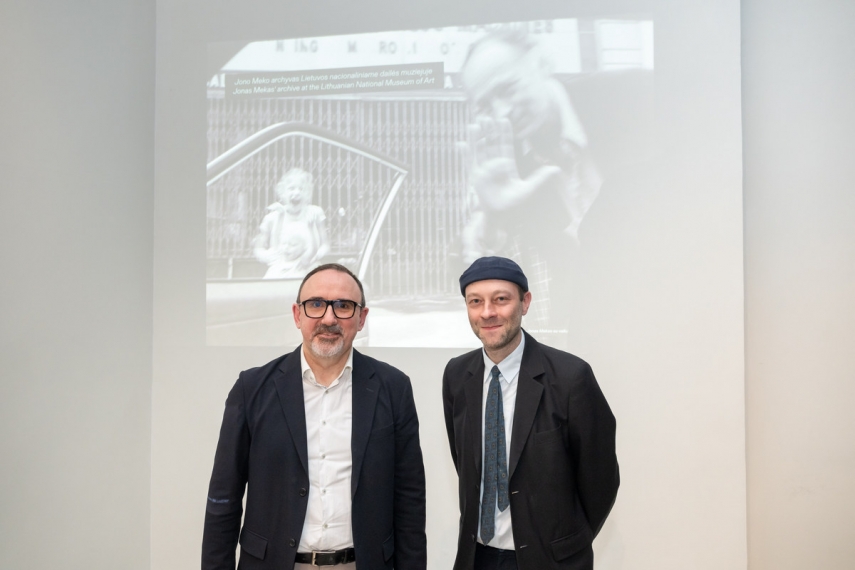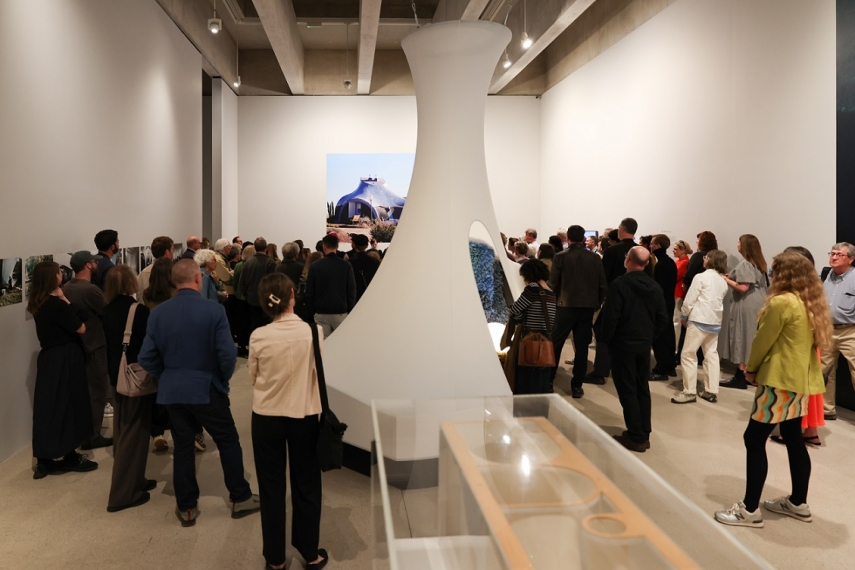
Photo: Aleksandra Kasuba- Shelters for the Senses. Exhibition at Tate St Ives (by Eglė Marija Želvytė-LNMA)
Tate St Ives opened Shelters for the Senses, an exhibition of the Lithuanian-American artist Aleksandra Fledžinskaitė-Kašubienė (Kasuba, 1923–2019), the first UK comprehensive overview of the artist’s journey. The exhibition is curated by Tate St Ives Director Anne Barlow in collaboration with the LNMA curator, senior researcher Elona Lubytė. On display is the artwork donated to Lithuania by the artist and kept by the LNMA.
“For us, the exhibition at the renowned Tate St Ives is not only an important international event in collaboration with the Tate, one of the forefront global art institutions, but a powerful re-entry of Aleksandra Kasuba into the global art discourse. Today her visionary artistic idiom, which brings together art, science and technologies, is increasingly resonant and even prophetic: the exhibition challenges us to rediscover modernity, our relationship with the environment and artist’s responsibility in contemporary world,” says Dr Arūnas Gelūnas, director general of the LNMA.
“With our exhibitions team at Tate St Ives, and of course Elona Lubytė, and Ieva Mazūraitė-Novickienė, along with Arūnas Gelūnas and Lolita Jablonskienė, who were leading on and supporting this vision, we developed an idea for the exhibition that revolves around Spectrum: An Afterthought (1975/2014) and that groups her work into different thematics that people can experience as they move through the show. From the initial idea of collaborating on how we conceived the exhibition, both thematically and structurally, it has been very much a shared process,” Tate St Ives Director Anne Barlow and curator of the exhibition is happy with the joint work.
The legacy bridging the shores of the Atlantic Ocean
“I believe that Aleksandra who trusted our museum with the safeguarding and promotion of her legacy, would be thrilled by the exhibition here at Tate St Ives. Her artwork, on its first UK museum presentation, finds itself close to its stimulus: nature and loads of prehistoric monuments from the Neolithic period of St Ives area,” Dr Elona Lubytė says.
In 1944, during the Second World War, Kasuba was forced to flee her native Lithuania. After a stay in Germany at the Displaced Persons Camp, she crossed the Atlantic in 1947 emigrating to the United States, where she first settled in New York, moving to New Mexico by the end of her life.
Kasuba was a visionary artist inspired by natural forms and shapes of vegetation, rocks, shells and marine life. Visitors to the Tate St Ives, overlooking the Atlantic Ocean, can be expected to be interested in work by the Lithuanian artist. According to Lubytė, Aleksandra gained “inspiration for one of her most celebrated environments, the Live-In Environment (1971) during her 1970 visit to Ireland, observing the prehistoric monuments situated on the shores of the Celtic Sea, opposite St Ives.” “The exhibition presents a reconstruction of one of the six abodes of the Live-In Environment together with the American textile artist Urban Jupena’s hand-knotted rug originally demonstrated in the Kašubas’s house in Manhattan,” says the art critic.
The exhibition spans seven decades of work by Aleksandra from her early paintings and mosaics to her later public artworks, architectural designs and innovative spatial environments wherein she wanted to forge a connection between humanity and nature, proposing a different mode of life.
Kasuba’s art travelling the continents
According to Lubytė, the stronger resonance of Kasuba’s art is witnessed by yet another exhibition opening at the Leeum Museum of Art in Seoul, Inside Other Spaces. Environments by Women Artists 1956–1976, curators Andrea Lissoni, Marina Pugliese. It includes a reconstructed, in cooperation with the LNMA, Kasuba’s colourful environment Spectral Passage (1975).
Shelters for the Senses will run at the Tate St Ives until 4 October, later on, it will publicize the name of Kasuba in other museums. A catalogue presenting the art of Kasuba, developed by the Tate publishing division in collaboration with the LNMA, will accompany the exhibition. The authors of the catalogue work to establish the links of Kasuba’s art to other artistic practices, and to place her into the context of the movements and ideas relevant for her time.
A symposium dedicated to the art by Aleksandra Kasuba will be held on 30 May at the Tate Modern in London. It is being organized by the Hyundai Tate Research Centre: Transnational, the Tate research centre organizing international symposia, seminars and other events with a mission of expanding stories of art and exploration of the movement of artists and ideas transculturally.

Please enter your username and password.

2026 © The Baltic Times /Cookies Policy Privacy Policy