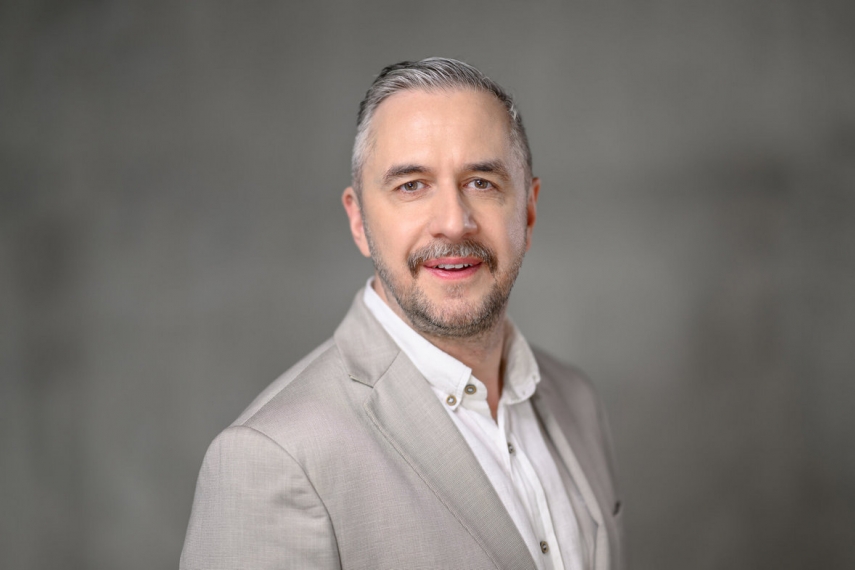
Photo: Mykolas Kulikauskas
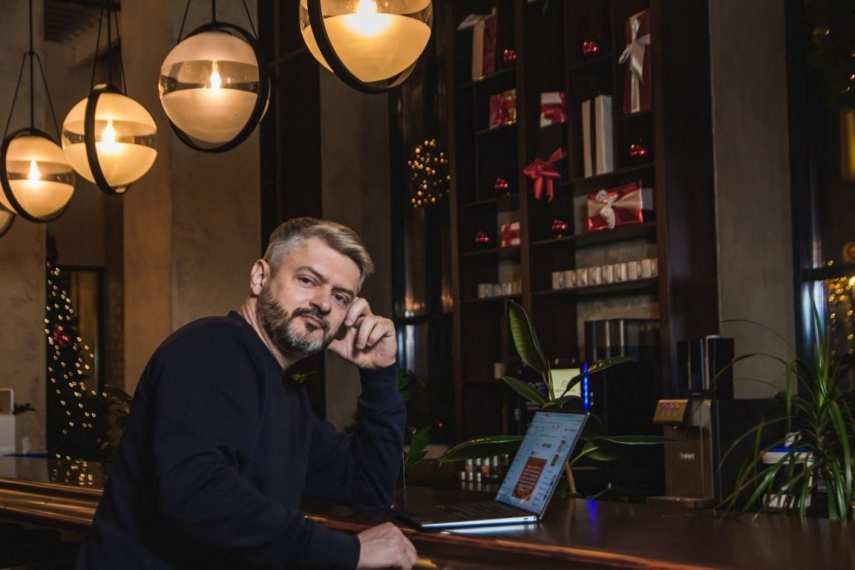
“My goal is to be a tree under whose shade young people can grow,” says Mykolas Kulikauskas, a graduate of Vytautas Magnus University (VMU), who now works at the Kaunas Archdiocese Youth Centre (KAJC), where his daily life revolves around supporting people, building community, and reflecting on questions of meaning.
In our interview, Mykolas openly discusses his journey, which began with an unexpected choice of studies, but evolved into a deliberate decision to dedicate his life to others. He also reflects on studies as a personal transformation, on communities that not only bring people together, but also help them grow, on experiences that shape a sense of responsibility, and on joy as a compass for direction in life.
Valuable knowledge and true calling
Mykolas ended up at the VMU Faculty of Catholic Theology (FCT) unexpectedly. He had been considering psychology, but personal connections led him towards theology.
“At the time, the father of a girl I liked was a teacher in theology. I knew him a little from children’s camps where we had worked together. One time, we were joking around, and she jokingly suggested that I apply for theology and attend her father’s lectures. So I came to these studies through humour, through a joke, completely unexpectedly, but now I understand that it was one of the most important decisions of my life,” the graduate recalls.
According to him, theology is a philosophy that does not reject the existence of God, and from the very beginning the subject drew him in. However, whenever he had some free time, Mykolas would also attend other lectures.
“After my own lectures, if I had nothing else to do, I would attend similar lectures for Master’s students, and I would also join the psychology students. The VMU timetable is publicly available, so it’s easy to see what lectures are taking place and where. So I would simply turn up and ask the teacher whether I could stay. Not once did anyone say ‘no’,” Mykolas says with a smile.
After two academic years, during which he studied theology alongside a minor in pedagogy, Mykolas eventually transferred to Religious Pedagogy. The decision was prompted by the realisation that teaching and working with children were his true calling.
“I received an invitation to contribute to the establishment of a school, and at the same time I was also questioning whether theology really was the right field of study for me... As those two things built up, I decided to try changing my studies – all the more so because a Bachelor’s degree in theology lasts longer than usual, five years, and although I enjoyed the knowledge I gained, I wanted to put it into practice,” the graduate explains his decision.
Nevertheless, Mykolas says that the greatest value of his studies at the Faculty of Catholic Theology was the personal change they brought about. “What these studies gave me was the realisation that I like the person I’ve become. Sometimes people like the subject, or the knowledge they’ve gained, but for me, it was the person I’ve become,” the graduate says.
Community and warm relationships
Speaking about the FCT community, Mykolas says that it is not large in number, but that is precisely what makes it easy to get to know all its members and to build personal relationships with teachers.
“In our first years, we got hints from the teachers themselves that it would be nice to have discussions, to talk. They even seemed disappointed if students didn’t ask any additional questions. But as soon as someone showed a deeper interest in the subject they were teaching, they lit up,” Mykolas says, recalling several occasions when discussions moved beyond the classroom and into teachers’ homes.
“Some of my best memories are from the times when the whole course, a dozen or so of us, would sit around a campfire in a teacher’s garden, cook food, joke around, and talk about life and philosophy. That connection has remained strong – even now, I could easily call most of my teachers and ask for advice. In fact, I’ve done that more than once,” Mykolas admits.
The graduate also singles out the dogmatic theology course taught by FCT Dean Benas Ulevičius as particularly memorable: “He had an incredible way of presenting the subject. In the best possible sense, it just blew your mind. I remember thinking, give me more, more of this kind of thing – it feeds me, not only in terms of knowledge, but spiritually too.”
According to Mykolas, the study environment at the FCT is shaped by respect between students and teachers, and by clear moral reference points. Here, studies are understood as more than mere theory – theology acquires meaning only when it is put into practice in a person’s life.
This approach to theology studies also led to Mykolas being one of the youngest students in his course, the only one who enrolled straight after school. “Everyone else in the course was older and had already achieved something in their lives – some even had their own businesses, some worked for a newspaper, and I also had a few coursemates who were over 50. They were genuinely deep, interesting people who had realised that there was more to life and wanted to figure out exactly what that was,” the graduate says.
A teacher beyond the classroom
Describing teaching and guiding others as his true calling, Mykolas says that he once put up a large sheet of paper on his wall bearing the words: “My goal is to be the best teacher in Lithuania.”
He insists that he was completely serious about that goal: “Whatever that might mean, whatever competences or qualifications I might need to gain, whatever fruits of my labour I might need to reap, my dream was to be the best teacher in the country. So what changed? I was inspired to care about it on an even bigger scale.”
After working for almost five years, first as a natural science teacher and later as a religion teacher, Mykolas quit his job at school and now serves as Academic Pastoral Care and Project Coordinator at the Kaunas Archdiocese Youth Centre (KAJC). It was volunteering that brought him to KAJC.
“In the past, KAJC was known for its large-scale events, attended by hundreds of people. I learned about the opportunity to join them and to contribute to other activities of the centre from social media and from friends who were already involved. It was only natural that I started volunteering too,” Mykolas says.
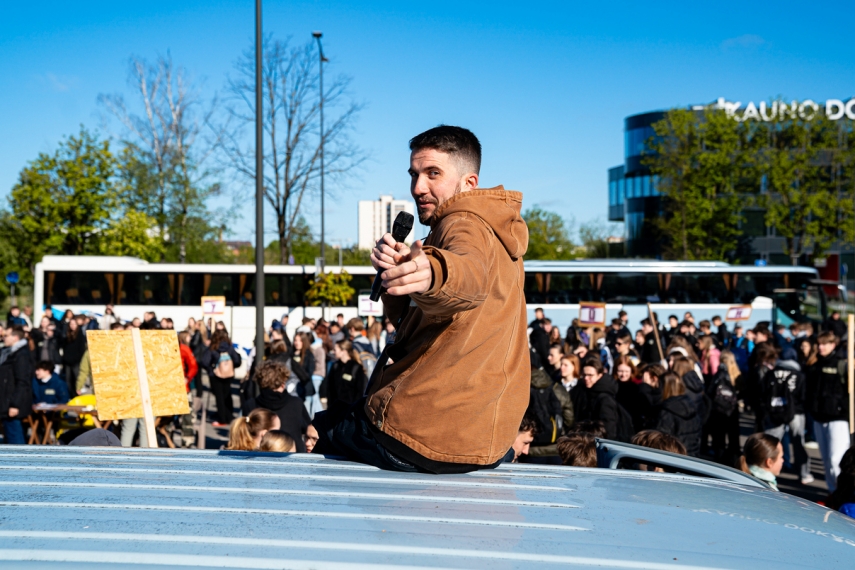
He describes himself as a man of ideas, so, driven by a sense of purpose, he volunteered at KAJC almost as if it were a full-time job, though unpaid, and also contributed to organising various trips. As Mykolas explains, he used to go on these trips himself, and then began helping others to travel to various pilgrimages, for example New Year community gatherings at a monastery in France or in Switzerland, World Youth Day in Lisbon, or conferences in the United States.
“I’ve spent the night in a meadow with the Pope and a million young people from all over the world. They were wonderful experiences – just the very fact of being together with thousands of like-minded people... It’s only here in Lithuania that all of this has died down somewhat, and it’s sad that the fire is not burning as brightly – because the atmosphere created by all these values, which I learned both in my studies and through faith in practice and in life, is something incredible,” Mykolas says.
The realisation that such initiatives and experiences could also be organised in Lithuania came quite unexpectedly. While visiting a friend, he heard her young son singing a children’s hymn with the words, “It's me who builds community. Roll over the ocean, roll over the sea, go into your parts and build community,” and he realised that he could also bring together a community of believers in his own country.
“That’s why I don’t really like travelling – everything I need, I already have here. I brought back ideas from my travels, started doing a lot of voluntary work around them, took on leadership roles too, and naturally, since I already had a great deal of experience and had put in the work, I was offered a job coordinating these activities,” Mykolas says about the offer to work at KAJC.
Not in breadth, but in depth
When asked how KAJC operates and what it does, Mykolas says that the centre’s current vision is to be like a greenhouse in which all parishes could thrive – and there are close to 100 of them in the Kaunas Archdiocese. “My job, and the job of the entire centre, is not to work directly with young people, but with the people who work with them,” he says.
Having previously worked in Dainava Parish himself, Mykolas explains that the goal of those working in parishes is to ensure that every young person hears that they matter, and that what they do is meaningful. “And when they start saying that they’d rather spend time here, in the parish, than at home in front of a computer, words like that are really heart-warming. The meaning of this work truly becomes clear. But if you feel called to do it on a larger scale, you have to follow that calling,” Mykolas says, explaining that, led by this calling, he moved from working with individual young people to supporting those who work with them. “I see great meaning in that,” he says.
“When you reach a certain point in life, you want to take in all the pain and evil, to absorb carbon dioxide like a tree, and to give out oxygen – that is, goodness. My job is to take in as many difficulties and irregularities as possible, to absorb people’s experiences, and to show them how meaningful their work is,” Mykolas says.
He believes that young people come to church for specific services, such as receiving First Communion and the sacrament of Confirmation, but stay for something else – for the care they receive.
“For example, in my parish too, young people stayed and began volunteering because someone showed them care – but the kind that revived them – first by noticing them, listening to them, and then by giving them a sense of meaning and an understanding that they are needed here. I think faith carries that message that you are accepted just as you are – that you don't have to be ‘someone special’ to matter, that you have a place under the sun, and that your life is meaningful,” he says.
Trends and unity
When asked about trends in the young people who have joined the community in recent years, Mykolas says that activities and initiatives are now structured in such a way that the priority is not so much to try to attract new people, but to work more deeply with those who are already part of the community.
“We are focusing less on ‘winning’ people over, and more on ‘building’ them up, so that they can grow in their calling, in their competence, and discover something in life. So we are planning a season with deeper content, and we will nurture those who want to care both for those who are newly arriving and for those who have not yet been reached,” he says about KAJC’s planned activities.
Young people studying in Kaunas are also united by Kaunas Academic Pastoral Care, to the coordination of which Mykolas also contributes. “The main mission of both VMU and other academic pastoral care communities is to care for the spiritual needs of students, to celebrate Mass, to provide students and staff with spiritual accompaniment, and to listen to them,” he says, adding that he is glad that the academic pastoral care community uniting the whole of Kaunas is one shared community, no longer divided among itself – students from different universities and colleges, and even graduates who have already completed their studies, come together for various activities and initiatives, or simply to spend time together.
“These people simply want the opportunity to grow in their faith, in love for their neighbour, and in their skills and competence. They want to understand how they can contribute to making the world a better place,” he maintains.
Mykolas says that he and his friends and like-minded people sometimes joke that faith is a kind of pyramid scheme. “After all, what Jesus did was start with twelve people – the apostles – and now there are more than a billion Catholics. So isn’t that a pyramid scheme?” he laughs, adding that the principle of this ‘scheme’ is actually a good one – to spread joy in the world.
About purpose and life choices
“Of all the Church feasts, my favourite is the Solemnity of Christ the King, celebrated a week before Advent. Because what people need most in life is direction, and Christ the King is precisely what provides it,” says Mykolas, adding that people can do anything if they know why they are doing it.
“I think the whole world becomes a sadder place when people lose their sense of direction and no longer know why they are here,” he says. So, when asked what advice he would give to a young person still choosing their path and field of study, Mykolas replies that joy can serve as a compass.
“But joy is not pleasure – it's the result of hard work. It's worth asking yourself what feelings arise when you think about your studies, about the kind of work you will do after your studies. And if you feel even a little bit of peace, then give it a try. Seek joy, not pleasure, because pleasure leaves no room for the pain that leads to what is right and valuable,” he advises.
Mykolas recalls that the happiest moments in his life were those to which sincere effort had led him.
“When I look back, the hardest moments in my life were when I thought only about myself – when I was pursuing a career and trying to earn money. And the best moments were those when things were hardest for me – when I was anxious about an event, a camp, or another project where I was volunteering. Yet it was precisely in those moments that I felt alive and joyful,” he says.

Please enter your username and password.

2026 © The Baltic Times /Cookies Policy Privacy Policy