<!--
/* Style Definitions */
p.MsoNormal, li.MsoNormal, div.MsoNormal
{mso-style-parent:"";
margin:0in;
margin-bottom:.0001pt;
mso-pagination:widow-orphan;
font-size:12.0pt;
font-family:"Times New Roman";
mso-fareast-font-family:"Times New Roman";
mso-fareast-language:LV;}
p.ecmsonormal, li.ecmsonormal, div.ecmsonormal
{mso-style-name:ec_msonormal;
mso-margin-top-alt:auto;
margin-right:0in;
mso-margin-bottom-alt:auto;
margin-left:0in;
mso-pagination:widow-orphan;
font-size:12.0pt;
font-family:"Times New Roman";
mso-fareast-font-family:"Times New Roman";}
@page Section1
{size:8.5in 11.0in;
margin:1.0in 1.25in 1.0in 1.25in;
mso-header-margin:.5in;
mso-footer-margin:.5in;
mso-paper-source:0;}
div.Section1
{page:Section1;}
-->
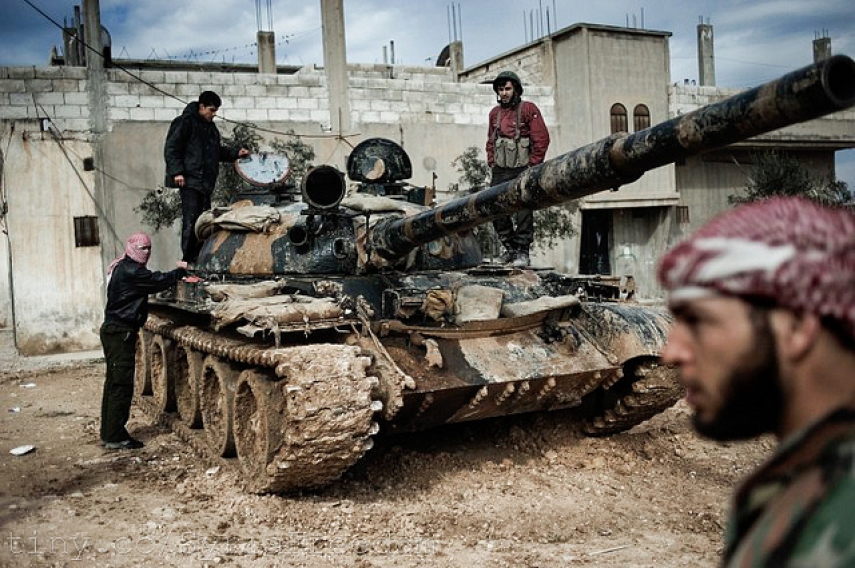
TALLINN- Estonian troops together with the Afghan security
forces and British units have attacked Taliban positions in the central part of
the southern Helmand province.
The battle that began during the operation which on the morning of Feb.
14, lasted into the night and continued to the next morning until the opponent's
retreat, said military spokespeople in Tallinn. The Estonian, British and
Afghan troops suffered no casualties whereas the Taliban units sustained losses
in both personnel and armaments.
The Taliban positions were also attacked by British combat aircraft and
helicopters as well as the Estonian mortar unit. Taliban fighters were forced
to abandon their positions and the areas under their control were cleared.
Estonian units are serving in southern Afghanistan as part of the
British-led Task Force Helmand. Currently almost 150 Estonian military are
stationed in Afghanistan.