Photo: European Parliament
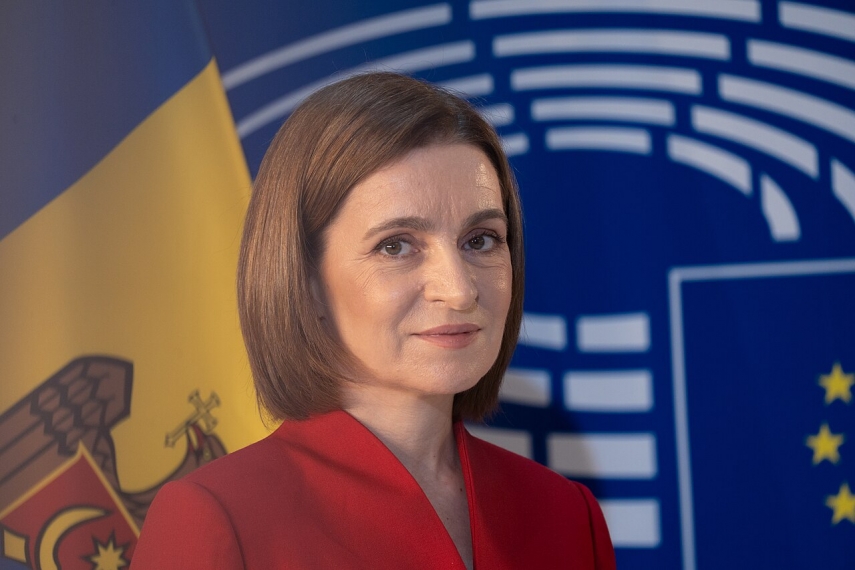
RIGA - In most EU member states, Russia's interference in electoral processes will not be as "direct and brutal" as in Moldova, so it will be harder for citizens to detect it and the dangers will not be immediately apparent, according to Moldovan President Maia Sandu, who is visiting Latvia this week.
Sandu noted that Moldova has been facing activities involving fake social network accounts used to amplify and spread disinformation, various algorithms, and funding for these activities. The Moldovan president stressed that the use of fake accounts to disseminate information is not freedom of expression and must be dealt with firmly.
Sandu said that in Moldova, public authorities and independent media have been working for 12 months before the 2025 elections to understand the activities, financing, and command centers of disinformation networks and to make this information public. She stressed that not only public authorities but also independent media and civil society should be involved in this work. Otherwise, citizens may feel that "the authorities are overreacting".
The Moldovan president concluded that the use of artificial intelligence to manipulate information, which makes it hard to distinguish between true and false information, makes the fight against disinformation increasingly difficult.
Latvian President Edgars Rinkevics added that in the fight against Russian disinformation, Europe's legal opinion and judiciary, including the Venice Commission, as well as security services and election commissions, need to keep up with the times.
Rinkevics noted that elections will be different from country to country, as Russia is learning and employing new influence tactics in each election. He gave the example of Romania, where social networks, including TikTok, and the buying of accounts played a major role, and the situation reached the point where the Constitutional Court had to intervene.
According to Rinkevics, Latvia has taken a number of concrete steps: the Criminal Law includes provisions on the use of deepfakes, and work has been done to provide an algorithm for the use of artificial intelligence in the context of elections. The president also highlighted the problem of illegal financing of elections, including through cryptocurrencies.

Please enter your username and password.


2026 © The Baltic Times /Cookies Policy Privacy Policy