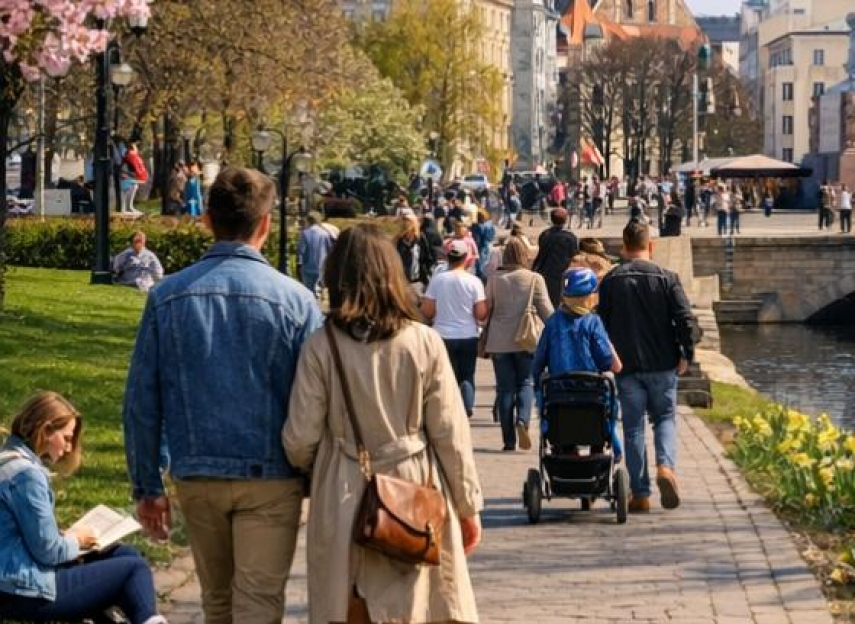

Photo: Gerd Altmann from Pixabay
Thanks to globalisation, many people have turned to immigration in search of better job opportunities and a higher quality of life. And the Baltic States have often felt the pinch of this, as many of their skilled workers have preferred to move to Western Europe in search of the same perks. However, the tides seem to have turned in their favour in the past decade. As other countries continue to witness the loss of skilled labour, the Baltics are celebrating the homecoming of many of their skilled workers. We look at the factors influencing this change and what this could mean for the Baltic States.
Why Are Workers Coming Home?
If you have ever stood in an airport and watched planes fly in and out, you might have noticed the joy that comes each time airport staff see planes landing. To them, it is a homecoming that allows them to see their colleagues once again, having waved them off hours, days, or weeks earlier. And to aircraft technicians, this signals an opportunity to fine-tune the aircraft. You can learn more here about how they do this with the help of MRO services, such as Magnetic Engines, which excel in performance restoration. But even as these airline staff scurry to work on the planes or receive the passengers, you can tell that a calm has settled in the air.
The same calm is becoming evident in the Baltic States as more skilled workers choose to come home. You see, between 2013 and 2019 alone, these states recorded an emigration of approximately 484,000 people. This emigration had a significant negative impact on local economies, leading to labour shortages, particularly in healthcare and ICT.
Now, these same states are recording a migration turnaround, where skilled workers are choosing to come home. Take Lithuania, for example. As more of its citizens choose to return home rather than leave, it has recorded positive net migration in the past few years. For instance, in 2024, 18,934 Lithuanian citizens returned home while only 9,486 left. This same trend has been seen across the Baltic States.
So, why are their skilled workers coming back?
Economic Growth
It is no secret that the Baltic States have been doing quite well economically, which has translated into rising wages. And seeing as these salary increases are now narrowing the gap between the Baltics and Western Europe, workers are choosing to come home.
Better Work Conditions
The work culture in the Baltics has changed. Rather than adopting authoritarian leadership styles with rigid work structures, companies have now moved towards flexible work arrangements and greater innovation. Employees now feel appreciated, which has encouraged more people to come home and enjoy similar working conditions.
Global Connectivity
While many skilled workers are moving back to the Baltics to work within the Baltic States, some are taking advantage of remote work opportunities. They can move back home while remaining employed by international firms, thus hitting two birds with one stone.
Family Ties
As they say, east or west, home is best. And for many workers moving back home, this urge stems from a desire to reconnect with loved ones and their culture. Much of this also has to do with the global loneliness epidemic, in which more people are seeking positive connections within familiar social networks.
Policy Changes
In a bid to encourage skilled workers to remain in the Baltics for the good of local economies, governments have introduced several incentives. These same strategies have appealed to skilled workers living abroad who have heeded the calls.

Please enter your username and password.

2026 © The Baltic Times /Cookies Policy Privacy Policy