TALLINN - Early Wednesday morning, the Council of the European Union and the European Parliament reached a preliminary agreement on the European Climate Law, setting an interim target for 2040 to reduce greenhouse gas emissions by 90 percent, provided that necessary preconditions are met.
The agreement aligns with Estonia's position.
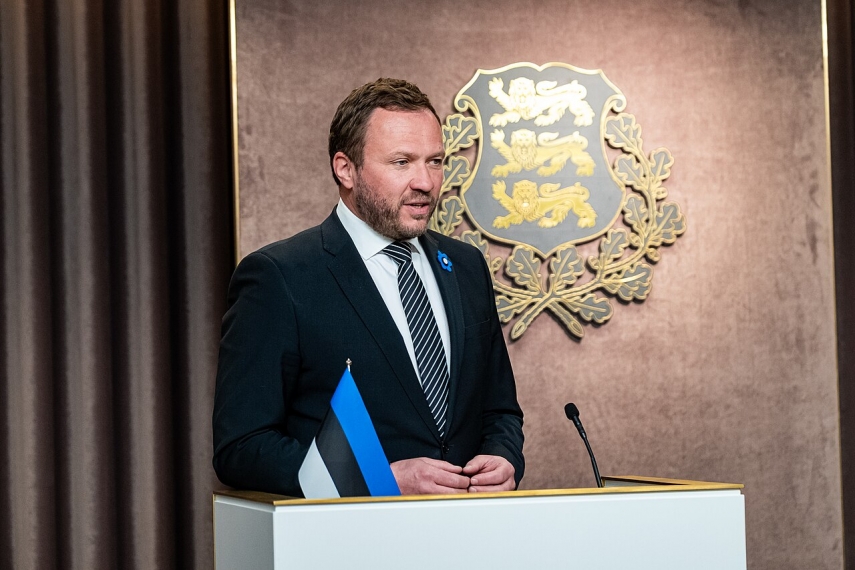
The agreement remains very similar to what was agreed upon in the Environment Council in November. "Both the European Parliament and the Council see that European climate policy and economic competitiveness go hand in hand-curbing climate change simultaneously encourages innovation and investment in clean technologies, supporting the sustainability and competitiveness of the European economy," said Minister of Energy and Environment Andres Sutt.
Compared to the previous version, the text of the agreement clarifies flexibility mechanisms, including the use of internationally traded greenhouse gas units (carbon credits), the role of carbon capture technologies in the emissions trading system, and flexibility between sectors. These changes will apply after 2030.
One focus of the discussions was the use of internationally traded greenhouse gas units, meaning emission reductions achieved through renewable energy or other carbon-reducing projects outside the European Union. It was ultimately agreed that from 2036, international carbon credits can be used to meet the 2040 target, up to a limit of five percent of the EU's 1990 net emissions.
"While the European Union's climate framework until 2030 has been effective but relatively rigid, the long-term perspective is more mature and flexible. Ensuring competitiveness, simplification, and social justice have been guiding principles from the outset, and this creates a good foundation for practical action. Among other things, the review mechanism was strengthened to regularly assess progress in achieving competitiveness, energy price, and emission reduction targets," Minister Sutt explained.
In addition to the long-term climate policy, the plan to postpone the emissions trading system for road transport and buildings (ETS2) by one year was reaffirmed, with a new launch date in 2028.
The European Union Climate Law, adopted in 2021, is the legal basis for the EU's long-term climate policy. The regulation sets the goal of achieving climate neutrality by 2050 and reducing emissions by at least 55 percent by 2030. The interim target for 2040 will now be added to it.
As the next step, the European Parliament and the Council must formally approve the agreement.

Please enter your username and password.

2026 © The Baltic Times /Cookies Policy Privacy Policy