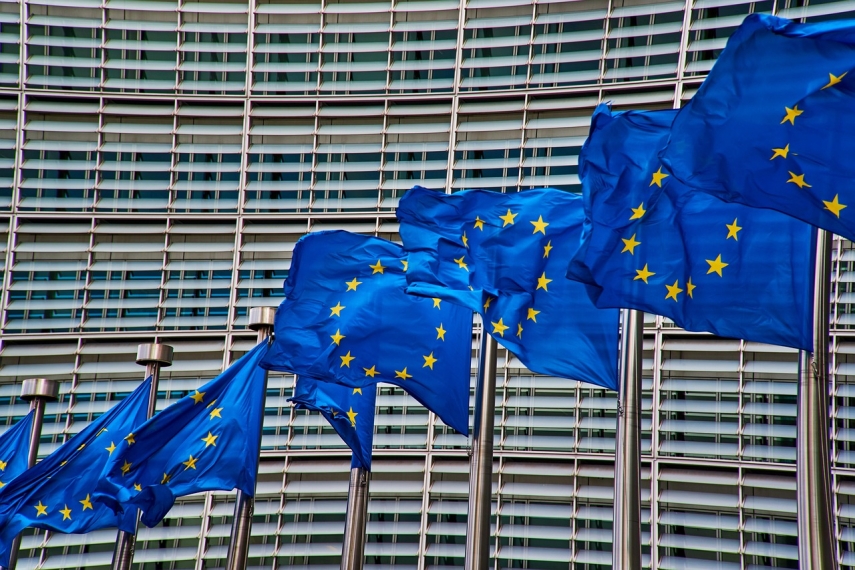
Photo: NakNakNak from Pixabay
TALLINN - On Wednesday, the European Commission presented a proposal to create a new EU company form and a unified framework, intended to serve as the cornerstone and starting point for a 28th business regime.
This is a voluntary and fully digital European business framework designed to simplify the establishment, operation, and growth of companies across the EU, encouraging them to remain in and return to Europe.
Currently, expanding a business across EU member state borders involves navigating a fragmented legal landscape of 27 different national legal systems and over 60 corporate legal forms. Consequently, establishing a new company can take weeks or even months and be extremely expensive.
For the new "EU Inc." company form, a regulation would establish harmonized business rules applicable across the entire EU, allowing a company to be established in any member state.
Commission President Ursula von der Leyen stated that Europe has the talent, ideas, and ambition to be the most sought-after destination for innovation. "But today, businesses expanding beyond their home country are burdened by 27 different legal systems and 60 company forms. The new EU-wide company form, 'EU Inc.,' will make it much simpler to establish and expand a business across Europe. A company can be set up within 48 hours from anywhere in the European Union, entirely online. This decisive step is just the beginning. Our goal for 2028 is clear: one Europe - one market," she remarked.
Key features of the new company form
Fast company registration means a new business can be established within 48 hours, for less than 100 euros, and with no minimum share capital requirement.
Procedures are simplified: company information will need to be submitted only once through an EU-level interface connecting national business registers. A central EU register is also planned for the future. Companies established under this new system will receive tax and VAT registration numbers without resubmitting documents.
The system is fully digital: all company operations will be digital by default throughout its entire lifecycle.
The dissolution process is faster and cheaper: the company liquidation procedure will also be fully digital, and a simplified insolvency procedure will streamline the process of winding down. This will enable startups to test innovative ideas and, if necessary, start anew.
Investment conditions are improved: formalities related to physical presence are eliminated, financial transactions are digital, and share transfers are simplified.
The involvement of intermediaries in share transfers and liquidation procedures will not be mandatory. The proposal also allows member states to grant "EU Inc." companies access to the stock market.
The form is attractive for talent: companies will be able to create EU-wide employee stock option plans. Income from stock options will only be taxed when the shares are sold. This is especially important for boosting the appeal of innovative startups.
It provides full access to the single market: new companies will be free to choose in which member state to establish their business. The proposal includes a list of prohibited practices to ensure that "EU Inc." companies are treated the same as any other company within member states.
There are strong safeguards: the proposal does not affect national employment and social law, which will apply to these new companies just as they do to any other company under national law.
It offers share flexibility: new companies will have the flexibility to create different classes of shares with varying economic or voting rights. This will help founders protect their businesses from hostile takeovers.
Additionally, the Commission adopted a communication proposing, among other things, to maximize the digitalization of interactions between companies and public authorities. It also calls on member states to consider establishing specialized courts for EU company law.
The Commission is also exploring how to create the necessary conditions for startups and scale-ups to enable 100% cross-border remote work across the EU.
The Commission has also proposed introducing a common definition for innovative companies, startups, and scale-ups to simplify oversight and provide certainty for entrepreneurs, investors, and policymakers.
The Commission's proposals will now be discussed by the European Parliament and the Council.

Please enter your username and password.

2026 © The Baltic Times /Cookies Policy Privacy Policy