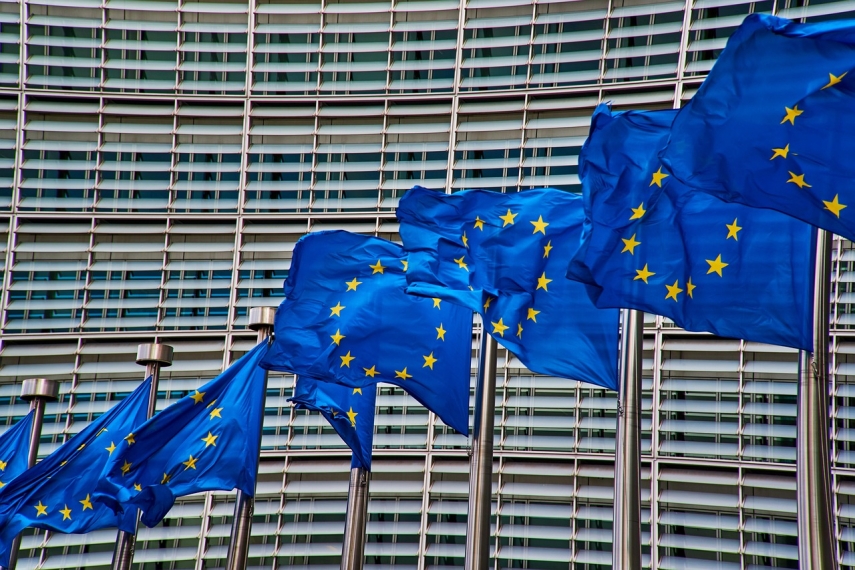
TALLINN – On Wednesday, the European Commission presented a package of measures to simplify environmental legislation in the areas of industrial emissions, the circular economy, environmental impact assessment, and geospatial data.
The changes will help reduce the administrative burden on businesses, accelerate permitting procedures in strategic sectors for the construction of affordable housing, and facilitate the transition to a clean and digital economy in the EU. The proposal aims to simplify six pieces of environmental legislation and adopt a new regulation to speed up permitting procedures.
This should enable businesses to save approximately €1 billion annually, which means the annual administrative savings from the Commission's previously presented omnibus acts and other simplification initiatives would total €11 billion per year. The current Commission's goal is to achieve administrative cost savings of €37.5 billion annually by the end of its term in 2029.
Commissioner for Implementation and Simplification, Valdis Dombrovskis, said: “Today's omnibus proposal shows what simplification means: we are reducing the administrative burden on businesses while maintaining our high standards. We are listening to our companies and taking a step in the right direction. By cutting red tape, we are promoting a more competitive business environment, reducing costs, and ensuring that EU businesses can focus on innovation and economic growth.”
The aim is to harmonize environmental impact assessments for permit granting. To simplify and accelerate permitting procedures, one-stop shops will be created, and digitalization will be expanded. Additionally, the proposal includes further fast-tracking measures for strategic sectors and projects to contribute to carbon emission reduction or resource efficiency.
The goal is also simplified industrial emission rules for industry and farmers.
Under the Industrial Emissions Directive, businesses will have greater flexibility in implementing environmental management systems. The requirement to include transformation plans will be eliminated. Businesses will be given more time to prepare their environmental management systems. An independent audit of the environmental management system will not be required. Farmers and aquaculture operators will be exempt from certain reporting obligations, thus alleviating administrative burden and duplication.
Another objective is more efficient digital solutions for tracking hazardous substances in products.
The costs of the database for Substances of Concern in Products (SCIP) were disproportionately high, and its functions will be replaced by more efficient digital solutions, such as the Digital Product Passport and a one-time assessment.
Extended producer responsibility will be simplified. Currently, legislation on batteries, accumulators, packaging, electronic equipment, single-use plastic products, and waste requires businesses based in the EU to appoint an authorized representative to fulfill their extended producer responsibility obligations. Businesses must establish this system in every member state where they are not established but sell their products. This obligation will be suspended for European producers while the extended producer responsibility systems under the circular economy legislation are being harmonized. This will reduce the costs of doing business in the EU.
Simplified access to geospatial data will also be implemented. The technical requirements for geospatial data under the EU's INSPIRE Directive will be fully aligned with horizontal legislation regulating public sector geospatial data. This simplification will reduce costs for public authorities and facilitate access to valuable geospatial datasets for all public and private sector users.
The legislative proposal will be submitted to the European Parliament and the Council for adoption.

Please enter your username and password.

2026 © The Baltic Times /Cookies Policy Privacy Policy