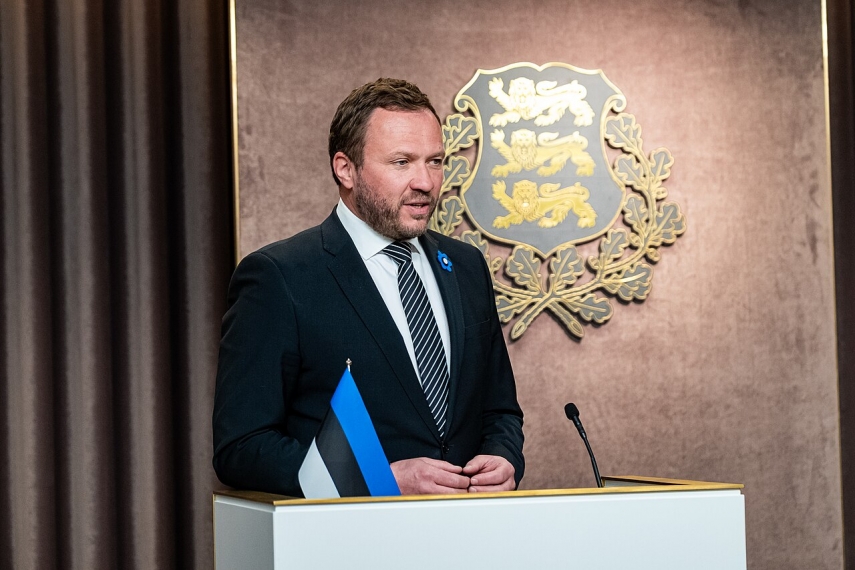
TALLINN - The Cabinet has endorsed proposals by Estonian Minister of Energy and the Environment Andres Sutt to reduce bureaucracy and simplify regulations in the fields of energy, nature conservation, and hunting.
The changes will benefit small businesses, landowners, forest owners, and reduce the workload of public authorities, while also strengthening the legal framework and ensuring legal clarity, according to the government.
"Today's decisions are a concrete step toward simplifying life for people and businesses and making public administration more effective," Prime Minister Kristen Michal said. "The state must trust people and give them responsibility, which means we must review costly and unnecessary requirements -- that is common-sense policy," the prime minister emphasized.
The Ministry of Climate reviewed 45 proposals submitted by the council for efficiency and economic growth. Of these, 11 are immediately feasible, 13 are not feasible, and 21 require further analysis.
"There is no single silver bullet for eliminating bureaucracy, but there are many important steps in the right direction. Together with the institutions under my ministry, we have thoroughly examined where bureaucracy hinders substantive work or creates unreasonable costs, and many necessary actions are already in the pipeline," Sutt said.
"For example, small solar plant owners have so far been subject to an auditor review requirement that adds no value but costs time and money -- we are ending that. We apply the same logic in nature conservation -- if a bear's wintering site is already registered, there is no need for a separate written notice. Electronic registry-based notification is sufficient," Sutt added.
Among other things, the government is considering raising the auditor review threshold for electricity producers generating over 1 MW and for small gas companies. The Forestry Act will be amended to ensure that at least 70 percent of forest land is classified as commercial forest.
As to biodiversity protection, construction restriction zone rules will be simplified, with a clearer list of objects exempt from the ban. This will reduce the administrative burden and speed up procedures. Municipalities will also gain more authority in applying the building exclusion zone.
A goal to protect 30 percent of Estonia's land area will be introduced into the Nature Conservation Act.
In hunting, all administrative processes will be moved to the JAHIS digital system, double procedures will be eliminated, and several unnecessary permit requirements will be removed.
All quickly actionable legislative proposals will be submitted to the government for approval this year and next. Some bills, including amendments to the Nature Conservation Act, Hunting Act, and State Assets Act, are already under parliamentary review.

Please enter your username and password.

2026 © The Baltic Times /Cookies Policy Privacy Policy