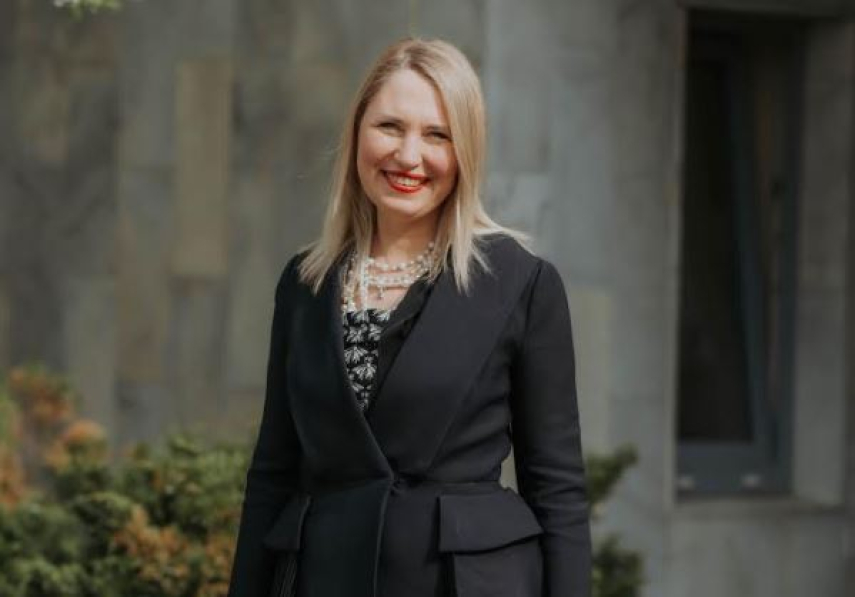
Photo: Kaspars Germanis is a researcher at the Center for Geopolitical Studies in Riga
With only a few months left until the Latvian Parliament Saeima elections, along with the traditional unpredictability - how currently undecided citizens will vote - others are also coming into play. First, how will Latvia pass the Russian test in defense, and second, it is unclear how the new government, appointed in May, will work. However, some potential leaders are emerging.
The new government raises the temperature
With just a few months left until the Saeima elections on October 3, the atmosphere in Latvian politics is traditionally heating up. The approval of the new government on May 28 is also adding spice. Assuming the post-election government is approved in November, its lifespan could be approximately six months. However, the government was not formed until February 2019, following the 2018 elections.
The new Cabinet of Ministers is headed by the previous MP Andris Kulbergs (“United List”), who had earned recognition for his actions and statements, especially regarding such very serious issues in Latvia as the future of the international railway project “Rail Baltica”. No one knows yet how Kulbergs and his four-party coalition (the “United List”, the National Alliance, the Greens and Farmers’ Union, and the “New Unity”) will work together and which of its members will be the winners and losers.
Under the power of difficult decisions
Although the life of the Kulbergs’ government is predictably short, it will not be able to avoid difficult decisions.
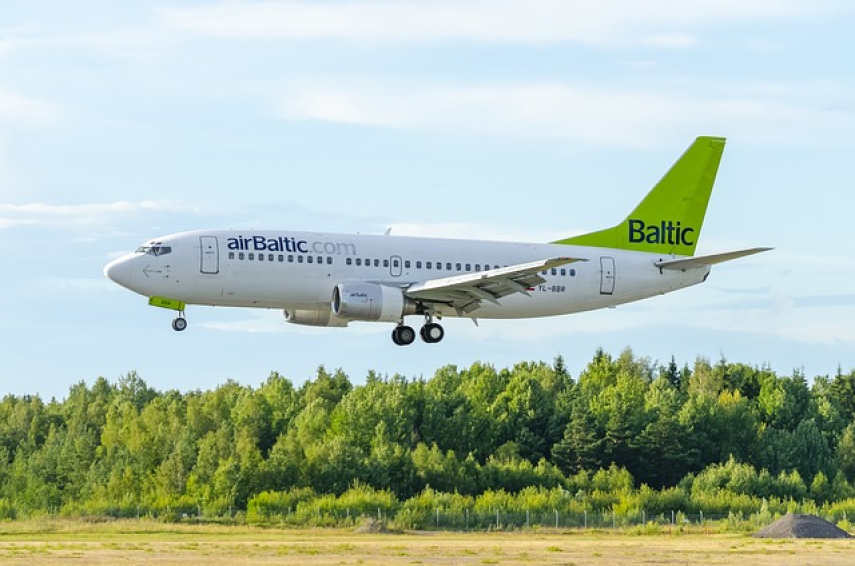
Kulbergs and his ministers will have to decide what to do with the national airline “airBaltic”. Already now, there is a belief that “airBaltic” will not be able to survive if the government does not allocate additional funds from the Latvian budget.
In a situation where Latvia intends to devote almost 5% of its GDP to defense, and in addition, problems in education, social welfare, and other fields have not disappeared anywhere, allocating additional millions to “airBaltic” may question the popularity of Kultberg’s government.
Besides, Russia will likely continue to test Latvia’s defense capabilities, which means that there will be more drone strikes. Other hybrid warfare methods are not ruled out. If the Kulbergs’ government and the coalition parties can defend the country, then it could be a significant psychological victory. Moreover, after the scandal in the Riga City Council elections last year, when the electronic voting machine broke, there is no certainty that Russia could not use the disruption of elections by damaging electronic systems.
Foggy forecasts
The party popularity ratings published in May show that 27.2% citizens have not decided which party they are going to support. Moreover, 13.2% claim, at least currently, that they will not participate in the elections. This means that the fight for votes in the summer will be brutal.
And yet, despite everything, the approximate outlines of the next Saeima can be predicted. One can safely predict the entry of the experienced politician Ainārs Šlesers’ party “Latvia First” into parliament, and, possibly, even victory. This party has support among both Latvian and Russian-speaking voters. On the other hand, some voters have not forgotten him as an “oligarch”, as he has been called for years.
It is not excluded that “Latvia First” will suffer the fate of the once popular party “Harmony”. It also won the Saeima elections, but was so toxic to the so-called Latvian parties that it always remained in opposition.
The number of mandates in the next Saeima will be won by the National Alliance, “Progressives” and “Sovereign Power”. All three have a sufficiently stable voter base. The National Alliance continues to attract nationalists, the “Progressives” – very liberal and left-wing, especially young and middle-aged voters, the “Sovereign Power” – Russian-speaking voters, and probably more of those who would like to see friendly relations between Latvia and Russia. It is expected that the Greens and Farmers’ Union, which have always had support in the countryside, will enter the next Saeima, also with a similar number of mandates.
The “New Unity” will also enter the Saeima with a smaller number of mandates than it currently has. Heavily criticized, there are still enough national-conservative and pro-Western voters in Latvia. It is most likely that the “United List” will also enter the next Saeima, whose recognition will be significantly improved by working in the new coalition.
However, once again, this summer in Latvian politics has been particularly hot and unpredictable for various reasons. This means that these forecasts may have to be completely changed in the second half of September.

Please enter your username and password.

2026 © The Baltic Times /Cookies Policy Privacy Policy