In less than a decade, Estonia, Latvia, and Lithuania have transformed from digitally curious post-Soviet economies into some of the most dynamic e-commerce markets in Northern Europe. The combination of high internet penetration, a tech-literate population, and aggressive EU integration has created fertile ground for online retail — and the numbers are beginning to reflect that ambition. Understanding what is driving this growth, and what is required to sustain it, is increasingly relevant for any brand, investor, or operator with exposure to the region.
A Market Coming of Age
The Baltic states collectively account for a relatively small share of European e-commerce by volume, but they are outpacing the continental average in growth rate. Lithuania leads the trio in online retail maturity, with its capital Vilnius emerging as a regional logistics and fintech hub that attracts both homegrown and international digital commerce operators. Estonia, long celebrated as the birthplace of Skype and the first nation to offer e-residency, brings a governance and digital-infrastructure model that lowers barriers for online businesses considerably. Latvia sits between the two, growing steadily as consumer confidence in online payments deepens.
Consumer behavior across all three countries has shifted decisively post-pandemic. Remote work, home delivery familiarity, and the expansion of domestic payment platforms have all contributed to a sustained rise in basket sizes and transaction frequency. Cross-border purchasing is also significant: Baltic consumers are comfortable shopping on German, Swedish, and Polish platforms, which in turn pushes local merchants to compete on service quality, not just price.
Category Dynamics and Market Drivers
Fashion and apparel remain the dominant e-commerce categories across the Baltics, mirroring Western European patterns. However, electronics, home goods, and health products are growing at a faster clip, reflecting a broader demographic trend: younger urban professionals are increasingly making high-consideration purchases online rather than in physical stores. This shift is particularly pronounced in Estonia, where digital trust infrastructure — including digital signatures, e-identity, and real-time banking APIs — makes the checkout experience frictionless.
The emergence of Baltic-origin marketplace platforms has been another defining dynamic. Rather than simply serving as outposts for Amazon or Zalando, the region has produced platforms tailored to local logistics realities, language preferences, and payment habits. These platforms are increasingly competing on delivery speed and return policy transparency, two factors that research consistently identifies as the primary drivers of repeat purchase behaviour in the region.
Mobile commerce is another accelerant. Smartphone penetration across Estonia, Latvia, and Lithuania exceeds 85%, and the share of online transactions initiated on mobile devices now rivals desktop in all three markets. This mobile-first reality has forced merchants to invest in progressive web apps, one-click checkout flows, and SMS-based order management — capabilities that require not only design investment but serious backend infrastructure.
Cross-Border Logistics and the Last-Mile Problem
Despite the digital confidence of Baltic consumers, physical logistics remains a genuine bottleneck. The region's geography — a long north-south corridor with relatively sparse population density outside capital cities — makes last-mile delivery both expensive and operationally complex. International parcel carriers have invested in Baltic networks, but rural delivery windows still lag behind urban standards by a significant margin.
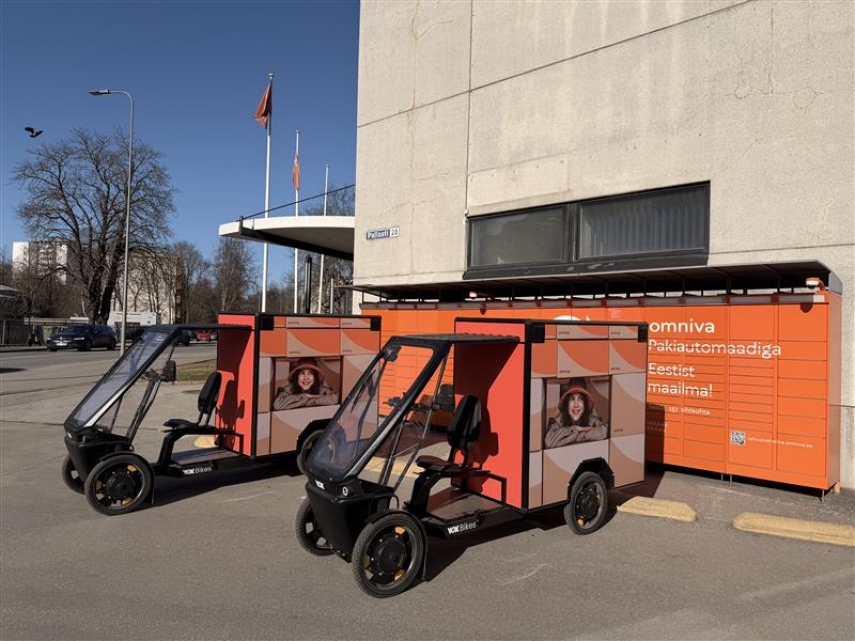
In response, parcel locker networks have expanded rapidly. Companies like Omniva and DPD have blanketed the three countries with automated pickup points, and adoption rates are among the highest in Europe. This model neatly sidesteps last-mile complexity while aligning with Baltic consumer preferences for self-directed, contact-free pickup — a behavior that accelerated sharply during the pandemic and has not materially reversed.
For cross-border merchants, customs and VAT compliance within the EU framework has become more manageable following the 2021 harmonisation of digital tax rules. The OSS (One Stop Shop) registration system in particular has lowered administrative friction for businesses shipping from other EU states into the Baltic market, encouraging more European merchants to test Baltic demand without establishing local legal entities.
Payment Ecosystem and Fintech Integration
The Baltic payment landscape is one of the region's greatest competitive advantages. Open banking adoption is mature relative to the rest of the EU: strong API frameworks, real-time payment rails such as SEPA Instant, and high trust in online banking have produced a payment environment that reduces friction at checkout significantly. Card abandonment rates in the Baltics are notably lower than the EU average, which analysts attribute directly to the familiarity consumers have with bank-linked payment flows.
Buy Now, Pay Later (BNPL) services have also gained meaningful traction, particularly among younger shoppers in the 18-35 demographic. Regional providers compete alongside global entrants, and the segment is growing faster in Lithuania than in the other two states. This BNPL adoption is pushing average order values upward, particularly in electronics and furniture categories where price points have historically suppressed online conversion.
The Infrastructure Layer: How VPS Hosting is Shaping E-Commerce Scalability
Behind every Baltic e-commerce success story lies a critical and often underappreciated enabler: server infrastructure. As regional merchants scale beyond simple template-based storefronts, the limitations of shared hosting become a genuine operational constraint. This is where Virtual Private Server (VPS) hosting has emerged as the pragmatic stepping stone between entry-level plans and fully managed cloud architecture.
VPS hosting gives e-commerce operators dedicated compute and memory resources within a virtualised environment, providing meaningful performance headroom without the cost and complexity of bare-metal or enterprise cloud deployments. For Baltic merchants running WooCommerce, Magento, or custom storefronts with real-time inventory, this matters considerably during promotional periods — Black Friday traffic spikes, for instance, have historically exposed infrastructure gaps that flat-rate shared hosting simply cannot absorb.
The geography of data centre proximity is also relevant here. Page load speed is a confirmed ranking factor and a conversion driver, and latency between a server located in Frankfurt or Warsaw versus one located in Vilnius or Tallinn can be meaningful for local audiences. As EU data sovereignty concerns have grown, Baltic merchants have increasingly scrutinised where their customer data is processed — a consideration that has accelerated interest in hosting providers with infrastructure inside the EU, or specifically within the Baltic-Nordic corridor.
Providers like Hetzner and OVHcloud have captured Baltic business customers by offering competitive price-to-performance ratios on VPS plans - a particularly attractive proposition for the many bootstrapped or SME-scale merchants that characterise the regional e-commerce landscape. The model appeals because it offers root access and configuration flexibility without requiring enterprise procurement budgets. For developers building headless commerce architectures or custom backend integrations, the ability to control server environment precisely is a practical necessity.
The hosting market itself is therefore quietly but consequentially intertwined with Baltic e-commerce growth trajectories. As more merchants move from marketplace dependency to owned-channel strategies — building direct D2C relationships through branded stores — demand for reliable, configurable, and cost-efficient server infrastructure will continue to scale alongside commercial ambition in the region.
Outlook: What the Next Phase of Growth Requires
The Baltic e-commerce market is not without its structural challenges. The total addressable consumer population remains modest relative to larger European economies — the combined Baltic population of roughly 6 million places a natural ceiling on purely domestic growth. Sustainable scaling therefore requires either regional expansion into Scandinavia and Poland or successful category differentiation that attracts international shoppers to Baltic-origin products.
Talent is a secondary constraint. The Baltic tech ecosystem punches well above its weight globally, but the demand for experienced e-commerce product managers, performance marketers, and data engineers consistently outstrips supply. This dynamic is driving salary inflation in digital roles and pushing some operators toward remote-first hiring models that draw on broader European talent pools.
What is undeniable is that the fundamentals are sound. High digital literacy, mature payment rails, expanding logistics density, and a regulatory environment that is transparent by regional standards all point in the same direction. The Baltics are not merely participants in European e-commerce — they are increasingly shaping it, offering a compact laboratory for digital commerce models that, when proven at home, are well-positioned to travel.

Please enter your username and password.

2026 © The Baltic Times /Cookies Policy Privacy Policy