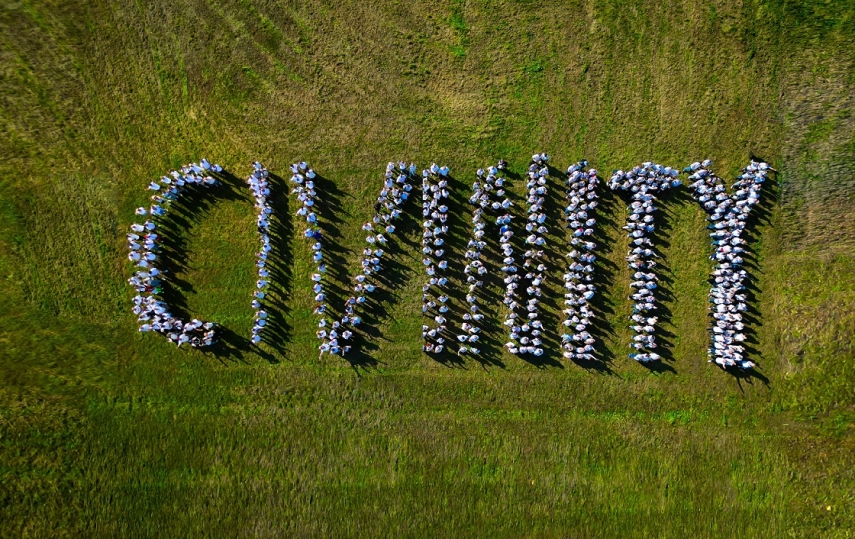
Civinity, one of the largest building maintenance service providers and engineering and technology solution developers in the Baltic States, celebrated its 20-year anniversary in September 2025, an impressive achievement for any company, especially one operating in this sector and experiencing rapid growth. Civinity has more than 1,600 employees across Lithuania, Latvia, Estonia, and the United Kingdom, unites over 30 companies in the building maintenance and engineering sectors, and continues to grow both its turnover and profits.
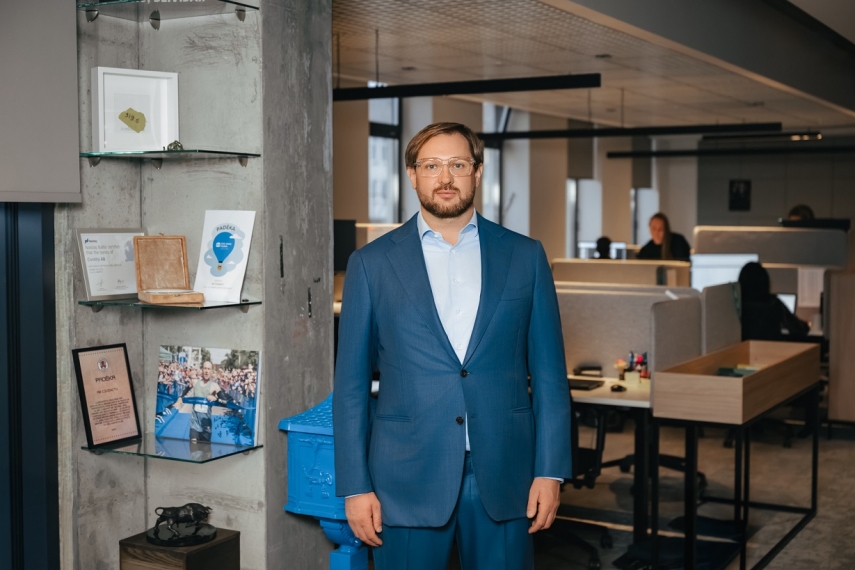
The Baltic Times Magazine sat down to talk with Deividas Jacka, the founder of Civinity and a trailblazer in PropTech (property technology) in Lithuania and beyond.
The story of Civinity – and your own story as the company’s founder – is all about success. What is your formula for success? What have you done – and continue to do – differently from others?
If I had to define the foundation of our success, it would be a long-term strategy and the courage to set ambitious goals. Over 20 years, we have grown steadily by combining acquisitions and organic expansion – in 20 years we have made more than 30 acquisitions, so we know how to identify the right targets, structure the deals, and integrate businesses smoothly.
Another one of our strengths is ambition. Every five years we create a new strategy and set goals that initially look very big. Five years ago, we aimed to reach 10-million-euro EBITDA, and today I can say that we will meet that goal. Now we are starting a new chapter and plan to grow tenfold.
For me personally, and for the team, “no” means “yes,” the impossible – possible. The harder it is, the more interesting it becomes. This allows us to think bigger and look for new solutions.
It seems that in recent years you have been paying particular attention to PropTech – applying technological solutions in building management, data analytics, smart maintenance, and energy efficiency. Why is this important to you? What exactly is Civinity doing in this direction? And how is the company benefiting?
One of the key elements of our new strategy is a new vision. We aim to transform from a traditional building maintenance business into a city lifestyle company. We want not only to maintain buildings using advanced technologies but also to provide digital services that make city life easier for residents.
When it comes to technologies used in constructing and maintaining buildings, their benefits are obvious to everyone. Smart systems allow more efficient building management, precise control of energy use, and prevention of failures. We receive more data about a building’s “health,” so we can avoid major accidents and costly repairs.
Digital services also create significant value. Today everyone expects everyday city services to be accessible on their phone. When dozens of apps are replaced by one unified platform, city life becomes much simpler. That is precisely the kind of convenient, integrated platform we aim to create.
That is why PropTech is a natural direction for us – it allows us to connect building management, technology, and digital services into one clear vision of how we will live in cities tomorrow.
You can speak at length about this, but in a few sentences – what will smart cities of the future look like?
Smart cities are cities that integrate physical infrastructure and digital services into one ecosystem. PropTech solutions already make it possible to manage traffic, buildings, and energy intelligently, and to make data-driven urban decisions.
But the city of the future will begin not with technology, but with people. Technology will be the invisible infrastructure ensuring that life is more comfortable, sustainable, and simple. The real question for cities is: what kind of experience do we want to create for people?
Copenhagen is a great example of how a clear vision can shape a city with a recognizable identity: bicycles, architectural harmony, and a positive city vibe. This is the result of a focused strategy.
With this in mind, we founded City Shift HUB – an urban innovation platform where solutions are tested in real conditions. Our goal is for Lithuania to become the fastest urban innovation testing ground in Europe, and for Vilnius to become a model city where life is truly good. This initiative brings together business, startups, communities, and the municipality around real urban challenges. I am proud to be a patron of this initiative, because it will allow Vilnius to attract, test, and implement advanced technologies more quickly and move toward becoming a truly smart city.
Is the PropTech sector – where you are one of the most visible trailblazers – just as attractive to investors and businesses today as, say, the miltech or defense sector? Why?
PropTech is very attractive to investors today for a clear reason: the construction sector is one of the most polluting in the world. This means it holds enormous potential for transformation and sustainability-driven innovation.
On the other hand, the sector still has too few startups. PropTech is not the easiest choice for young businesses: here you need not only technological knowledge but also engineering understanding of how buildings, energy, and infrastructure work. This is precisely why it is important to actively grow this field, attract young talent, and help them build products that can transform cities.
Lithuania already has a strong foundation for this. PropTech Lithuania now unites most of the country’s PropTech startups and traditional real estate companies. This creates opportunities for ideas to reach the market faster and for real partnership projects to emerge.
What would you especially advise the Government, municipalities, and businesses as they pursue a PropTech/Smart City (r)evolution?
Building smart cities begins with a clear, long-term direction. A city needs a stable vision and priorities that do not change with every political cycle. When the direction is clear, businesses and startups invest confidently because they know what kinds of innovation the city is looking for.
Collaboration is equally important. Real progress happens when municipalities work together with businesses, startups, and communities – sharing data, providing access to city infrastructure, and allowing solutions to be tested in real conditions.
A great example is the Vilnius City Municipality, the first to join City Shift HUB and provide access to open city data. This is the start of significant collaboration with technology developers. With such an approach from Mayor Valdas Benkunskas and City Administrator Adomas Buzinskas, Vilnius has every chance to become the brightest PropTech star in the Baltics – and perhaps in all of Europe.
For national-level growth, clear state support is essential. Lithuania has real potential to become a European PropTech hub, but this requires more favorable regulation, talent-attraction measures, and consistent incentives for business. We already have a great example – the successfully developed FinTech sector. Now it is time to do the same with PropTech.
In the media, you’ve mentioned Copenhagen as a Smart City example. What impresses you about it? And which Lithuanian city shows promising PropTech potential?
Copenhagen is similar in scale to Vilnius – similar population and climate – so many of its solutions can be applied here. Today it is the No. 1 city in the world for quality of life and aims to become climate-neutral by 2030.
As former chief architect Camilla Richter-Friis van Deurs said at Lithuania’s first PropTech conference, City Shift, Copenhagen was bankrupt thirty years ago. The breakthrough came from strategic investments in the metro, universities, public spaces, and a clear political direction – quality of life and sustainability.
What impresses me most is their mobility system: the metro, buses, bicycle highways, and pedestrian areas are planned as a single ecosystem. Copenhagen also consistently develops green spaces, analyzes residents’ access to nature, and implements creative urban design solutions.
Much of Copenhagen’s success came from partnerships – the city owns only about 20 percent of its territory, so change is only possible through cooperation with businesses, landowners, and communities. That is what made Copenhagen a global leader.
Civinity has invested in various sectors and companies. As an investor, what criteria do you apply when selecting projects?
We invest in businesses operating within the Smart Green City ecosystem that are profitable and have strong growth potential. For us, it’s not just about the idea or market, but also the team – whether people can think broadly, have the ambition to grow, and are not afraid of big goals.
We follow a simple principle: we invest up to 70 percent of the capital, and the remaining part stays with the team. This is a deliberate decision – we believe in partnership, not control. The local team knows its market, customers, and daily business pulse best. This model combines our capital and group capabilities with the team’s experience, ambition, and speed – and that creates the best conditions for rapid growth.
In August, Civinity and Youston Living, the largest co-living network in the Baltics, announced a strategic partnership for expansion in European cities. What do you plan to achieve together?
The partnership with Youston Living is completely natural, because our businesses operate side by side and complement each other organically. Youston Living operates the largest co-living network in the Baltics and is expanding into London, while Civinity manages their buildings in Lithuania, Latvia, and soon – in the United Kingdom.
Together we combine their expertise in lifestyle and community-building with our engineering, technology, and building-management competencies. This combination opens doors to the largest European markets and strengthens both companies’ positions internationally.
You’ve said: “Money loves silence.” Explain what you mean. And do you personally like silence? What are your rituals or rules for balancing daily work and rest?
When I say that “money loves silence,” I mean one thing: it’s worth speaking only about what creates value. If I share something to inspire or unite the team, that’s meaningful. Speaking just to brag is empty noise that distracts from what matters.
The same goes for personal life. Money is not a measure of success. To me, health, purpose, and creating value for others are far more important. Money comes as a consequence, not a goal.
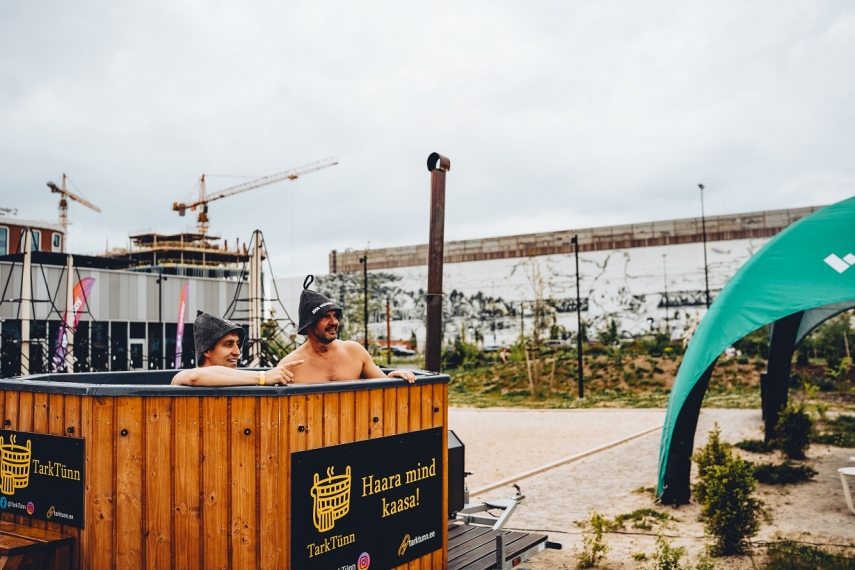
I like silence very much. There is enough noise in business, so silence helps me pause and get a broader view. My routine is simple: a few minutes of morning quiet, cycling or running, and a cold shower. I try to maintain balance and support both physical and psychological well-being.
You come from a large, strong, and entrepreneurial family: your father is a legendary entrepreneur on the coast, your brother works in business, your sister Virgeda is the CEO of Civinity, and your other sister is a well-known actress. Where does all of this come from? What principles did your parents instil in you?
Business was a natural part of my life. Even in school I had my first attempts – from selling hot dogs in Palanga to my first real estate project during university. I started building Civinity when I was just 23, and that probably says a lot about the environment in which I grew up.
Nothing in our family was given “just because.” If you want something – earn it yourself. Maybe that’s why I’ve never lacked business ideas (laughs). From my parents I learned a few simple but powerful rules: don’t be afraid to think big, have the will and courage to pursue your goals, and always keep your word.
We are a big family with a strong bond and shared values. We can argue or disagree, but for Christmas or Easter the whole family always sits at the same table – that is sacred to us.
What is the Civinity Group planning for 2026? Are you entering new markets?
In 2026, Civinity will continue implementing its new strategy and expanding within the Smart Green City ecosystem. Recently we acquired several digital businesses that open wider opportunities across Europe.
One of the most significant steps is the acquisition of Mobilly in Latvia. It is a city super-app that allows people to pay for parking, public transport, utilities, and other everyday services in one place. Mobilly aims to expand into other cities – both where Civinity operates and beyond our current footprint.
We have also invested in the platform Valandinis, which connects construction professionals with companies. We believe such solutions are the future of the construction and building maintenance sector, because they allow more efficient use of talent and faster project completion.
At the moment (the interview was conducted on December 2, 2025 -TBT) we have about 15 potential acquisitions across eight countries – ranging from 5 million euros to more than 100 million euros. We will be able to announce some of these projects next year. In short, 2026 will be a year of active expansion and new steps – in geography, technology, and business models.

Please enter your username and password.

2026 © The Baltic Times /Cookies Policy Privacy Policy