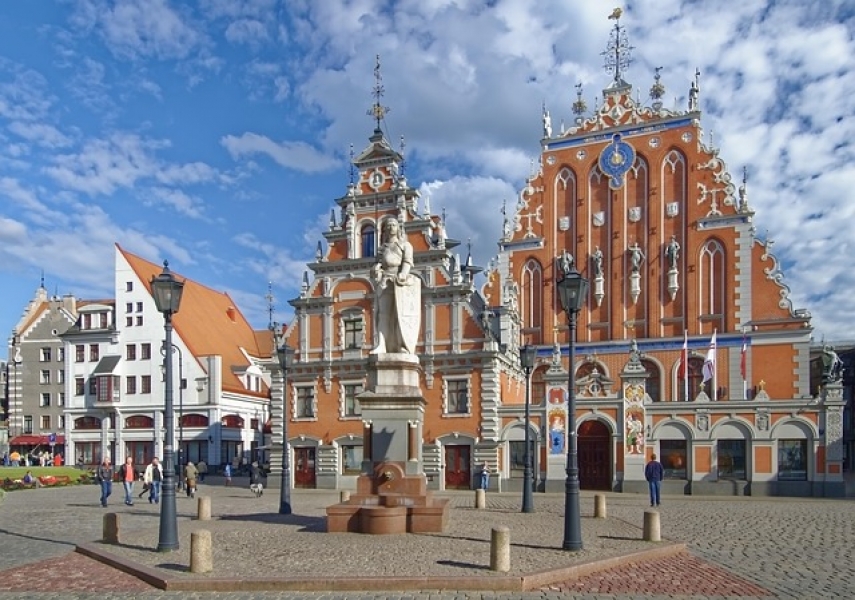
Photo: Makalu from Pixabay
The Baltic region has long been recognized as one of Europe’s most dynamic crossroads — where old-world charm meets cutting-edge innovation. From Tallinn’s medieval towers to Vilnius’s creative districts and Riga’s Art Nouveau boulevards, Estonia, Latvia, and Lithuania offer U.S. travelers a rich blend of history, culture, and digital sophistication.
But as many international visitors discover, staying connected while hopping between these closely linked countries can still be a logistical challenge. Between high roaming fees, unreliable public Wi-Fi, and the hassle of changing SIM cards, managing mobile data across borders can feel more complicated than planning the trip itself.
Now, a quiet revolution in connectivity is changing that — thanks to eSIM technology, a digital solution that lets travelers stay online across multiple destinations without ever swapping a SIM card.
The Baltics: A Digital Gateway to Europe
The Baltic states have spent the past two decades establishing themselves as leaders in digital governance and innovation. Estonia’s pioneering e-Residency program made headlines worldwide, while Riga and Vilnius have become startup hotspots and testbeds for fintech and IT development.
That spirit of innovation extends to how people live and travel. With efficient transport, mobile-first infrastructure, and widespread English fluency, the Baltics are a favorite among digital nomads, remote workers, and business travelers.
However, even in this highly connected environment, many international visitors — especially those coming from North America — still face the same pain points when it comes to mobile data: expensive roaming charges, region-specific SIM cards, and inconsistent coverage when moving between countries.
That’s where the eSIM steps in as a perfect fit for this tech-savvy region.
The Challenge: Connectivity Across Borders
For U.S. travelers exploring Europe, mobile data often becomes an unexpected source of frustration. Traditional SIM cards still rely on physical chips that must be inserted, activated, and often replaced when entering a new country.
Even within the European Union, where roaming regulations have improved for EU residents, international visitors from outside the bloc still face complex pricing structures. That means a simple drive from Riga to Vilnius or a flight from Tallinn to Helsinki could trigger extra charges or service interruptions.
Public Wi-Fi, while common in cafes and airports, isn’t always secure — particularly for travelers handling sensitive work or financial data.
This fragmented experience feels at odds with the seamless travel infrastructure the Baltics are known for. And that’s exactly why digital travelers are turning to eSIMs as the next step in truly borderless connectivity.
What Exactly Is an eSIM?
An eSIM (short for “embedded SIM”) is a digital version of the traditional SIM card. Instead of inserting a physical chip, your device uses a small, built-in component that can download multiple network profiles remotely.
This means you can:
- Activate a local or regional data plan instantly via QR code.
- Switch between networks as you cross borders — automatically.
- Eliminate the need for physical SIM swaps or local SIM vendors.
The result is a completely digital connection experience — one that’s faster, safer, and far more convenient for travelers who move frequently between destinations.
A Real-World Example: Traveling the Baltics Seamlessly
Imagine this scenario: You’re flying from New York to Riga for a Baltic city-hopping holiday. After spending a few days exploring Latvia’s capital, you head north to Tallinn by bus, then catch a train to Vilnius.
With a traditional SIM card, you’d either:
- Have to buy a new local SIM in each country, or
- Rely on roaming, risking high charges and spotty coverage.
With an eSIM, it’s different. You activate your data plan before leaving the U.S., scan a QR code, and connect the moment you land. Your phone automatically adjusts to local networks across Latvia, Estonia, and Lithuania — no interruptions, no new cards, and no extra fees.
This is exactly why more U.S. travelers — particularly remote workers and tech-savvy professionals — are adopting eSIMs as their preferred way to stay connected abroad.
Why eSIMs Are Ideal for the Baltic Region
The Baltics’ compact geography and high level of digital integration make them one of the best regions in Europe to experience the advantages of eSIM technology.
Key benefits include:
- Seamless connectivity: One data plan covers multiple countries — perfect for travelers moving across borders.
- Sustainability: eSIMs eliminate the plastic and waste associated with traditional SIM cards.
- Security: No need to rely on public Wi-Fi; your data stays encrypted through mobile networks.
- Convenience: Activate before arrival and stay online instantly, even during layovers or transfers.
These advantages align perfectly with the Baltic region’s identity — forward-thinking, efficient, and environmentally conscious.
Holafly: Simplifying Global Data for Travelers
One of the pioneers making this transition easy for international travelers is Holafly, a global eSIM provider trusted by millions. Holafly offers data plans that cover over 190 destinations worldwide, including comprehensive coverage throughout Europe and the Baltics.
The process couldn’t be simpler:
1. Visit the Holafly website.
2. Select your destination (or regional plan).
3. Receive your eSIM instantly by email.
4. Scan the QR code and start browsing — no store visits, no paperwork.
For U.S. travelers heading to Europe, Holafly’s regional plans make it possible to get unlimited data with Holafly and travel across multiple countries with a single digital setup.
It’s the kind of convenience that perfectly matches the fast-paced, borderless nature of modern travel.
The Bigger Picture: eSIMs and the Future of Travel
Beyond convenience, eSIM technology represents a broader shift in how global connectivity works. It’s part of a growing movement toward digital-first infrastructure, where everything from boarding passes to hotel keys — and now SIM cards — lives securely in your phone.
For governments and tourism boards, widespread eSIM adoption also means more predictable connectivity for visitors — an asset for safety, commerce, and tourism data analytics.
For travelers, it’s about freedom: the ability to explore without logistical constraints, to work remotely without interruption, and to connect instantly wherever inspiration strikes.
Final Thoughts
The Baltics are already known for blending tradition and technology in remarkable ways — where centuries-old architecture stands alongside 5G networks and digital IDs. For U.S. travelers, embracing eSIM technology is a natural extension of that same spirit of innovation.
Whether you’re attending a conference in Riga, exploring Tallinn’s creative scene, or road-tripping through the Lithuanian countryside, an eSIM keeps you online, informed, and free to move without boundaries.
The future of travel is digital, borderless, and always connected. And with the right tools — like Holafly’s eSIM — it’s a future that’s already here.

Please enter your username and password.

2026 © The Baltic Times /Cookies Policy Privacy Policy