Globally, electricity shortages are limiting the expansion of data centers and other high-consumption projects, which are rapidly growing to meet demand for AI. The Baltics present a fundamentally different landscape. Capacity is available, and development is underway without years-long delays. While others face limitations, the Latvian and Lithuanian data center operator Delska continues to strategically expand its infrastructure, strengthening its regional position at a time when limitations dominate the global and European markets.
As a result, power capacity, rather than technology or capital, is increasingly determining where artificial intelligence infrastructure can be built. Investment-ready projects are being delayed due to insufficient power grid capacity. Meanwhile, the Baltics' infrastructure enables a timely response to the AI-driven surge in demand without structural delays.
This structural advantage is strengthening the Baltics’ competitive position at a time when energy constraints are slowing expansion elsewhere in Europe. At the same time, enterprises are reevaluating technological dependencies and long-term cost exposure — a process accelerated by Broadcom’s changes to VMware’s pricing and licensing framework. In response, Delska is expanding its cloud portfolio with customizable enterprise solutions designed to ensure predictability, sovereignty, and cost stability within European data centers.
Electricity is the industry’s new gold
If, just a few years ago, the main factor in data center placement was proximity to markets, then in 2025, the decisive resource has become electricity availability and grid capacity.
On a global scale, the situation is becoming increasingly tense. Currently, projects totaling more than 2,500 gigawatts, including renewable energy, storage solutions, and high-consumption facilities such as data centers, are stuck in connection queues worldwide. This means that investment-ready projects cannot begin construction because the power grid cannot provide the required capacity. In many European hubs, the waiting time for a new connection is measured in years, significantly affecting investment plans and the pace of digital development.
In the Baltic region, grid capacity and supply stability provide a measurable competitive advantage.
Last year, the rapid expansion of artificial intelligence and high-performance GPU clusters fundamentally changed infrastructure requirements. As computing power density increased, traditional architecture could no longer fully support the new workloads.
AI-driven demand is pushing data center expansion to historic highs
The data center industry is entering a structurally different phase of development. The main growth driver is artificial intelligence, but this change is not limited to technology companies or global cloud service providers. It also directly affects traditional industries, including manufacturing, logistics, the financial sector, retail, and public administration.
Increasingly, companies are using artificial intelligence solutions in their daily operations, including demand forecasting, process automation, cybersecurity monitoring, personalized offerings, and real-time data analytics. This results in significantly higher data-processing volumes and greater requirements for stable, uninterrupted, and secure IT infrastructure.
Historically, a company could rely on traditional server capacity for email and accounting systems. Today, even a mid-sized organization uses multiple cloud platforms, analytics tools, and artificial intelligence solutions simultaneously. This results in increased demand for computing power, greater electricity consumption, stricter data security and compliance standards, and higher system continuity requirements.
A company’s competitiveness is increasingly dependent on the modernity and scalability of its digital infrastructure.
What does this mean for businesses in practice?
Imagine a mid-sized manufacturing company that implements an artificial intelligence solution for demand forecasting and equipment maintenance planning. This reduces downtime and optimizes inventory. Behind this solution, however, lie rapidly growing data volumes and intensive computing requirements. If the infrastructure is not sufficiently powerful or stable, the artificial intelligence project becomes slow and inefficient. As a result, the key management question is no longer whether artificial intelligence should be implemented, but whether the existing infrastructure can support it.
From a business perspective, infrastructure becomes a strategic asset. Energy turns into a competitiveness factor. Security and regulation evolve into matters of reputation. Flexibility becomes critical, and access to artificial intelligence capacity determines the pace of development. As a result, infrastructure emerges as a factor in regional competitiveness.
Additional pressure on the infrastructure market is created by changes in the enterprise virtualization and cloud infrastructure segment. Following the acquisition of VMware, Broadcom has introduced changes to pricing and licensing conditions, significantly impacting IT budgets and long-term infrastructure planning. This is forcing organizations to reassess technology dependency risks and to consider alternative cloud solutions, including hosting infrastructure within European jurisdictions.
Delska strengthens its position in the Baltics
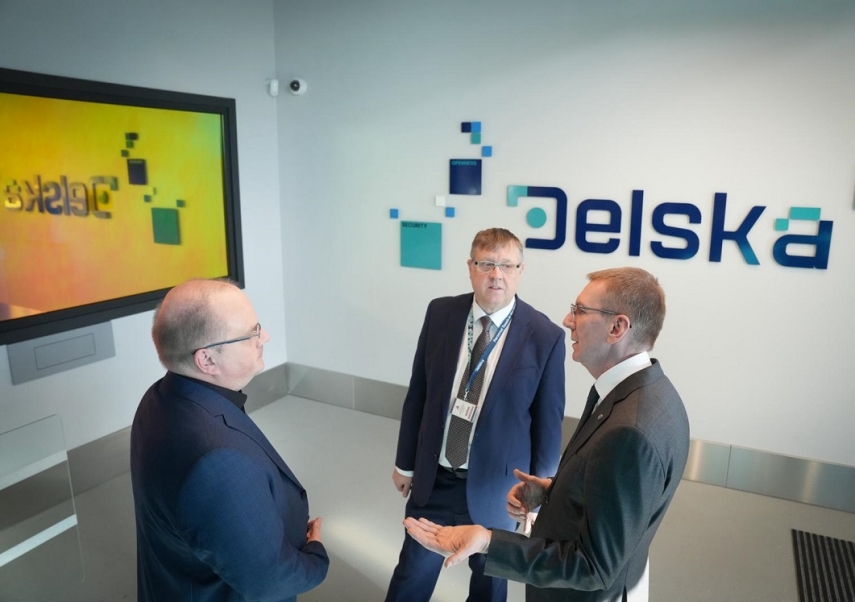
While projects in many parts of the world are waiting for grid connections, Delska is developing in the Baltics without such constraints. The company has recently commissioned a new 10-megawatt data center in Riga, the importance of which in strengthening digital resilience was also highlighted by a recent presidential visit. The data centers’ campus includes additional acquired land and a reserved grid connection, enabling expansion to up to 30 megawatts.
The new Riga data center, EU North Riga LV DC1, has already received Uptime Institute Tier III Design certification and will undergo Tier III Facility certification in March. It will be the first data center in Latvia to implement liquid-cooling solutions for artificial intelligence workloads.
In total, the group operates six data centers in Latvia and Lithuania with a combined capacity of 19 megawatts. The expansion potential enables the company to respond quickly to growing demand for artificial intelligence and GPUs.
At the same time, the myDelska cloud platform is being developed, strengthening its footprint in the Baltics while expanding its presence across Europe. The platform allows companies to provision IT resources immediately to meet business needs while maintaining data sovereignty and transparent cost management. myDelska helps organizations reduce dependence on large cloud providers, mitigate vendor lock-in risks, and build IT infrastructure aligned with their security and compliance requirements within European data centers.
The year 2026 will mark IT efficiency and specialization
It is expected that in 2026, competitiveness will be determined not only by available capacity but also by the ability to deliver projects on time, control supply chains, and ensure energy efficiency.
Market growth will become more selective, with investors more carefully assessing projects, particularly the sustainability of artificial intelligence infrastructure. Smaller players will be forced to choose between specialization and consolidation.
Delska plans to expand capacity and strengthen its presence across Northern Europe by adding additional data centers while scaling AI and GPU services. With EU sustainability regulations tightening and data sovereignty rising on executive agendas, customers are prioritizing providers that demonstrate compliance rather than make declarative commitments. Delska’s operational model is structured around these principles, translating regulatory pressure into competitive advantage.
In addition to its infrastructure in the Baltics, Delska operates partner data centers in Frankfurt and Amsterdam. This enables local companies to diversify geographic risk, store backups outside the Baltics, and develop disaster recovery scenarios aligned with international best practices. This approach strengthens business continuity and resilience in emergency situations. Companies are also increasingly choosing regionally based infrastructure to reduce dependence on non-European cloud providers and strengthen data security.

Please enter your username and password.

2026 © The Baltic Times /Cookies Policy Privacy Policy