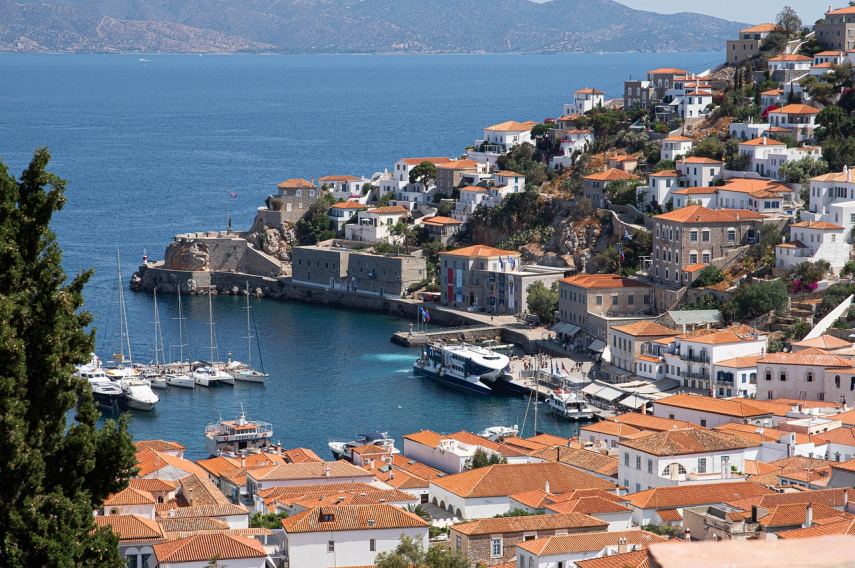

Photo: www.pexels.com
The European Union (EU) doesn't have a unified gambling tax system, which leaves each individual member country free to decide how to license and tax the industry. This disjointed reality has turned the Baltic region into a sort of testing ground for online gambling policies.
With the European Union (EU) still in the midst of debates over whether or not to impose supranational online gambling levies, the unique concept of tax-free winnings has slowly begun to transform the market.
More specifically, the role of Verovapaat Kasinot (tax-free casinos) is finding its balance against the shifting corporate tax rates. This dynamic will significantly alter the way regulators fight against illegal offshore sites while simultaneously attempting to keep the local tax revenues high.
The Disconnected EU Network and the Shift In Brussels
In the past, European online gambling was always governed by a complex legal patchwork. The overarching EU rules like the General Data Protection Regulation (GDPR) and Anti-Money Laundering Directives (AMLD) may have formed the foundation, but specific financial policies remain strictly domestic.
However, the intense financial pressure has led to a significant political shift in Brussels, resulting in:
- The proposed EU iGaming tax, with the European Parliament having formally endorsed an expansion of the EU budget by exploring a coordinated 1% tax on the profits generated through online gambling. Those in favor see this as a way to generate own-resource revenue for education and digital literacy without placing further strain on their national budgets.
- Cross-border enforcement after the Court of Justice of the European Union (CJEU) sanctioned harsher mechanisms that allow national courts to freeze the cross-border bank accounts of sites through the European Account Preservation Order (EAPO).
- The cost of black markets following a revelation by the European Casino Association that illegal, unlicensed online gambling deprived EU member states of an estimated €22.9 billion in tax revenue in 2025 alone.
These revelations and proposed sanctions will undeniably have a substantial impact on the online gambling industry in Europe.
The Baltics' Diverging Regulatory Strategies
The Baltic States are a clear example of how different tax models affect market behavior. Although all 3 nations have legalized both physical and remote gambling, they have chosen completely different tax directions to maintain the process of keeping players on local regulated sites and away from the black market.
Estonia is the Low Tax Competitor
Estonia has implemented an aggressive tax-haven approach to capture its share of the international market. Instead of increasing fees, the Estonian government chose to reverse plans for a tax hike and instead started cutting its remote gambling tax from 6% down to 4%, decreasing by 0.5% per year.
Through this strategy, officials are aiming to attract influxes of foreign iGaming brands, betting that a lighter regulatory tax load will boost their annual gaming revenue from €22 million to over €50 million through sheer volume.
Latvia Favors Centralized Oversight and Financial Pressure
Latvia is moving in the complete opposite direction by prioritizing immediate state revenues. The Latvian government actually fast-tracked its legislative updates, increasing its interactive gambling revenue tax from 12% up to 15%.
The country has also undergone a structural reform where supervision of all licensed sites has been moved directly under the State Revenue Service (SRS), which effortlessly links tax compliance with daily regulatory oversight.
Lithuania's Heavy Corporate Tariffs
Lithuania has implemented some of the highest corporate gambling fees throughout the Baltic region, increasing its gross gambling revenue (GGR) rate to 22%. The resulting revenue has been explicitly allocated toward finding public awareness campaigns regarding responsible gambling as well as compensating the local media for their strict gambling ad bans.
These vastly different tax models highlight the different ways that local regulatory bodies have implemented to generate revenue from the surging online gambling market.
How Tax-Free Casinos Fit Into This Equation
In the European context, a tax-free casino doesn't mean the business doesn't pay taxes; it means that your winnings are completely exempt from personal income tax. In countries like Estonia, you don't pay any tax on your winnings when you play on an EU-regulated site.
Since the tax burden is placed entirely on the site's corporate revenue instead of the players, there's really no incentive for you to seek out any underground, offshore black-market online casinos to protect your payouts.
As a way to make sure these casinos aren't abused for capital flight or money laundering, the Baltic states enforce strict IP blocking and restrict financial transactions between local banks and unlicensed offshore sites.
An Economic Battleground
The Baltics have clearly demonstrated how the tax-free player model is highly effective when it comes to destroying the black market. Still, as the EU moves toward a more unified, centralized system of supervision, the region's distinct corporate tax choices, ranging from Estonia's 4% race to the bottom to Lithuania's 22% tariff, will likely remain a primary battleground for European economic policy.

Please enter your username and password.

2026 © The Baltic Times /Cookies Policy Privacy Policy