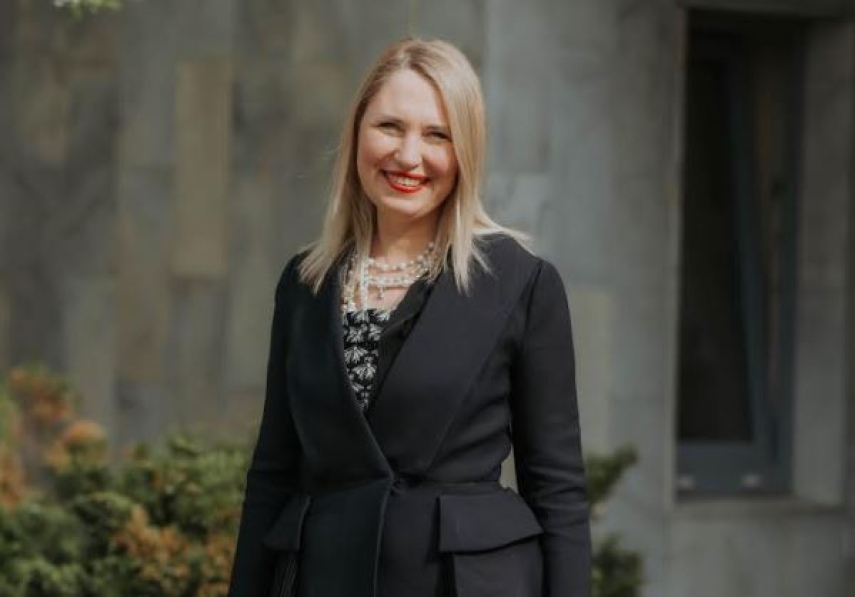
RIGA - Raising taxes to cover a budget deficit should be a last resort, as withdrawing large amounts of funds from the economy can slow growth, Arvils Aseradens, the prime ministerial candidate for the New Unity party said, in an interview with LETA's podcast "Politicians! What Was That All About?".
Aseradens pointed out that the government should currently avoid solutions such as raising the value-added tax (VAT), even though, in theory, that would be one way to increase budget revenue. In his view, withdrawing significant amounts of money from the real economy could negatively impact development.
As an example, the politician cited Estonia, which has decided to raise several taxes, including the VAT rate, and whose economic growth, in his assessment, has been weaker than Latvia’s.
The former finance minister expressed his conviction that the necessary additional revenue can be generated by promoting economic growth. He noted that the next government should agree on an "economic growth budget," aimed at accelerating economic growth from the current rate of approximately 2 percent to between 3 percent and 3.5 percent per year.
According to Aseradens, investments, productivity growth, export development, as well as business automation and the implementation of artificial intelligence solutions will play a crucial role in promoting economic growth.
At the same time, the politician objected to across-the-board cuts in government spending. He expressed the view that simply reducing spending by a fixed percentage is the worst possible solution. Instead, government agencies should assess the cost-effectiveness of services by comparing how much it costs to achieve specific results.
Aseradens cited the costs of a child’s education, the costs of issuing documents, and the cost of transporting a single passenger on public transportation as examples. In his view, this approach would make it possible to identify areas for efficiency gains in public administration and reallocate funds to higher priorities.
The politician also noted that the previous government had already reviewed expenditures totaling approximately EUR 840 million. He emphasized that these funds were not saved in the traditional sense, but rather reallocated to other priorities, including healthcare and education.
Aseradens believes that public administration must continue to move toward results-based budget planning and the evaluation of service effectiveness, to ensure sustainable management of public finances even after the current fiscal exceptions for funding defense spending expire.

Please enter your username and password.


2026 © The Baltic Times /Cookies Policy Privacy Policy