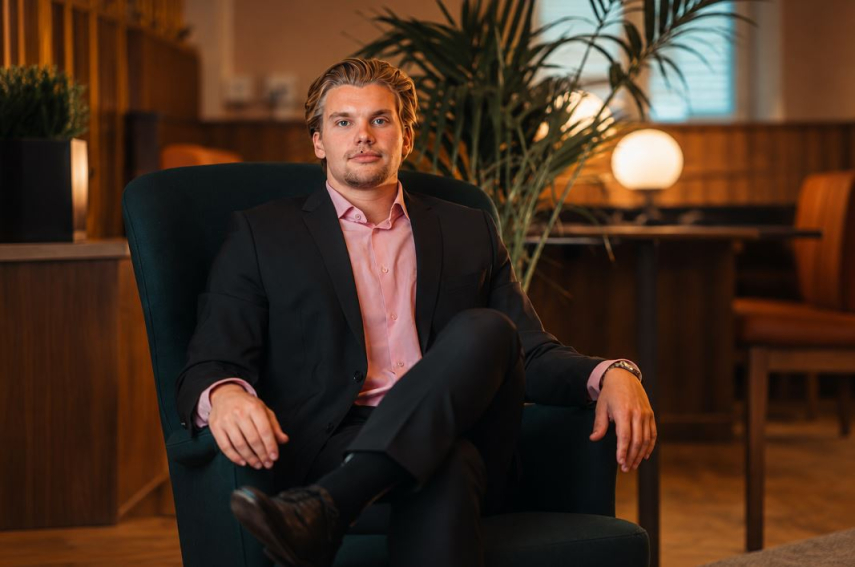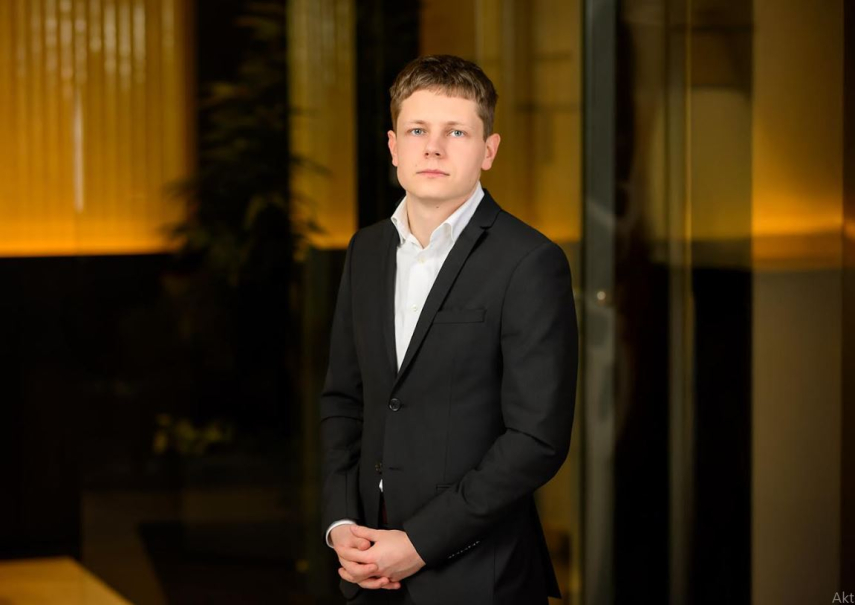
For companies in the Baltics, international expansion is often a necessity rather than a choice. Small domestic markets mean businesses in Estonia, Latvia and Lithuania must look abroad relatively early, but building dedicated sales teams in every new market can be expensive. Alex Kanto, partner at Finnish B2B sales and go-to-market company Niittyla&Kanto Oy, believes AI-assisted research, preparation and outbound sales workflows can make that expansion faster, more targeted and more cost-efficient.
“Rather than using AI simply to generate greater volumes of automated outreach, we use it to improve the quality of the outreach we already do. AI-assisted research and preparation help us understand potential customers faster, filter out irrelevant accounts and focus human effort on prospects with genuine commercial potential. Clients do not buy our service because of AI; they buy the results that better efficiency and quality can produce. Niittyla&Kanto already works with clients across Finland and the Baltics, and I myself live in Tallinn. We increasingly think about the business on a Baltic-Nordic level,” Alex Kanto told The Baltic Times.
How did Niittyla&Kanto start, and what gap in the B2B sales market did you originally set out to fill?
My co-founder and I met at school and later worked together in a few different sales roles during Covid-19. Through that experience, we saw a gap in B2B appointment setting: there was plenty of volume-based cold calling, but much less focus on combining good targeting, relevant messaging and different outreach channels.
One of our first projects at N&K was actually international appointment setting for an EdTech company expanding around the world. That taught us very early how different cross-border sales is from simply working through a local call list.
From there, we first scaled the model in Finland, but today one of the most valuable things we can bring to a client is cross-border go-to-market support. We can help a client identify a new market, find the right companies and decision-makers to contact, test how their value proposition resonates and start building the first qualified sales conversations there.
What exactly do you do for a client, and where does your role typically end?
Niittyla&Kanto provides B2B appointment setting, outbound sales and go-to-market support for companies expanding across Finland, the Baltics, the Nordics and wider international markets.
Depending on the client, that can include B2B market research, target-account selection, decision-maker research, lead generation, outbound prospecting and multichannel sales outreach through email, LinkedIn, phone and other relevant channels. For companies entering a new market, we can essentially operate as an outsourced sales development resource: helping validate the market, build the initial pipeline and book qualified B2B sales meetings before the company commits to building a full local sales organisation.
Our job is to create the right commercial conversations. Once a qualified meeting is booked with a prospect who has genuine relevance, the client's own sales team normally takes over the opportunity and closing process.
The same model works in both directions: we help Baltic companies with international market entry and customer acquisition, while also helping Nordic and other international companies enter Estonia, Latvia, Lithuania and Finland.
What does the business look like today, and what are your targets for the next three to five years?
We are intentionally still a founder-led team, and I think that is increasingly an advantage rather than something we need to grow out of.
Over the years, we have sold well over €1 million worth of appointment setting and outbound sales services. More importantly, that work has helped create tens of millions of euros in sales pipeline and commercial opportunities for our customers across a very broad range of industries and markets.
That repetition has given us a fairly specialised understanding of one part of the sales cycle: how you identify the right commercial opportunities and turn a cold market into actual conversations.
Earlier, we thought scaling a service company mainly meant adding more people. Today we think much more about scaling the process and giving a smaller number of capable people better tools, data and workflows.
Over the next few years, the goal is to build N&K into an increasingly international sales partner, particularly for companies that need a cost-efficient way to establish themselves in a new market before investing heavily in local sales infrastructure.
What types of companies and industries make up your customer base? Are you increasingly looking beyond Finland?
We've worked with companies ranging from SaaS and professional services to industrial technology, energy, healthcare technology and enterprise consulting.
Technology and SaaS companies are a particularly natural fit because they often have strong products but relatively limited sales resources, and their addressable market is usually international from the beginning.
We already work with clients in the Baltics as well as Finland, and I live in Tallinn myself. So I don't really view Estonia, Latvia and Lithuania as some future export project for us. We already operate from this region and increasingly think about the business on a Baltic-Nordic level.
For Baltic companies in particular, international sales is almost built into the equation. Estonia, Latvia and Lithuania are excellent places to build companies, but the domestic markets are small. If you want to build something significant, you usually have to learn how to compete cross-border relatively early. That is exactly the type of problem where our experience can be useful.
How are AI and automation changing your business?
AI has become an extremely useful tool for us, but people don't buy our service because it uses AI. They buy it because they want qualified sales opportunities, better market coverage and ultimately new customers.
That distinction is important to us.
The fundamentals of good B2B sales haven't changed. You still need the right company, the right person, the right context and a reason for them to care. AI simply allows us to do parts of that work much more efficiently and, in many cases, at a higher level of quality.
Research is a good example. We can now analyse much more information about a company and its commercial situation before approaching it. That helps us filter out companies where there is no meaningful context and spend more time on the ones where there is.
Ironically, one of the biggest benefits of AI for us has therefore been the ability to contact fewer companies, not more.
There is already enough AI-generated noise in everyone's inbox. If the only thing AI enables is sending more generic outreach faster, it is being used badly.
For a service company like ours, the interesting part is that AI can improve both efficiency and quality at the same time. That changes the economics of the service. Work that previously required a much larger amount of manual preparation can be delivered more efficiently, which allows us to make high-quality outbound and go-to-market support accessible and commercially useful to smaller companies as well.
The customer doesn't need to care which AI model or workflow is behind that. They should care that the service is relevant, cost-efficient and produces results.
Could AI eventually replace some work currently performed by sales professionals?
Certainly. A lot of manual list work, research, CRM administration, data entry and repetitive preparation will probably disappear or become heavily automated.
But I see that more as a change in where human time is valuable.
A good salesperson should not spend most of the day copying information between systems or manually researching basic company information. They should understand customers, make decisions, build trust and have commercial conversations.
AI is a bit like what Excel became for finance or what search engines became for knowledge work. Neither removed the underlying profession, but eventually it became difficult to imagine a high-performing professional choosing not to use them.
I think AI is heading in the same direction. Today it can still feel like an advantage. Eventually, it will simply be part of the expected toolkit.
And again, the customer is unlikely to buy something simply because AI is involved. AI has to translate into something tangible: better quality, lower cost, faster delivery or a better result. Otherwise, it is just technology for technology's sake.
Do you see opportunities to expand into Estonia, Latvia and Lithuania?
We already have clients in the Baltics, and because I live in Tallinn, I see the region as part of our home market rather than simply an expansion target.
What is especially interesting is helping Baltic companies go the other direction.
A company can build an excellent product in Tallinn, Riga or Vilnius, but at some point it needs customers in Stockholm, Helsinki, London, Germany or the US. Building a sales organisation in every market before knowing what works is expensive.
A cross-border go-to-market partner can help bridge that gap: map the market, identify the relevant accounts and decision-makers, localise the commercial approach, generate qualified B2B leads and meetings, and collect real market feedback.
The same applies to a Finnish or international company entering the Baltics. The fundamentals of sales travel well, but the approach still needs to respect the market, buyer behaviour and context.
What is the biggest obstacle to scaling Niittyla&Kanto?
Maintaining quality while increasing reach.
Appointment setting looks simple from the outside, but doing it well requires quite a lot of judgement. You are representing another company's brand in what may be its first interaction with a future customer.
AI-assisted research and workflow automation allow us to make preparation and execution much more efficient, but efficiency only matters if the quality stays high or improves. We don't want to automate the customer or prospect out of the process.
So the challenge is building something that becomes more scalable and accessible without becoming more generic.
That's also why I like the founder-led model. Decisions about quality, customers and how we represent them remain very close to the people who have the most at stake in the company.
Where do you see the company in five years?
I think AI itself will become much less of a differentiator and much more like standard business infrastructure.
Twenty years ago, having a good website or CRM could itself be a competitive advantage. Today nobody describes themselves as a "website-enabled company" because those tools have simply become part of doing business. I suspect AI will follow a similar path.
For N&K, the goal isn't to become an AI company. It is to become a better international sales and go-to-market company by using whatever technology gives our clients an advantage.
People won't buy from us in five years because we use AI any more than they buy from a company today because its employees use Outlook or Google. They will buy if we can produce the outcome they need at the right quality and cost.
Five years from now, I would like us to be a recognised cross-border B2B sales partner between the Baltics, the Nordics and wider international markets, particularly for companies that want to test, enter and establish themselves in a new market without immediately building a large local sales organisation.
The tools behind that service will certainly change. The underlying job probably won't: find the right commercial opportunities and turn them into conversations.

Please enter your username and password.


2026 © The Baltic Times /Cookies Policy Privacy Policy