RIGA - Latvia exports simpler products than its European Union (EU) neighbors, even though economic development is based on the production and export of increasingly complex products, writes Olegs Krasnopjorovs, an economist at the Bank of Latvia, on the website Makroekonomika.lv.
The economist explains that economic development does not mean producing the same things, just more of them. Development is based on the production and export of increasingly complex products. This is a structural transformation in which resources are shifted from low-value-added to high-value-added products. As a result, the structure of the economy is shifting toward the production and export of more complex products.
Goods of the highest complexity are currently concentrated primarily in the electronics, chemical and pharmaceutical, mechanical engineering, and transportation sectors, notes Krasnopjorovs. Their production requires modern technologies, appropriate education, and institutions that promote investment. Countries that specialize in the production and export of these complex goods-such as Germany, Switzerland, and Japan-are typically characterized by high productivity and high wages.
The economist points out that the provision and export of high-value services are no less important-ranging from education, healthcare, and transportation to marketing, artificial intelligence models, or cybersecurity software-since services are increasingly transforming both our lives and the production of goods; without them, industry simply cannot become more sophisticated.
In contrast, the simplest products are most commonly found in the raw materials, agriculture and food, wood processing, and textile product groups. Krasnopjorovs explains that countries specializing in the production and export of simple products-such as Cambodia, Bangladesh, or Sri Lanka-all have low productivity and low wage levels. They specialize in simple products not because they have vast agricultural lands or the most efficient sewing factories in the world, but rather because they lack the knowledge, technology, or investment needed to produce higher-value products.
The only way for Latvia to become wealthy-at least to catch up with Lithuania and Estonia in terms of income levels-is to learn how to produce complex, unique products that are in demand on the global market and to export them, emphasizes Krasnopjorovs. Since complex products are rarely created entirely within a single country these days (from raw material sourcing to manufacturing, packaging, and marketing), the key to success in the real world is active participation in supply chains for high-value products, explains the economist. For example, Slovenia exports medicines produced using imported raw materials and manufacturing equipment. Similarly, Slovakia exports cars manufactured from imported parts.
A country cannot achieve a high standard of living solely by producing bread and similar simple products that others are also capable of producing. The economist emphasizes that this is precisely how the idea of Latvia’s economic structural transformation should be understood. Krasnopjorovs states that we should not shut down the food industry or wood processing, since these sectors generally have low added value, but we must learn to use agricultural raw materials and timber to produce high-value-added products that are in demand on the global market.
"If we succeed, we will be using natural resources as efficiently as possible. If we fail, we need to understand why and what we must do to succeed in the future. Moreover, advanced agriculture is by no means at odds with advanced electronics, chemistry, or mechanical engineering. For example, the world's largest exporter of grains is the U.S., while the largest exporter of fish is Norway; yet these products account for only a very small portion of the U.S.'s and Norway's total exports," explains Krasnopjorovs.
The economist points out that it is worth comparing the competitiveness of Latvia's exports with that of our closest EU neighbors-both geographically and in terms of their level of development. These are Lithuania, Estonia, Poland, the Czech Republic, Hungary, Romania, Slovakia, and Slovenia-collectively known as the EU9. In all of these countries, the income level (gross domestic product per capita based on purchasing power parity) is 75 to 91 percent of the EU average. This income level corresponds to what Latvia (at approximately 70 percent of the EU average income level) can realistically achieve over the next 10 to 20 years.
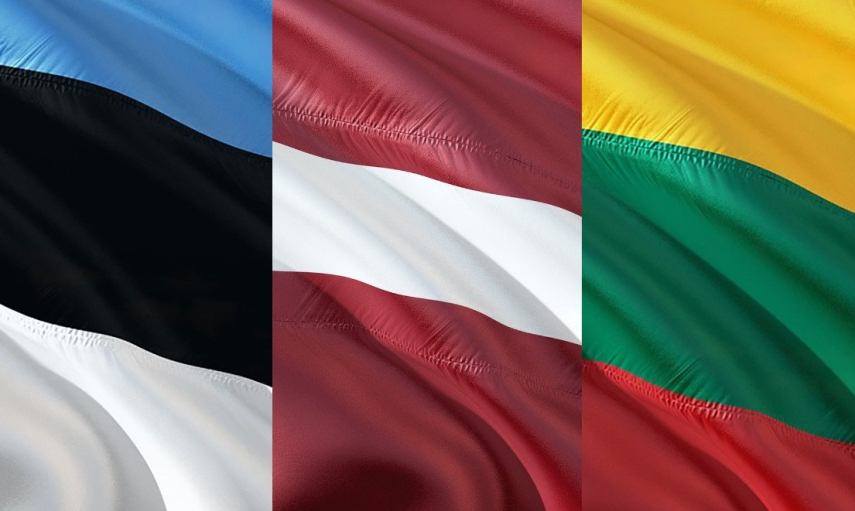
Krasnopjorovs reports that in the global ranking of the complexity of goods exports, Latvia ranks 39th, trailing behind Estonia and Lithuania (ranked 28th and 30th, respectively) and other EU9 countries. Latvia has held the last place in this group of countries since 2012.
Since joining the EU, Lithuania’s ranking has improved by 16 places, Estonia’s by six, while Latvia’s ranking has declined by two places. Krasnopjorovs believes that Latvia’s lower ranking and slower progress indicate greater potential for structural transformation of the economy and exports in the future.
Chemicals, pharmaceuticals, mechanical engineering, transportation vehicles, and electronics account for one-third of Latvia’s gross exports-the lowest share among the EU9 countries, according to Krasnopjorovs. He explains that the export structure fairly accurately reflects the country’s economic and employment structure. Relatively few people in Latvia are engaged in the production of complex products. In contrast, many people work in sectors characterized by low productivity-such as the food industry, wood processing, and textiles.
This places Latvia first among EU member states in terms of the share of agricultural, food, and wood processing products in its exports. This is despite the fact that forests in Latvia cover a smaller portion of the country’s land area than, for example, in Estonia or Slovenia.
The ability to manufacture complex products is not innate; it must be developed over time, emphasizes Krasnopjorovs. For example, 30 years ago, none of the EU9 countries specialized in the export of mechanical engineering products and vehicles. Currently, in the EU6 countries (the EU9 excluding the Baltic states), the share of these products in exports is twice the global average (with Slovakia and the Czech Republic leading the way).
Among the Baltic states, Estonia has been more successful in developing specialization in electronics, while Lithuania has done so in the chemical industry. This has allowed neighboring countries to grow output and exports in high-productivity sectors more rapidly, the economist explains.

Please enter your username and password.

2026 © The Baltic Times /Cookies Policy Privacy Policy