Following a €4mn transformation, Pullman Riga Old Town is setting its sights on becoming the rate leader in Riga’s five-star hotel market and using international conferences to strengthen winter demand. General Manager Pawel Panczak tells The Baltic Times how the 151-room hotel preserved the character of its 1789 building, rebuilt the infrastructure guests never see and why people, costs and air connectivity remain the hospitality sector’s greatest challenges.
Pullman Riga Old Town underwent a major renovation in 2025. What were the most important changes, and how much was invested?
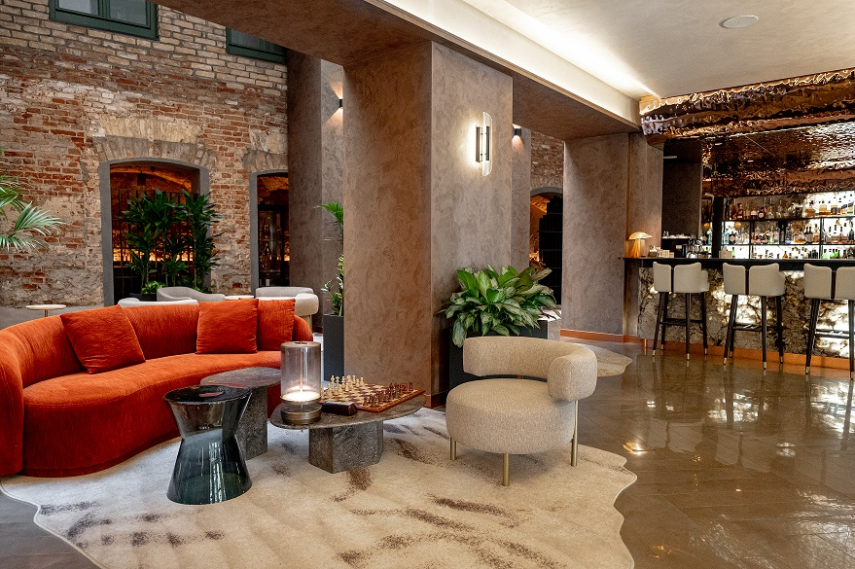
This was not a cosmetic refresh – we rebuilt the hotel with an investment of €4mn. All 151 rooms were stripped back and redone, the lobby and the entire ground floor were reconfigured, the conference area was built from scratch, and the wellness and pool floor on the seventh level was fully reworked.
A large share of the budget went into things a guest will never notice: air conditioning, lifts, fire safety systems, soundproofing and IT infrastructure. It is not the glamorous part of a project like this, but it determines whether a five-star hotel still works properly ten years from now.
How did you modernise the hotel while preserving the character and architectural identity of its historic Old Town setting?
The building dates from 1789 and stands in a protected part of the Old Town, which made the project a close collaboration with the heritage authorities from the very beginning. Preserving the façade, the rhythm of the windows and the proportions of the public spaces allowed us to celebrate the building's remarkable character. At the same time, we had the opportunity to completely reimagine everything behind it, creating a contemporary experience while remaining true to the spirit of the place.
We are fortunate in the layout: the property is really three buildings joined together – the historic house and two contemporary structures alongside it. That allowed us to place the demanding modern functions – the conference floor, the technical plant and the wellness area – in the newer parts, and let the historic building stay calm and residential in feel.
Inside, the design language is deliberately Nordic-Baltic: oak, linen, stone and muted colours create an atmosphere that reflects the region's heritage and natural surroundings. A guest should be able to tell from the room which country they woke up in.
What distinguishes Pullman Riga Old Town from other five-star hotels in Riga, particularly those in or near the historic centre?
Three things, I would say.
First, the address and the building. We are inside the Old Town, a few steps from the Saeima (Parliament), the National Theatre, Dome Square and the Freedom Monument. Guests walk out of the door and they are already where they wanted to be. And the door they walk out of belongs to a protected house from 1789, with genuinely modern conference and leisure infrastructure inside. Very few hotels can offer both on the same site. Usually, you choose one or the other. Here, you do not have to.
Second, the scale. With 151 rooms and eight meeting spaces for up to 200 people, we can host a full conference or an incentive group and still run the hotel normally for everyone else. Most five-star addresses in the centre are boutique properties of 40 to 70 rooms, which they do beautifully, but group business of that size is simply outside what they were built for.
Third, Harper Woolf. It is not a hotel restaurant in the usual sense. The kitchen is led by Maksims Kolomaznikovs, and the menu is built around shared plates, so the whole table orders together and tries a bit of everything. With up to 60 seats, it handles a group dinner easily, but it is just as good for two. An anniversary, a promotion or just an ordinary Tuesday: at Harper Woolf, every reason to come for dinner is a good one.
Which guest segments are most important – international leisure, corporate, conference delegates, or Baltic and Nordic visitors?
We deliberately do not lean on a single one. The mix is well balanced and shifts with the season, and that is the point – Riga is too seasonal a market to be a pure leisure hotel or a pure business hotel.
Geographically, the UK, the Nordics and Poland are our strongest inbound markets, with steady corporate demand from Lithuania and Estonia. The Nordic weekend guest brings particular value to the destination: the journey is short, communication is easy, and these stays often extend beyond the room itself, with guests enjoying dinner and making full use of the hotel’s facilities.
The segment I am giving most attention to at the moment is international MICE – associations, corporate meetings and incentives. That is where the Pullman flag genuinely helps, because it puts us on the radar of planners in France, the United States and Canada who would most likely never have considered a hotel in Riga otherwise.
How have occupancy levels, average room rates and guest demand developed since the renovated hotel reopened?
The first months after a reopening are never the real picture. You are still carrying construction noise in the reviews, the sales pipeline is empty and the online ratings start again from zero. About six months in, the curve began to look the way it should.
Occupancy is well above where the hotel stood before the renovation, and more importantly, we are achieving rates we simply could not have asked for with the old product.
What I follow even more closely than occupancy is our index against the competitive set – whether we are taking more than our fair share of the market. We are above that benchmark, and guest satisfaction scores have improved steadily every month since reopening.
How important are conferences, corporate events and business travellers to the hotel's overall revenue, and what facilities do you offer to this market?
Meetings and events account for roughly 25% to 30% of total revenue, and their real value is greater than that share suggests, because a conference fills rooms on precisely the nights leisure demand does not – Tuesday to Thursday, October to March.
We have eight meeting rooms, the largest for 200 people, all located in the modern part of the building, so delegates are not moving through the lobby past leisure guests. Alongside that, we run a full banqueting operation, and the restaurant, bar and cigar lounge give organisers somewhere to take an evening programme without leaving the hotel.
Riga's hotel sector experiences strong seasonal fluctuations. How does the hotel attract guests during the quieter autumn and winter months?
Winter demand has to be built around something other than the weather.
In practice, that means three things. Conferences and corporate meetings, which we pursue hardest in exactly those months. Short city breaks packaged for Baltic and Nordic guests, where the hotel itself is part of the reason to travel. And food and beverage: our immersive dining concept, Le Petit Chef, together with the seasonal programme in the restaurant, gives people a reason to come in December or February, when a city break on its own is a harder sell.
December largely takes care of itself thanks to the Christmas market – Riga does that very well. The months we have to solve are November, January and February, and that is where the meetings business and our restaurants earn their keep.
What role do the restaurant, wellness facilities and other services play in attracting local residents as well as overnight guests?
A hotel restaurant that serves only hotel guests is a missed opportunity. Ours has to work as a Riga restaurant first.
Harper Woolf is open to the city, and a meaningful share of the covers is local – that is the standard we hold it to. Le Petit Chef has been particularly effective in that respect: it is an occasion, so people book it for birthdays and company dinners, and most of those guests are Latvian rather than visiting. The cigar lounge and the wellness area follow the same logic on a smaller scale.
There is a commercial reason and a cultural one. Commercially, local business fills the shoulder periods. Culturally, a hotel that residents never walk into feels closed off, and international guests sense that immediately. When people from Riga use the building, the atmosphere is simply better.
What are the biggest challenges currently facing Riga's five-star hospitality sector?
People, first and by some distance. Latvia's working-age population is shrinking, and we compete for the same staff with the Nordic countries, where they can earn considerably more. Retention, training and offering people a career rather than a shift have become a central part of the job rather than an HR topic.
Cost is the second. Payroll is rising, and energy and food costs have not returned to their earlier levels. At the rate levels this market supports, you cannot simply pass all of that on to the guest.
Third, connectivity. Demand in Riga follows the route map from the airport very closely, and every new long-haul or Western European connection is worth more to this city's hotels than any marketing campaign we could run on our own.
I see competition as a positive force. A strong and diverse hotel landscape makes Riga an even more attractive destination for travellers and showcases the city's growing appeal on the international stage.
What are your principal targets over the next three years, and are further investment or expansion projects being considered?
Three targets. To establish the hotel as the rate leader in the Riga five-star market, measured against our competitive set rather than against our own last year. To keep guest satisfaction improving month on month. And to grow international meetings and incentives to the point where group business carries the winter reliably rather than occasionally.
On further investment, the core product is complete, so the next phase is smaller and more precise rather than another construction site. At the moment, we are working on the furniture in the restaurant and the cigar lounge, and that will be finished by the end of September.
The larger ambition goes beyond the building. Riga is still undersold as a city-break and conference destination compared with Tallinn or Vilnius, and that is a marketing question rather than a product one. We are now in a position to be part of solving it.

Please enter your username and password.


2026 © The Baltic Times /Cookies Policy Privacy Policy