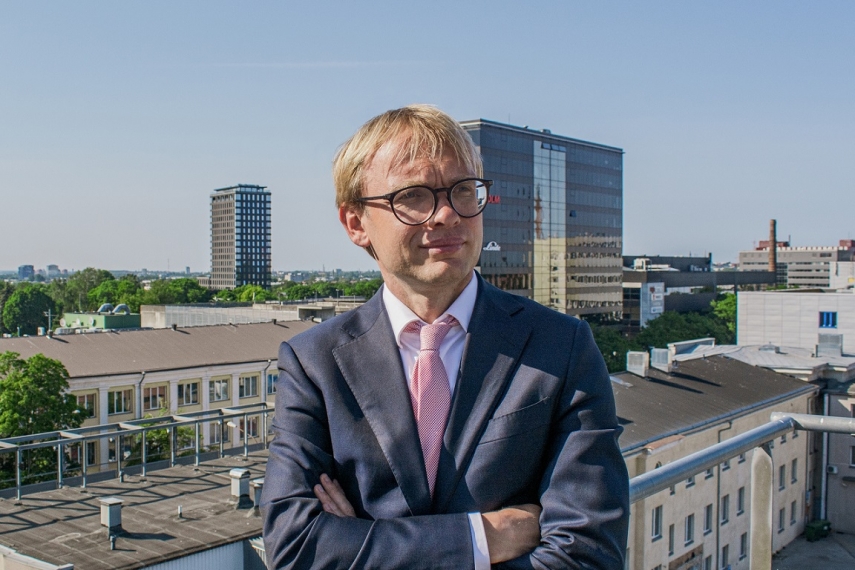

BURNING STONE: Estonia has been using shale energy for centuries, says Sandor Liive.
TALLINN - A huge excavator bites into the earth of an open-cast mine, as the operator skillfully mans the controls in a cabin four stories above ground level, writes AFP. For the small Baltic state of Estonia, rock seems to be the future of energy.
The European Union nation of 1.3 million generates 97 percent of its electricity thanks to oil shale - sediment formed 400-450 million years ago - containing hydrocarbons. Its industry forecasts that shale’s use can only expand. “Estonia has 1.1 percent of global oil shale reserves, but what makes us unique is that we have used it and developed the technology for a hundred years,” said Sandor Liive, chief executive of state-run power firm Enefit.
Enefit is betting on shale beyond the nation’s borders, looking to the Middle East and the United States. After already having signed a development deal with Jordan, this month Enefit announced the acquisition of a 100 percent stake in the U.S.-based Oil Shale Exploration Company for an undisclosed sum.
The energy company said the firm owned the largest tracts of privately-owned oil shale reserves in the United States, with over 3.1 billion tons of oil shale containing almost 2.1 billion barrels of oil. The United States is home to 72 percent of global oil shale reserves. Besides Jordan, this mineral is also found in Australia, Brazil, China and Morocco.
Asked why Enefit thinks shale makes economic sense, Liive said it hinges on the high prices for conventional oil. “If you believe that oil will be more than 60 U.S. dollars a barrel, then the answer is ‘yes.’ Yes, it’s profitable to produce oil from oil shale,” he said.
Estonia has long used shale without actually extracting oil, however. The Estonian word for it is ‘polevkivi’ (burning rock). It is mined and then burned in the country’s power stations.
Shale is the main mineral resource in this former Soviet-ruled republic. Estonia’s shale hub is Narva, in the northeast near the Russian border. Two underground mines and two open-cast pits in the area feed a duo of power stations - the world’s biggest oil shale-fired electricity plants.

Please enter your username and password.
2024 © The Baltic Times /Cookies Policy