TALLINN 's Olympic Entertainment Group(OEG) held an extraordinary general meeting on August 14th at whichit tinkered with its structure as part of its future strategy.
According to the resolutions adopted bythe meeting, the previous Chairman of the Management of OEG Armin Karu willcontinue as the Chairman of the Board. The Management of OEG will continuecomprising of one member, CEO of OEG AndriAvila who will conduct the day-to-daymanagement of the company. Mart Relve was elected as a member of theSupervisory Board.
Olympic is the largest provider ofcasino entertainment in Central and Eastern Europe, with more than100 premises employing around 4,000 people in Estonia, Latvia,Lithuania, Belarus, Ukraine, Romania, Poland and Slovakia.
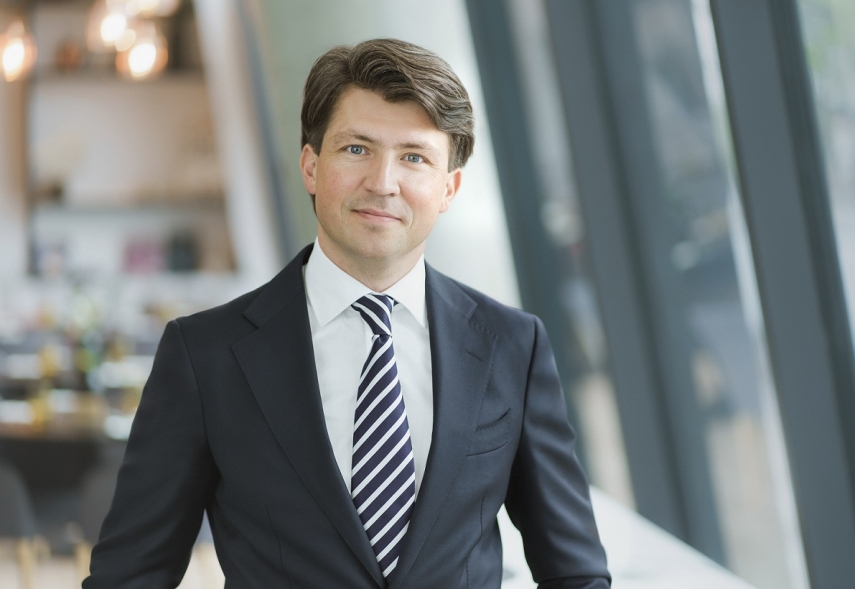
Shares of OEG are traded in the MainList of the Tallinn Stock Exchange and the Warsaw Stock Exchange, andfor some years it's been one of the darlings of investors in theregion thanks to its rapid expansion and brisk, professional approachpersonified by Andri Avila, who now finds himself in day-to-daycharge of OEG. He spoke to The Baltic Times recently, outlining thecompany's strategy.
Avila believes politicians can largelytake the blame for any seediness that does linger in his industry."If the legislation is set in a way that is favourable tohigher-quality operators and higher-quality casinos, like inLithuania, then public opinion about gaming tends to be morepositive. If the regulations are more positive towards smalllocations and a big number of operators then it tends towards lowerquality 's of which the classic example is Latvia, where there areapproximately 600 casinos, including slot casinos. About half ofthose are in Riga, which definitely I think is too many. You onlyhave to walk around Riga to see this. It causes public opinion toturn against casinos. Operators need to be regulated and there needsto be transparency in the casino business," he told The BalticTimes.
Europe-wide gaming laws would probablyhelp, but Avila sees no immediate prospect of their introduction."Currently it is entirely up to every member state to regulate,"he says. "The European Commission tried to put it into a servicedirective but it was taken out. If I had to make an estimate I wouldsay that in 15 or 20 years there will be a unified gaming law inEurope."
But with teams of specialists in placein each country to stay abreast of legislation, Avila's priority isseeing OEG come through the economic slowdown in the best shapepossible. Despite year-on-year growth in revenues during the earlypart of the year, pre-tax profits were down.
"People still go into casinos butthey do not spend as much time there," Avila explains. "Also theaverage bet is smaller than it used to be so people are much morecautious. Definitely we can feel the slowdown in the economy 's andthis slowdown seems to be much deeper than previous ones."
This finally disproves the notion thatthe casino business is "recession-proof," he believes, as thedownturn has been just as pronounced in Las Vegas as in Europe.
"The previous boom was generated notso much by increased productivity or the normal forces of economicgrowth, but because people were really spending their assets. Nowthat it's dropped off, the effect is very sharp and severe," hesaid.
As a result, OEG has had to revise itsown expansion plans, Avila admitted, though still a new location isopening up every other week, the most recent being the Olympic CasinoNyvky which became Kyiv's 22nd Olympic casino with more than €1minvested.
Part of the reason Olympic is able toremain active even during a downturn was a decision made in its earlydays not to invest in bricks and mortar but to concentrate solely onthe core business. It leases nearly all its premises afternegotiating favourable long-term contracts, reducing overheads andallowing it to remain flexible in times of uncertainty.
But OEG may be forced into the realestate market as it pursues the next big thing in gaming 's casinoresorts. "We would like to enter that line of business. In Europe there are many hotels which have casinos but not really any casinoresorts other than one operating in Slovenia near the border withItaly," Avila said.
Even though the global economicdownturn is squeezing profits in gaming, it's not dampening Olympic'sambition. "We want to become a global player," Avila asserted.
"So far we have been focussing onCentral and Eastern Europe, but if you look at the countries where weare present and the countries which still could be of interest to usin that part of the world, then the choice is getting very limited.We have already identified potential partners all over the world, soI'm pretty confident that in ten years we will be global rather thanregional players."